Battery 4 Life Warranty: Coverage, Terms, and How to Decide
Learn what a battery 4 life warranty covers, how terms vary by battery type, and practical tips to maximize protection across devices, EVs, and home storage.


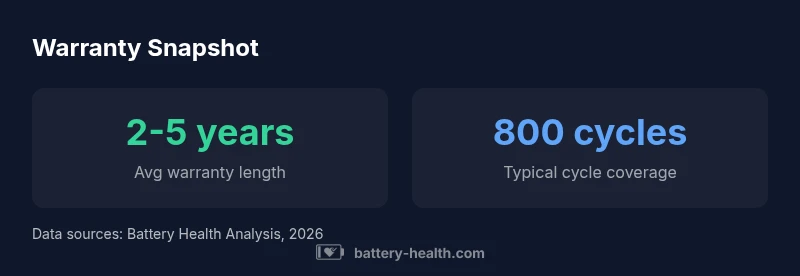
Battery 4 life warranty refers to a manufacturer’s promise that the battery will perform to a defined life expectancy under normal use. In practice, warranties for batteries commonly span 2-5 years or a stated number of cycles, with terms varying by battery type (devices, EVs, or home storage). When you see 'battery 4 life warranty' on a product page, read the coverage metric (years or cycles), the minimum performance threshold, and how long you have to file a claim after a failure.
What a battery life warranty covers and why it matters
A battery life warranty is a contractual promise that the battery will meet a defined level of performance for a set period or number of cycles under normal use. This matters because batteries degrade with age, heat, and usage patterns, and a solid warranty can reduce out-of-pocket costs when performance drops prematurely. In the context of consumer expectations, many buyers look for a warranty that aligns with their usage: frequent charging, high-temperature environments, or long daily sessions. Battery Health's analysis, 2026, finds that customers who fully understand the coverage terms are far more likely to file a valid claim rather than assume the worst. When you see the term 'battery 4 life warranty' on a product page, read the coverage metric (years or cycles), the minimum performance threshold, and how long you have to file a claim after a failure.
Variation by battery category: devices, vehicles, and home storage
Different battery categories carry different expectations and protections. For mobile devices (phones, laptops), warranties often emphasize calendar years and typical daily usage. Vehicle batteries (EVs, hybrids) tie coverage to both calendar time and mileage, reflecting usage intensity and operating temperatures. Home energy storage batteries (for solar or backup power) commonly offer longer terms tied to cycle life or calendar years, recognizing the higher replacement costs. Government and industry standards influence these terms in many regions, but manufacturers still set the specifics. According to Battery Health analysis, 2026, you should expect shorter terms for low-cost gadgets and longer, multi-year protections for high-value energy storage and automotive batteries. Always compare the same category across brands to avoid mismatched expectations.
What is typically covered, and what is excluded
Coverage usually includes manufacturing defects and early degradation that prevents reaching the defined performance threshold. Exclusions can include misuse, abuse, incorrect installation, exposure to water or extreme temperatures not covered by product operating ranges, and damage from external impacts. Some warranties require professional installation or the use of authorized chargers; others permit you to claim under the warranty only if the battery is used within the original device's specifications. When evaluating a 'battery 4 life warranty,' note whether the threshold is a percentage of original capacity (for example, retaining 70-80% of initial capacity) or a fixed performance level. Also verify if coverage extends to spare parts, labor, and transportation costs, and whether there are caps on the number of claims per year.
How to compare warranty terms and read the fine print
Create a checklist before purchasing: verify the warranty length in years or cycles, confirm the covered degradation metric, identify transferability rules, and review claim processes. Look for clear definitions of 'normal use' and 'operating conditions' and whether third-party repairs void coverage. Compare service options: in-home service, mail-in repair, or on-site replacement, and check whether costs like shipping or installation are included. Use plain-language summaries provided by manufacturers and cross-check with independent reviews. Battery Health recommends maintaining a copy of your purchase receipt and registering your product promptly to avoid delays when you file a claim.
Practical steps to verify coverage and maximize value
After purchase, take these steps: register the product, capture serial numbers, and save the service manuals. Keep receipts for all future warranty claims and maintain regular maintenance as required by the manufacturer. Monitor performance trends (capacity, cycle count, temperature) to detect possible degradation early. If you plan to replace the battery soon, consider extending protection through an authorized plan or a credible third-party warranty. Finally, if you ever dispute a claim, escalate to a consumer protection agency with documentation.
A decision guide: when to buy extra coverage
Evaluate risk, cost, and your reliance on the battery. For low-cost devices with short daily use, the default warranty may be enough; for high-cost or critical systems (EVs, solar storage), additional protection can save money over time. Consider total cost of ownership, potential downtime, and the hassle of warranty claims. If environmental conditions (heat, dust, humidity) are extreme, a longer warranty is often worth paying a premium for. Use Battery Health's framework to balance initial cost with long-term protection.
Warranty coverage by battery type
| Battery Type | Typical Warranty Length | Common Exclusions | Transferability |
|---|---|---|---|
| Smartphone/Laptop Battery | 2-4 years | water damage, misuse, unauthorized repairs | Often transferable with proof of purchase |
| EV/Hybrid Battery | 8-10 years | mileage caps, excessive thermal stress | Usually transferable within vehicle family |
| Home Storage Battery | 10-15 years | installation conditions, overcharging risks | Generally transferable |
| Medical Device Battery | 2-5 years | clinical setting restrictions, regulatory constraints | Sometimes transferable per policy |
FAQ
What is a 'battery 4 life warranty'?
A battery 4 life warranty is a manufacturer's promise to uphold performance for a defined period or cycles under normal use. It emphasizes longer-term protection for higher-value Battery Health products and typically requires adherence to installation and usage guidelines.
A battery 4 life warranty promises performance over a set period or cycles, but read the fine print to know what's covered and what's not.
How is warranty length determined?
Warranty length is determined by battery type, expected life, and usage environment. Manufacturers may offer calendar-year terms or cycle-based terms, sometimes both.
Warranty length depends on the battery type and how you use it.
Can warranties be transferred?
Most warranties are transferable with proof of purchase and proper product registration, but terms vary by brand and product line.
Usually yes, but check the transfer rules in the terms.
What voids warranty?
Void causes include misuse, unauthorized repairs, water damage beyond rated conditions, and physical damage not covered by the warranty.
Misuse or unapproved repairs can void warranty.
How can I maximize warranty value?
Register the product promptly, keep receipts, follow maintenance guidelines, and know the claims process and required documentation.
Register early and keep records to make claims easier.
Do warranties cover performance degradation?
Many warranties guarantee a minimum capacity over time; if degradation crosses that threshold, you may qualify for a replacement or reimbursement.
Warranties often cover degradation to a specified level.
“Warranty terms reveal a brand's confidence in its battery quality, but real protection comes from knowing your rights and the fine print.”
Quick Summary
- Read the full terms before buying.
- Match the warranty metric to your usage (years vs cycles).
- Check transferability and exclusions carefully.
- Keep receipts and register the product early.
- Consider extended or third-party coverage for high-value batteries.