Battery 49 H8: Specs, Compatibility & Safety Guide
A comprehensive, data-driven guide to battery 49 h8, covering chemistry, voltage, form factors, compatibility, safety, and maintenance for devices, cars, and home storage. Learn to read datasheets, verify fits, and optimize longevity with Battery Health.


battery 49 h8 is a model code used to identify a specific lithium-based battery family. It signals chemistry, nominal voltage, and form factor, enabling safer, more accurate replacements. To verify fit, always cross-check the datasheet for exact voltage, capacity, and connector type before purchase. Battery Health emphasizes using official sources to confirm compatibility and preserve safety.
What is battery 49 h8?
The battery 49 h8 is best understood as a model code used to identify a particular family of lithium-based cells within a broader lineup. In practice, this code appears on datasheets, label stickers, and replacement parts, helping engineers and consumers quickly gauge chemistry, nominal voltage, and compatible form factors. According to Battery Health, these alphanumeric codes are not universal standards; they vary by manufacturer, but they share a common goal: enabling safe, compatible substitutions without trial-and-error.
For someone shopping for a replacement, the 49 h8 marking should trigger two checks: (1) the chemistry and safety classifications — most 49 h8 components use lithium-based chemistries with built-in protection, and (2) the electrical envelope — the number of cells, voltage, and current rating must align with your device's requirements. You should also verify the physical form factor and connector type. If the datasheet lists a 49 h8 designation, you can use it to compare against your device's service manual or a trusted parts supplier to confirm a proper fit and avoid safety hazards.
With that groundwork, you’ll be better prepared to assess whether a 49 h8 battery is a suitable replacement in consumer electronics, automotive applications, or home storage systems. In practice, the label enhances safety checks, helps avoid mismatches, and guides you toward compatible third-party or OEM solutions.
How the 49 h8 code encodes key specs
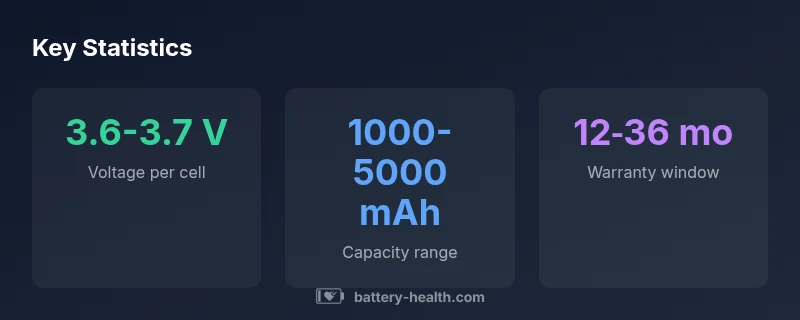
In practice, the 49 h8 code is a shorthand that points to a battery family with a defined chemistry, voltage envelope, and physical format. For most players in the Battery Health ecosystem, it signals lithium-based chemistry, a nominal voltage per cell in the mid 3.6–3.7 volt range, and a flexible range of capacities that manufacturers package into the same family. The form factor can be cylindrical, prismatic, or pouch, depending on the application. You may also find information about terminal types and connector layouts associated with the code.
Because manufacturers can map the same code to slightly different configurations, always consult the official datasheet or a materials safety data sheet (MSDS) when you encounter 49 h8 on a label. The datasheet will spell out the exact voltage window, temperature limits, cell chemistry, internal protection features (like overcurrent and thermal cutoffs), and any certifications (UL, CE, or equivalent) that apply. When reading these sources, take note of the device class as well: a 49 h8 for a smartphone battery could differ significantly from a 49 h8 intended for a small solar storage pack. In Battery Health’s experience, precise reading of the datasheet is the reliable way to ensure you’re selecting a compatible and safe option.
Step-by-step verification for compatibility
- Identify device requirements: voltage, current rating, and connector type. 2) Locate the 49 h8 datasheet and compare nominal voltage against your device’s spec. 3) Check the form factor (cylindrical, prismatic, or pouch) to fit the physical space. 4) Review capacity ranges and intended load profiles to avoid under- or over-provisioning. 5) Confirm protective features (BMS, overcharge/short-circuit protection) and safety certifications. 6) Inspect connector layout and mounting compatibility. 7) If possible, validate a short bench test with the exact charger and a controlled discharge test. 8) Consider OEM vs. third-party replacements and warranty implications. 9) Document serials and lot numbers for traceability when purchasing from non-OEM suppliers. 10) Retain the datasheet for future maintenance and audits. In practice, following these steps reduces the risk of mismatches and safety hazards that can arise from code misinterpretation.
Safety considerations and charging standards
Battery 49 h8 variants typically adhere to standard lithium-ion charging profiles, but there is considerable variation among manufacturers. Always confirm the recommended charging voltage, current limits, and end-of-charge behavior in the official datasheet. Use a charger that matches the battery’s chemistry and the device’s charging circuitry; mismatched charging can shorten lifespan or pose safety risks. Ensure a proper Battery Management System (BMS) is in place, especially in packs used for energy storage or automotive applications. Temperature monitoring is crucial during charging and discharging: avoid charging at extremes of heat or cold, and never leave charging batteries unattended in poorly ventilated spaces. Certifications (UL, CE, UN38.3 for transport) add layers of safety assurance. Finally, observe safe handling practices, including avoiding crush injuries, punctures, or exposure to liquids, which can compromise the cell integrity and increase the risk of thermal runaway.
Understanding these safety markers helps you select reliable configurations and reduces the likelihood of mishandling that could lead to injury or property damage.
Maintenance, storage, and lifecycle planning
Longevity depends on how you store and cycle the battery. Store 49 h8 batteries in a cool, dry place away from direct sunlight and flammable materials. If the pack comprises multiple cells, monitor each cell’s health to prevent imbalanced aging. Regularly inspect for swelling, corrosion, or unusual heat signatures during operation. For devices with removable batteries, follow the manufacturer’s guidance on maximum discharge depth and charging cadence to maintain optimal cycle life. When a battery nears the end of its practical life, establish a replacement plan that considers warranty coverage, compatibility with existing devices, and the availability of spare parts. Recycling options should be explored at the end of life to minimize environmental impact. Battery Health recommends recording maintenance dates and performance metrics to track degradation trends and inform future replacement decisions.
Market context and future trends in model-code labeling
Model-code labeling like 49 h8 is part of a broader shift toward more transparent battery specifications. As devices diversify, manufacturers increasingly provide richer datasheets, including chemistry, voltage windows, charge/discharge curves, and certifications. There is growing emphasis on standardization across regions to simplify cross-brand compatibility, particularly for replacement parts and second-life applications. Battery Health expects continued expansion of traceability features, such as batch numbers and lifecycle data, to help consumers make safer choices and to facilitate repairability and recycling programs. While codes may vary by maker, the underlying goal remains consistent: empower users to identify fits quickly, understand safety implications, and reduce the risk of mismatched components in critical applications.
Model code indicators for battery family
| Aspect | Indication | Notes |
|---|---|---|
| Chemistry | Lithium-ion | Widely used in consumer devices |
| Nominal voltage (per cell) | 3.6-3.7 V | Depends on cell configuration |
| Form factor | Cylindrical/prismatic/pouch | Device-dependent |
FAQ
What does the '49 h8' code signify for a battery?
The 49 h8 code signals a specific family within a battery line and helps you confirm chemistry, voltage, and form factor by consulting the datasheet. Always verify the exact specs before purchase.
The 49 h8 code marks a particular battery family; always check the datasheet for exact specs.
How can I verify if a 49 h8 battery fits my device?
Compare the device's required voltage, current rating, and connector type with the 49 h8 datasheet. Ensure the form factor matches the battery compartment and that any BMS or protective features align.
Check voltage, form factor, and connector against the datasheet.
Is 49 h8 compatible with common charging standards?
Most 49 h8 variants use standard lithium-ion charging profiles, but verify the recommended charging voltage and current in the datasheet. Using an inappropriate charger can damage the battery or void safety protections.
Yes, but verify the charging specs in the datasheet.
What safety features should I look for with 49 h8?
Look for built-in protection like overcharge, short-circuit, and temperature protection. Certifications (UL, CE) and a proper BMS improve safety in both devices and storage setups.
Seek protection features and safety certifications.
How should I recycle or dispose of a 49 h8 battery?
Follow local regulations for battery disposal. Many regions require drop-off at designated recycling centers or retailer take-back programs to prevent environmental harm.
Dispose through authorized recycling channels.
Where can I find the official datasheet for 49 h8?
Check the manufacturer's website or trusted distributors for the datasheet and MSDS. If you cannot locate it, contact customer support for the exact specifications.
Look on the manufacturer's site or ask support for the datasheet.
“Model codes like 49 h8 unlock safer, faster replacements when the datasheet details align with device requirements.”
Quick Summary
- Verify the code against official datasheets
- Match voltage, chemistry, and form factor to your device
- Use trusted sources to confirm compatibility
- Prioritize safety features and proper charging
- Recycle responsibly at end of life