123a Battery Error: Diagnosis & Fixes
Urgent guide to understanding the 123a battery error, its common causes, quick fixes, and step-by-step repair options. Learn safe troubleshooting and when to seek professional help to prevent damage and downtime.


According to Battery Health, the 123a battery error signals a safety-critical fault in the battery system that should be treated as urgent. If you encounter this code, stop using the device or vehicle immediately and perform basic safety checks. This quick diagnosis helps you distinguish between simple wiring issues and failing cells that require professional service.
Understanding the 123a Battery Error
The 123a battery error is a fault indicator emitted by many battery management systems when they detect abnormal conditions such as voltage drift, excessive temperature, or poor connectivity. This isn't a routine warning—it often means there could be a safety risk like a thermal runaway potential, electrolyte leakage, or a compromised seal. The Battery Health team emphasizes treating this as urgent: do not ignore persistent signals, do not enfantsy drive with a swollen pack, and avoid handling damaged cells with bare hands. Early, cautious action can prevent costly damage and protect you from harm. In devices and cars, this error can trigger protective shutdowns to prevent fire or further electrical injury. If the code appears after any maintenance or a rough impact, assume possible mechanical damage and inspect thoroughly for any cracking, corrosion, or loose components. Always follow manufacturer guidance and, when in doubt, consult a professional.
Signs to Look For
- Visible swelling, odor, or heat around the battery
- Sudden drops in voltage under load
- Warning lights or audible alert indicating a safety risk
- System shutdown or reduced performance
Why This Matters
The 123a battery error isn't just a nuisance; it can indicate imminent failure of a cell group or a compromised connection. Ignoring it can lead to complete battery failure, fire risk, or vehicle immobilization. Battery Health recommends verifying safety first: power down, disconnect if safe, and move to a well-ventilated area away from flammable materials. The goal is to isolate the fault and prevent escalation while collecting any diagnostic data that will help a technician diagnose the root cause.
Quick Diagnostics You Can Do (Non-Destructive)
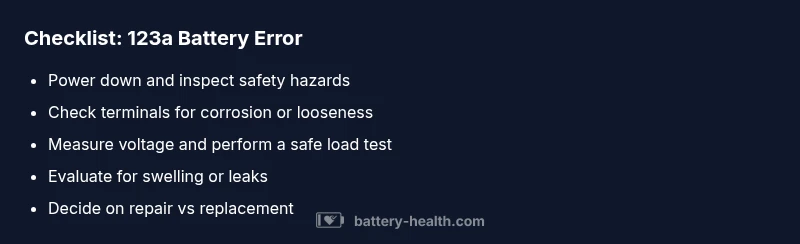
- Check for loose terminals and clean corrosion with a non-metallic brush designed for battery terminals.
- Inspect for battery swelling, cracks, or leaks and avoid contact with leaked materials.
- Measure open-circuit voltage and compare to the manufacturer’s specified range.
- If safe, perform a controlled load test using appropriate equipment, or take the device to a shop for testing.
Safety Protocols When Handling Batteries
- Always wear eye protection and gloves when inspecting a live battery.
- Work in a ventilated area; avoid sparks, flames, or smoking nearby.
- Do not puncture or crush battery cells; treat any damaged pack as hazardous waste.
- If you are unsure about the integrity, stop and seek professional help immediately.
Understanding the Data
The 123a battery error codes can be influenced by several factors: battery age, exposure to extreme temperatures, high internal resistance, poor connections, and a malfunctioning battery management system. Collect the essentials: voltage readings, temperature readings, and a photo of the battery area. This data helps technicians quickly pinpoint the issue and reduces diagnostic time. Remember, early data can prevent further damage and improve replacement outcomes.
How Battery Health Recommends Approaching Repairs
Battery Health advises a structured approach: verify safety, gather data, perform safe non-destructive checks, and escalate to professional service for high-risk symptoms or uncertain conditions. This strategy minimizes risk and helps ensure you replace the right component—whether it’s a terminal, a cell group, or the BMS module—without unnecessary downtime or expense.
What To Do If The Code Reappears
If the 123a battery error reappears after an initial fix, reassess for broader issues such as hidden corrosion, harness damage, or a failing BMS. Re-test after each intervention, keep a log of test results, and avoid extended operation under load. Persistent or recurring errors typically indicate a deeper fault that warrants professional evaluation. Battery Health recommends a formal diagnostic if the problem remains unresolved.
Steps
Estimated time: 45-60 minutes
- 1
Power Down and Isolate
Shut off the device or vehicle and disconnect the battery if safe to do so. Remove jewelry and metal tools to prevent short circuits. Ensure you are in a well-ventilated area away from flammable materials.
Tip: Always disconnect the negative terminal first to minimize risk. - 2
Inspect Terminals and Cables
Check for corrosion, loose clamps, or damaged cables. If you see white or blue corrosion, gently clean with a non-metallic brush and a baking soda solution.
Tip: Use a terminal protector after cleaning to slow future corrosion. - 3
Voltage Check Under Load
Measure the open-circuit voltage and then test under a controlled load. Compare readings to the manufacturer’s range. Abnormal results suggest degraded cells or a failing BMS.
Tip: If you don’t have proper equipment, do not attempt risky voltage tests. - 4
Inspect for Physical Damage
Look for swelling, cracks, or leaks. Do not puncture or puncture-test a swollen cell. If damage is suspected, isolate the battery and seek professional replacement.
Tip: Swollen cells are a clear sign to replace the battery. - 5
Decide on Replacement
If half or more of the cells show degraded performance or the BMS is faulty, replacement is usually the safest option. Compare replacement costs with potential downstream damage.
Tip: Consider replacement in a single pack to maintain performance consistency.
Diagnosis: 123a battery error code appears and system performance is degraded or device/vehicle shuts down
Possible Causes
- highLoose or corroded battery terminals
- highAge-related degradation and weak cells
- mediumOverheating or sensor fault in the battery management system
- lowDamaged wiring or damaged BMS module
Fixes
- easyTighten and clean battery terminals; apply dielectric grease
- mediumPerform a voltage and load test; replace weak cells or whole pack if needed
- hardInspect and repair wiring or replace the battery management system if faulty
FAQ
What does the 123a battery error mean for my device?
The 123a battery error typically indicates abnormal voltage, temperature, or connection within the battery system. It is a safety fault that can lead to shutdown or damage if ignored. Following a structured diagnostic flow helps you identify whether you can address it safely or if professional help is needed.
The 123a battery error signals a safety fault in the battery system; follow a careful diagnostic flow to decide if you can fix it at home or need a professional service.
Can I keep using the device if I see this error?
No. If the 123a battery error appears, stop using the device or vehicle immediately and assess for safety risks. Prolonged use can worsen the fault or cause a hazardous situation.
Stop using the device and assess safety. Do not continue operating with this error.
How much does a replacement typically cost?
Battery replacement costs vary by type and model, typically ranging from moderate to high depending on pack size and whether BMS components are involved. Expect a broad range and plan for a professional estimate.
Replacement costs vary; ask for a professional estimate based on your battery type.
Is it safe to perform repairs at home?
Basic inspections can be performed safely with proper safety gear and precautions. Avoid opening swollen or venting packs, and do not attempt complex electrical work without training and the right tools.
Only perform safe, simple checks with proper gear; avoid risky repairs if the battery shows damage.
When should I call a professional?
Call a professional if you notice swelling, strong odors, leakage, high temperatures, or if basic checks do not resolve the fault. A licensed technician can safely diagnose and replace components as needed.
If in doubt or if the fault persists, contact a professional for a safe, expert diagnosis.
Will replacing the battery fix recurring errors?
Often yes, especially when the issue stems from degraded cells. If the fault reappears after replacement, the problem may be with the BMS or wiring, which a professional should inspect.
Replacement often resolves it, but if it recurs, the wiring or BMS may be at fault.
Watch Video
Quick Summary
- Identify if safety issues exist before continuing.
- Tighten and clean terminals as a first step.
- Use data from voltage and temperature readings to guide replacement.
- Seek professional service for high-risk signs or uncertain repairs.