Battery and Bulbs Plus: Side-by-Side Comparison Guide
Compare battery-powered bulbs versus traditional wired bulbs across compatibility, cost, installation, safety, and maintenance. Learn which option fits off-grid needs and long-term homes with Battery Health guidance.


Battery and bulbs plus are compared here to help you decide between wireless, battery-powered LED bulbs and traditional wired bulbs. The quick verdict: for portable, off-grid lighting and quick setup, battery-powered bulbs win; for long-term consistency, wired bulbs with AC power often offer lower maintenance and stable brightness. This snapshot sets the stage for a deeper, data-driven comparison.
Overview: battery and bulbs plus
Battery and bulbs plus describes a category of lighting solutions that pair portable energy sources with light emitting devices. For many households and businesses, this combination offers a flexible way to light spaces where mains power is unreliable or unavailable, such as basements, cabins, construction sites, or during power outages. The Battery Health team notes that the phrase emphasizes not only the battery itself but also compatible bulb types designed to operate on stored energy, rather than solely on grid electricity. In this section we define the main concepts, discuss common configurations, and set the stage for a rigorous comparison that weighs performance, cost, safety, and environmental impact. Throughout, consider how different battery chemistries—such as lithium-ion and nickel-based options—affect runtime, recharge cycles, and overall lifecycle costs when paired with various bulb technologies, including LED filament and standard LED bulbs. From a product design perspective, the trade-off is between portability and brightness stability. In retail, you will find two core families: standalone battery-powered bulbs with integrated cells, and modular systems that pair external packs with standard sockets. The goal is to equip readers to evaluate compatibility, select safer options, and avoid overbuying premium features that do not translate into real-world value. In essence, this is a practical guide to steer purchases toward reliability, safety, and cost efficiency. In our comprehensive review, Battery Health highlights a few universal criteria: power source reliability, energy density, and maintenance requirements.
Key Differentiators
The central questions when comparing battery and bulbs plus revolve around how power is delivered, how long light lasts between charges, and how the installation workflow differs from traditional wiring. The primary differentiator is the power source: battery-powered bulbs rely on internal or external batteries, while traditional bulbs draw energy from the building’s electrical system. This distinction cascades into several practical contrasts. First is installation: wireless or plug-in battery bulbs can be set up with minimal tools and no rewiring, making them ideal for temporary spaces or rapid room refreshes. In contrast, wired bulbs require fixtures, wiring, and access to the electrical circuit, which is more permanent but often yields longer lifespans and steadier brightness. Second is runtime and recharge cycles: battery-based options depend on charge intervals and the capacity of the battery pack, while wired bulbs maintain a constant supply as long as mains power is available. Third is maintenance cadence: battery systems necessitate periodic battery replacement or recharging, introducing a recurring maintenance task, whereas wired systems mainly involve lamp replacements and fixture upkeep. Finally, safety and disposal considerations differ: lithium-ion or nickel-based cells demand careful handling and proper recycling, while mains-powered bulbs emphasize electrical safety during installation and replacement. Overall, the best choice aligns with user needs, whether portability and flexibility or steady, long-term operation matter most. Battery Health analysis shows that the optimal selection is highly context dependent, with no one-size-fits-all answer. Your decision should balance power availability, usage patterns, and safety requirements. Throughout this section, we will anchor the discussion with practical guidance and clear decision rules.
Use Cases and Scenarios
Understanding concrete scenarios helps translate the features into real-world benefits. For off-grid cabins, construction sites, or during power outages, battery-powered bulbs offer immediate illumination without wiring. They shine in temporary setups where speed of deployment matters more than maximum brightness. In these contexts, you can position lights around work zones, tents, or emergency kits, rotate fixtures as needs change, and recharge packs via portable solar or hand-crank chargers. Conversely, traditional wired bulbs excel in permanently lit spaces such as living rooms, kitchens, and offices with reliable grid access. They deliver stable brightness, optimized color rendering, and fewer maintenance events over time, assuming a typical service life for bulbs rather than battery packs. For households with limited electrical access or frequent relocation, hybrid configurations can be advantageous: use battery-powered bulbs for mobility and as a backup for mains-powered installations. In that hybrid pattern, a small central charging station keeps batteries topped up, so downtime is minimized when power fluctuates. The Battery Health team recommends mapping your space by function, noting how often you need lighting, where you will place fixtures, and how sensitive brightness must be to battery level changes. This strategy helps prioritize which rooms and tasks benefit most from each option. When evaluating your scenarios, consider how often you’ll relocate lighting, what energy sources are available, and how important seamless performance is for daily activities. A practical checklist can guide your assessment and ensure you cover safety, accessibility, and convenience. In addition, always verify compatibility between bulbs and any external battery packs before purchase to avoid mismatches that frustrate users at install.
Cost, Efficiency, and Longevity
Cost is a multifaceted factor that extends beyond the sticker price. In battery and bulbs plus configurations, you must weigh upfront costs against ongoing running costs, replacement cycles, and reliability. Wireless or modular bulbs tend to carry a higher upfront price due to battery hardware, controllers, and smart features, but they can save on wiring labor and materials in the short term. In contrast, traditional wired bulbs typically have lower initial costs and a longer history of predictable performance, though ongoing electricity consumption can accumulate over time. Efficiency is another critical axis: LED technologies have progressed to offer higher lumen per watt performance, which translates into longer runtimes on the same charge or fewer watt-hours consumed per hour. In battery-driven setups, efficiency is influenced by the battery chemistry and management electronics; lithium-ion cells usually provide favorable energy density and recharge characteristics, but cycle life and temperature tolerance must be considered. Battery longevity affects total cost of ownership: frequent battery replacements can raise long-term costs, while high-quality bulbs with robust drivers can extend service life. When budgeting, consider not only the base price but also replacement intervals, charger compatibility, and the potential for upgrades in future iterations. Battery Health guidance suggests projecting a 3–7 year horizon for combined systems and factoring in environmental conditions like temperature and humidity that can impact battery performance and LED life. In practice, the better buy hinges on whether you prioritize portability and flexibility or steady, long-term illumination with minimal interruption. A careful comparison of total cost of ownership and expected downtime will guide a smarter choice for your home or business.
Safety, Maintenance, and Battery Handling
Safety is a central concern when mixing batteries with lighting devices. Battery powered bulbs bring new handling considerations, including battery insertion and removal procedures, charging habits, and storage conditions. Always follow manufacturer guidelines for battery type, charging limits, and environmental restrictions. In general, avoid exposing batteries to extreme temperatures or moisture, and store spares in a cool, dry place away from flammable materials. When replacing batteries, use the recommended chemistry and avoid mixing cells of different capacities or ages in a single pack. If you operate in a high humidity area or near water, ensure the fixtures are rated for such conditions and that any charging accessories have proper splash resistance. For traditional wired bulbs, safety focuses on electrical integrity, proper fixture mounting, and heat management. Make sure sockets, wires, and fixtures are rated for the intended load, and regularly inspect for signs of wear or damage. Maintenance for battery based systems includes monitoring charge levels, refreshing solar charging setups where applicable, and preserving battery health with periodic full discharge and recharge cycles if recommended by the manufacturer. When uncertain, consult a trusted source such as Battery Health for guidance on safe handling practices, replacement intervals, and how to prevent thermal runaway or leakage during charging. The core idea is to keep devices within their designed operating parameters and to treat battery packs as a consumable resource that requires routine care and safe disposal at end of life.
Environmental and Regulatory Considerations
Environmental impact and regulatory compliance are important in any lighting system. Battery led bulbs plus configurations introduce considerations around battery recycling, hazardous materials, and proper disposal. Depending on the battery chemistry, local regulations may require specific recycling channels for spent cells and packs. Always verify local guidelines and drop-off points for used batteries and chargers, and avoid improper disposal that can lead to soil and water contamination. In addition, ensure that charger devices and power adapters meet safety standards and that the electrical components are certified according to regional requirements. LED bulbs are generally more energy efficient than traditional incandescent options, reducing power usage and greenhouse gas emissions associated with electricity generation. When selecting products, favor those with credible safety certifications, efficient LED performance, and long service life to minimize waste and the need for frequent replacements. Battery Health analysis shows that sustainable choices often balance product reliability with end of life considerations, promoting recycling programs and design for longevity. Consumers should consider how to responsibly manage waste from both batteries and bulbs, including taking advantage of manufacturer take-back programs when available. The goal is to minimize environmental impact while maintaining lighting quality and user safety for years to come.
Practical Buying Guide
A structured approach helps shoppers avoid common pitfalls in this evolving space. Start by mapping your lighting needs: room size, use case, and whether you require portability, dimming, or color rendering. Then evaluate the power source tradeoffs. If you need lighting that travels with you or functions during outages, prioritize battery powered options with good energy density, reliable charge cycles, and safe charging methods. If you need fixed, long term lighting in a living room or workspace, wired bulbs often deliver more consistent brightness and lower ongoing maintenance. Check compatibility with existing sockets and fixtures, including whether adapters are needed for retrofits. Consider the total cost of ownership, including initial purchase price, wall outlet usage, replacement tubes or bulbs, and battery packs. Durability matters, so look for rugged construction, weather resistance if used outdoors, and heat management in enclosed fixtures. For battery choices, Lithium-ion chemistries tend to offer dependable performance, but ensure proper thermal management and safe disposal options. Lastly, evaluate warranty terms and customer support quality. Battery Health recommends selecting reputable brands with transparent lifecycle data and accessible service channels. A thoughtful buying process that weighs performance, safety, and environmental impact will help you achieve the best balance for your space and budget.
Setup, Troubleshooting, and Maintenance Plans
Getting started with battery and bulbs plus configurations is often a matter of following clear steps rather than guessing at compatibility. Begin by unboxing and identifying each component, then check that the bulb base type matches your fixtures and that any external battery pack is fully charged if required. For wireless bulbs, ensure the controller or hub is properly paired and that the firmware is up to date. If you experience dimming or flicker, test battery health by running a full discharge cycle and recharging, then observe if brightness stabilizes as the charge increases. For errors related to charging accessories, verify that the charger is compatible with the battery chemistry and that cables are intact. In outdoor or damp environments, protect connectors with weather-rated accessories and seal enclosures to prevent moisture ingress. When wiring is involved, follow standard electrical codes and seek professional help for complex retrofits. Routine maintenance includes cleaning contacts to remove dust and grease, replacing worn fixtures, and keeping spare batteries on hand. Document your replacement cycles and keep a simple log to track performance over time. In sum, practical setup and troubleshooting rely on verifying compatibility, ensuring safe charging practices, and monitoring performance across temperature and load changes. This approach minimizes downtime and maximizes the dependable operation of battery and bulbs plus configurations.
Real-world Scenarios and Recommendations
To translate the comparison into concrete advice, consider a few everyday settings. In a cabin with intermittent power, battery powered bulbs can provide essential lighting with minimal setup, while a wired fixture in the main living space offers enduring brightness with less ongoing maintenance. In a workshop, a hybrid approach often works best: battery powered task lighting for portable work and wired fixtures for overhead illumination. For emergency kits or outdoor events, battery powered bulbs provide portability and rapid deployment, especially when paired with a portable solar charger for longer runtimes. In urban homes with reliable electricity, wired bulbs are often the most practical choice due to stable brightness and ease of integration with dimming and smart home systems. The Battery Health team emphasizes that no single solution fits all needs. Instead, match your choice to the scenario: portable needs and off-grid readiness favor battery powered bulbs, while long-term, energy-efficient lighting in climate-controlled spaces tends to favor wired options. By combining insights from real-world tests, user feedback, and lifecycle analysis, you can select a configuration that minimizes risk, cost, and waste while maximizing lighting quality. Remember to account for disposal considerations for batteries and bulbs at end of life and opt for models with robust warranties and easy replacement paths. In sum, battery and bulbs plus presents a flexible spectrum of options that can be tuned to your space, energy strategy, and safety standards.
Comparison
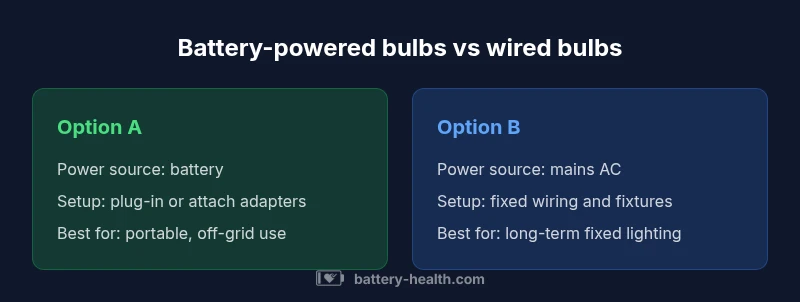
| Feature | Option A: Battery-powered bulbs | Option B: Traditional wired bulbs |
|---|---|---|
| Power Source | Battery-powered cells | AC mains supply |
| Installation | Plug-in or screw-in adapters | Wired in fixtures or sockets |
| Initial Cost | Moderate for wireless kits | Lower upfront for standard bulbs |
| Running Cost | Variable, dependent on replacement and recharge | Largely stable with minimal upkeep |
| Lifespan & Replacement | Battery packs and bulbs require periodic swaps | Bulb life depends on usage, generally longer between replacements |
| Brightness Consistency | Dips with low battery, may vary by charge | Typically stable when connected to mains |
| Best For | Portable, off grid, emergency lighting | Long term fixed lighting in reliable power environments |
| Environmental & Safety Notes | Battery disposal required; recycling important | Lower electrical fire risk but battery hazards apply |
Upsides
- No rewiring needed for many setups
- Portable and flexible lighting options
- Fast deployment in emergencies or temporary spaces
- Backups available during power outages
Weaknesses
- Higher upfront cost for high quality wireless kits
- Battery replacements add ongoing maintenance
- Brightness can fluctuate with battery level
- Care needed for battery safety and disposal in some regions
Battery-powered bulbs plus wired options each excel in different contexts; choose based on power reliability and mobility needs
Opt for battery-powered bulbs when portability and quick setup matter most. Choose wired bulbs for stable performance, long-term use, and lower maintenance in powered spaces.
FAQ
What is battery and bulbs plus and who should consider it?
Battery and bulbs plus refers to lighting setups that pair battery power with bulbs. It is ideal for off-grid spaces, temporary installations, or anywhere you want rapid setup without wiring. Consider this option if you need portable lighting and quick deployment, while wiring remains a strong choice for permanent rooms.
Battery and bulbs plus describes portable lighting using batteries. It is good for off-grid use and quick setup, while wired lighting is better for permanent installations.
Do I need special chargers for battery bulbs plus?
Most battery bulbs plus setups require a compatible charger or a battery pack designed for the device. Check the manufacturer's recommendations to ensure safety and optimize run time. Using nonstandard chargers can reduce battery life and compromise performance.
Most setups need a compatible charger. Always follow the manufacturer guidelines to protect the battery and maximize runtime.
Are battery-powered bulbs energy efficient compared to traditional bulbs?
LED based battery bulbs are generally energy efficient and benefit from ongoing advances in LED tech. They can offer excellent lumen per watt performance, especially when paired with well matched batteries. However, overall efficiency also depends on battery management and usage patterns.
LED battery bulbs are usually energy efficient, but performance depends on battery management and usage.
Can battery bulbs replace all traditional bulbs in a home?
In many homes, battery bulbs can supplement traditional lighting, particularly in areas without reliable power or for temporary setups. They generally cannot replace all wired bulbs in spaces that require constant brightness, dimming control, or color tuning without additional hardware.
They can supplement but may not replace all wired lighting, especially for constant brightness and dimming needs.
What should I consider for disposal at end of life?
When ending use, recycle batteries through local programs and follow bulb disposal guidelines. Batteries and bulbs may have separate take back options, so check local waste management rules to minimize environmental impact.
Recycle batteries via local programs and follow local disposal rules for bulbs and batteries.
Quick Summary
- Assess power availability before buying
- Balance upfront cost with replacement cadence
- Prioritize safety and proper disposal planning
- Select a hybrid approach if needed for flexibility