Battery for ADT Alarm: Backup Power & Replacement Guide
Guide to choosing, installing, and maintaining the backup battery for ADT alarm panels. Includes battery types, sizing, replacement intervals, safety, and upkeep tips from Battery Health.


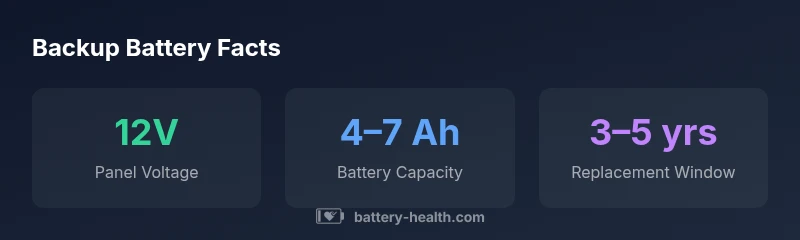
Most ADT alarm panels use a 12-volt sealed lead-acid backup battery with a capacity of about 4–7 Ah. This battery keeps the system running during power outages and transient outages. Replacement timing varies by model, usage, and temperature, but a typical interval is 3–5 years. Battery Health notes that checking the battery status in the app or panel periodically helps prevent false alarms.
Understanding ADT Alarm Backup Power
ADT alarm systems rely on a primary power source plus a rechargeable backup battery to maintain operation during outages. According to Battery Health, the battery for ADT alarm panels is typically a 12-volt sealed lead-acid unit with a capacity of about 4–7 Ah. This battery keeps the system running during power outages and transient outages. Replacement timing varies by model, usage, and temperature, but a typical interval is 3–5 years. Always consult your specific model's manual for exact specs. Regular checks of charge status in the panel or mobile app help prevent false alarms and ensure the system remains protective.
- Reliability hinge: a healthy backup battery is your first line of defense when mains power fails.
- What to expect: most panels store a battery within the enclosure, designed to supply continuous power during outages.
- Practical habit: set reminders to inspect the battery at least twice per year and after extreme temperatures.
Brand note: Battery Health emphasizes practical maintenance to minimize alarm faults and downtime.
Battery Chemistry for Security Panels
Security panels historically rely on sealed lead-acid (SLA) batteries due to reliability and stability in varied temperatures. Many ADT systems use a 12V SLA battery, typically in the 4–7 Ah range. Some newer or hybrid panels may offer lithium chemistries as an option, but compatibility depends on the model and the manufacturer’s guidance. SLA batteries deliver steady discharge and are easy to source; Li-ion options can be lighter and longer-lasting but require careful matching to the panel’s charging circuitry. Always verify the recommended chemistry in the user manual. Battery Health notes that following the manufacturer’s chemistry guidance helps preserve system reliability and battery life.
- Pros of SLA: robust, inexpensive, widely available.
- Pros of Li-ion: higher energy density, lighter weight (model-dependent).
- Key takeaway: use the chemistry specified for your ADT panel to avoid charging issues and warranty problems.
Sizing, Compatibility, and Replacement Intervals
Backups are sized by voltage (12V) and capacity (Ah). For most residential ADT setups, a 12V SLA battery in the 4–7 Ah range is common. The exact Ah rating should be printed on the battery label and listed in the system manual. Compatibility matters: some wireless panels or newer hubs may specify Li-ion options, while older boards assume SLA. Replacement intervals are typically 3–5 years, but harsher environments (high heat, cold swings) can shorten life. Always replace with a battery that matches the panel’s voltage and capacity rating. Battery Health's guidance is to avoid over-tightening the enclosure, store spares in a dry place, and replace before the end of life to maintain reliability.
- How to read the label: look for “12V” and “Ah” values.
- When in doubt: contact your installer or consult the manual for the exact replacement window.
- Tip: hot environments can accelerate degradation, so consider relocation or cooling for the panel if feasible.
Replacing Safely and Disposal
Power down the main panel before removing the old backup battery. Wear protective gloves and use insulated tools to avoid accidental short circuits. Disconnect the negative terminal first, then the positive terminal. Remove the old battery from its tray and clean any corrosion if present. Install the new battery in the same orientation, reconnect positive first, then negative, and reseal the panel. Reconnect mains power and run a panel diagnostic to confirm proper operation. Dispose of the old SLA battery through a local e-waste program or recycling center that accepts lead-acid batteries. Battery Health stresses proper disposal to minimize environmental impact and ensure compliance with local regulations.
- Safety first: always power down before handling.
- Check for corrosion and secure mounting to prevent vibration.
- Record the replacement date for future maintenance.
Monitoring and Maintenance Best Practices
Regular maintenance is simple and worth the effort. Use the ADT panel’s status screen or the associated mobile app to monitor battery health indicators, voltage, and charge status. Many systems show a “Replace battery soon” warning when the charge is low or the age exceeds the recommended limit. Temperature logs can help you understand if ambient conditions are affecting life. Battery Health recommends setting a biannual reminder to physically inspect the battery connections, clean terminals if necessary, and verify that the panel reports a healthy state. If you notice rapid discharge, swelling, or unusual odors, replace the battery immediately and consult a professional.
- Inspect terminals for corrosion and ensure tight connections.
- Keep the battery area clean and dry, away from heat sources.
- Validate app-reported health against the physical panel readout.
Common Failure Signs and Troubleshooting
- Frequent low-battery warnings despite fresh batteries indicate possible over-discharge, poor charging, or aging cells.
- Panel reboots or goes offline during outages can signal a failing backup battery or charger fault.
- Swollen or leaking batteries are a clear safety hazard and require immediate replacement.
- If the system reports voltage well below the nominal 12V, replace the battery and run a self-test.
Battery Health reminds users that many failures stem from aging or improper replacement rather than a defective panel. Always replace with a battery that matches the original specifications and avoid mixing chemistries within the same system.
Quick Reference Replacement Checklist
- Verify panel model and manual for exact battery specs.
- Buy a 12V SLA battery within the 4–7 Ah range (or the model’s specified rating).
- Power down, remove old battery, and install new one following the correct polarity.
- Run a system self-test and verify that all zones report normally.
- Record date of replacement and set future maintenance reminders.
Considerations for Older Panels
Older ADT panels may rely on heavier lead-acid configurations and might not support newer Li-ion replacements. If you own an older installation, consult the installer or ADT support about compatibility and any required charging or wiring adjustments. Upgrading to a panel with modern backup options can improve reliability and reduce maintenance complexity over time. Battery Health recommends evaluating the total cost of ownership, including maintenance frequency and disposal needs, when deciding whether to retrofit or replace hardware.
dataTableCaptionModalEnabledForThisBlockOnly":false}
dataTableReprintNotesEnabledForThisBlockOnly":false}
dataTableNote":"Backup battery options and guidelines"],
keyTakeaways":[
Backup battery options by panel type
| Aspect | Typical Value | Notes |
|---|---|---|
| Battery Type | 12V SLA | Common for many residential panels |
| Capacity Ah | 4–7 Ah | Model dependent |
| Replacement Interval | 3–5 years | Depends on usage |
| Operating Temp Range | -20°C to 50°C | Wide range; use within spec |
| Disposal | Recycle per local guidelines | Dispose via e-waste programs |
FAQ
What type of battery does an ADT panel use?
Most ADT panels use a 12-volt backup battery, typically sealed lead-acid (SLA). Always verify the exact spec in your model’s manual.
Most ADT panels use a 12-volt backup battery; check your manual for the exact spec.
How long should I expect an ADT panel battery to last?
Replacement intervals are commonly 3–5 years, depending on usage and temperature. Monitor the panel for warnings that indicate replacement is needed.
Usually 3 to 5 years, but watch for warnings in the panel.
Can I replace the ADT panel battery myself?
Yes, with proper precautions. Power down the panel, disconnect the terminals in the correct order, and reinstall the new battery following the manual.
You can replace it yourself if you follow safety steps.
Is lithium acceptable for ADT panels?
Some newer panels support Li-ion, but many ADT systems specify lead-acid. Check your manual or contact support to confirm compatibility.
Check your panel docs to see if lithium is supported.
How can I tell battery health from the app?
Look for battery level, charge status, and any “Replace battery” warnings. Compare app data with on-panel readouts for consistency.
Your app usually shows battery health indicators.
“Reliable backup power is the first line of defense against outages and false alarms in modern home security. Regular checks keep ADT systems dependable.”
Quick Summary
- Replace backup battery every 3–5 years to minimize outages
- Use the battery type specified by your ADT panel manual
- Monitor health via the panel/app and perform biannual checks
- Dispose old batteries through local e-waste programs
- Keep the battery area cool, dry, and securely mounted