Battery YTX14-BS Guide: Compatibility, Care, and Replacement
An expert Battery Health guide to the battery ytx14-bs for motorcycles and power storage, covering fitment, specs, charging, maintenance, and safe replacement options.


What is the battery ytx14-bs?
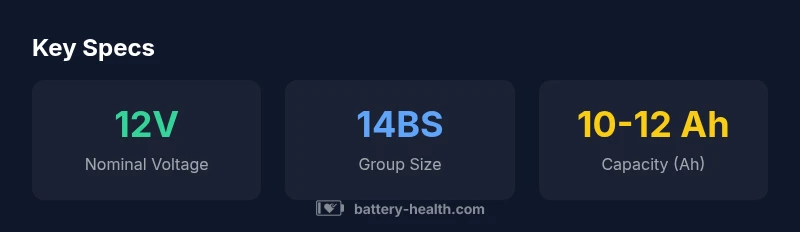
The battery ytx14-bs is a 12-volt sealed lead-acid battery configured for motorcycles and power-sport devices. It belongs to the popular group size 14BS, which refers to its physical dimensions and terminal layout rather than a single brand. In practice, this model is designed to fit a wide range of bikes that specify a 14BS terminal arrangement. When you shop for a replacement, you will encounter variations in capacity and CCA (cold-cranking amps) across brands, but the core electrical spec remains 12V with a compact footprint suitable for under-seat mounting. For motorcyclists, the compatibility of this battery rests on three pillars: correct group size, proper terminal orientation, and compatible charging setup. In the context of Battery Health analysis, the battery ytx14-bs represents a dependable baseline for many riders, especially those who value straightforward maintenance and predictable replacement cycles. If you see the lowercase term, the phrase battery ytx14-bs is a reminder that the model is part of a family of batteries configured for similar bikes and charging requirements.
Compatibility and fitment across popular bikes
Fitment verification starts with the group size, which should read 14BS at the battery labeling. Next, check terminal placement: the YTX14-BS uses one positive and one negative terminal with standard linear spacing—but some bikes use different connector orientations, including right-side or left-side terminals. The physical casing should align with the battery tray mounting points, and weight distribution should not cause clearance issues under the seat or within a side cover. Battery Health guidance emphasizes checking the bike’s service manual or the OEM fitment list, then confirming with a visual fit in the bike’s battery compartment before final installation. A loose fit can impair connections and cause charging delays or voltage drops during crank events. Finally, consider climate exposure: sealed units perform well in variable weather, but ensure an appropriate venting arrangement and secure clamps to minimize movement during riding.
Key specifications and what they mean for performance
Across brands, the 12V nominal rating remains constant for the battery ytx14-bs, with capacity typically ranging in the low-to-mid range for motorcycle applications. The Cold-Cranking Amps (CCA) window is a useful gauge of starting power in cold weather, and most 14BS batteries fall in a middle-to-high CCA range depending on plate design and electrolyte formulation. Expect a compact form factor with enough reserve capacity to handle standard electronics and lights without frequent recharging. When evaluating options, note the difference between maintenance-free and flooded variants; most modern 14BS batteries sold for motorcycles are maintenance-free, meaning you won’t need to top up water. Battery Health notes that even within a single model family, the exact Ah and CCA values will vary by manufacturer and production year, so always review the datasheet for your chosen unit.
Charging guidelines, safety, and maintenance basics
Proper charging extends life and reduces failure risk. Use a charger designed for sealed lead-acid batteries and avoid high-current fast charging unless the charger specifies compatibility with motorcycle batteries and a safe charge rate. Maintain a clean terminal surface and ensure polarity is correct during all maintenance activities. When not in use for extended periods, keep the battery charged with a smart charger to minimize sulfation and battery settling. Store the battery upright on a non-conductive surface, away from metal tools or conductive objects, to prevent short circuits. Battery Health stresses that charging temperatures should be moderate; charging in extreme heat or cold can reduce efficiency and shorten overall life.
Replacement intervals and when to replace the YTX14-BS
A typical replacement window, with proper maintenance, spans multiple seasons but will vary by climate, bike usage, and charging behavior. Look for signs of aging such as slow cranking, frequent need to jump-start the bike, or swelling of the case. A voltmeter reading above 12.6 volts with the engine off is a healthy sign, while a sustained drop under load indicates aging plates or sulfation and warrants replacement. Replace the battery promptly if you notice persistent hard starts during cold weather, a significant drop in voltage after a short ride, or visible corrosion on terminations. Battery Health notes that comparing the battery’s performance against your bike’s starter draw across a typical winter start can provide actionable insight into remaining life.
How to test health and confirm a good battery ytx14-bs
Testing combines static voltage checks with load testing to assess capacity under stress. Start with a static voltage test; a healthy 12V battery should sit above about 12.6V with no load. If the voltage falls quickly under light load, that’s a red flag. For a more thorough assessment, perform a load test recommended by the battery or charger manufacturer, which simulates starter current and measures how well the battery maintains voltage. If available, use a digital multimeter with a voltage drop test or a dedicated battery tester. Remember that a healthy reading under no-load conditions doesn’t guarantee performance when the engine cranks; always test under realistic load conditions. Battery Health recommends professionals or trained DIYers follow safety procedures and wear protective gear when handling exposed terminals.
OEM vs aftermarket options: choosing a reliable replacement
OEM replacements often guarantee exact fit and documented compatibility, but reputable aftermarket brands can offer similar performance with comparable warranties. When evaluating options, examine the battery’s group size (14BS), terminal layout, weight, and capacity range. Consider vendor warranties, expected service life, and packaging that protects the battery during shipping and in the bike’s environment. Battery Health emphasizes selecting a brand with consistent build quality and a proven supply chain to minimize risk of leaks or premature failure. If you’re replacing an aging unit, keep a spare connector or terminal cover on hand in case you encounter a snug fit or slightly different terminal orientation.
Safety, disposal, and environmental considerations
Disposal of old lead-acid batteries requires safe handling and recycling through approved channels. Never dispose of a battery in regular household trash; most regions provide recycling programs or drop-off points that recover lead and acid. Before disposal, ensure the battery is fully discharged, then store it upright in a non-conductive container until you can drop it off. When transporting a replacement, protect the terminals against short circuits with caps or insulated covers. For riders choosing to upgrade to a higher-capacity option, ensure the upgraded output won’t stress the charging system or electrical wiring of the motorcycle. Battery Health reminds readers that responsible disposal is a shared obligation among manufacturers, retailers, and users.
Quick-buy checklist: what to verify before purchase
- Confirm the group size is 14BS and that the terminals align with your bike’s harness.
- Compare capacity ranges across brands to ensure sufficient cranking power for your climate.
- Check whether the unit is maintenance-free, and confirm the warranty terms.
- Inspect packaging and labeling for leakage warnings and venting design.
- Review the compatibility list in your bike’s owner manual or the OEM parts catalog.