How to Charge a Lawn Mower Battery: A Step-by-Step Guide
Learn how to safely charge a lawn mower battery, whether it's lead-acid or Li-ion. This step-by-step guide covers tools, safety, charging tips, testing, and maintenance for reliable yard work.


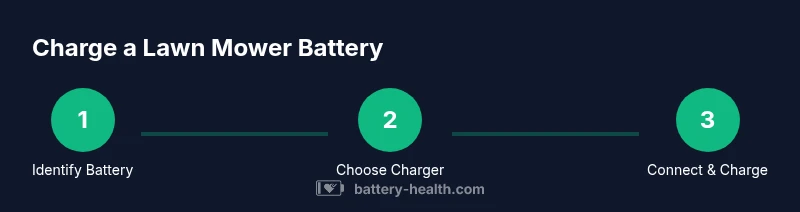
You will learn how to safely charge a lawn mower battery, including identifying battery type, selecting a compatible charger, and steps to connect, charge, and test the battery. Before you start, wear eye protection, unplug accessories, and avoid overcharging by using a charger with automatic cut-off or a timer. This short guide covers safety, tools, and troubleshooting.
Why safely charging lawn mower batteries matters
Charging a lawn mower battery safely is essential for performance, longevity, and personal safety. The wrong charger, an improper connection, or charging outside recommended conditions can shorten the life of the battery or create hazardous situations. According to Battery Health, using a charger that matches your battery chemistry and provides automatic shut-off minimizes the risk of overcharge and sulfation. In practice, this means selecting a charger designed for either lead-acid/AGM packs or lithium-ion packs and following the manufacturer’s guidelines. When you say you want to charge a lawn mower battery, you are replenishing stored energy so the mower can deliver predictable run time, reliable starting power, and safe operation. Start by planning the session in a well-ventilated area, with the mower unplugged from any accessories and the battery accessible. A careful setup reduces fumes, heat buildup, and the chance of accidental short circuits.
According to Battery Health, a well-prepared charging session is less likely to cause terminal corrosion or heat buildup, especially with older batteries. Listen for bubbling or a strong odor during charging; if either occurs, stop and recheck your connections and charger settings. The goal is a stable, gradual return to full capacity, not a quick burst of energy that stresses the cells.
If you are new to lawn equipment, take time to read the mower’s manual and the battery’s label. The exact safety steps can vary by model and chemistry, so use the information that matches your equipment. Finally, keep kids and pets away during charging to reduce the risk of accidents.
Understanding battery types common in lawn mowers
Most riding lawn mowers and push mowers use sealed lead-acid (SLA) or AGM batteries, while newer cordless models rely on lithium-ion packs. Lead-acid and AGM batteries tolerate charging with a constant voltage profile and are relatively forgiving of small mistakes, but they can produce hydrogen gas and acid spills if abused. Lithium-ion cells, on the other hand, require strict charging control to prevent overvoltage, thermal runaway, or capacity loss. The Battery Health analysis shows that using the wrong charger or charging at extreme temperatures can accelerate degradation, regardless of chemistry. Before you start, identify the battery type by checking the label or the mower manual, and note the nominal voltage (usually twelve volts for small mowers, sometimes twenty-four volts in larger systems). This helps you choose the correct charger and adjust charging time accordingly. Remember: chemistry dictates the safe charging profile, so treat Li-ion and lead-acid differently.
Some mowers mix battery chemistries across multiple cells or packs; in those cases, ensure every pack is matched and charged with the right profile. If you’re unsure, contact the manufacturer or a qualified technician before charging.
Choosing the right charger for your mower battery
Selecting a charger that matches your battery’s chemistry is the single most important decision in a safe charging session. Look for a unit that is explicitly labeled for your battery type and that offers automatic shut-off when the battery reaches a full charge. A smart charger with a programmable profile can switch between constant current and constant voltage modes, which reduces heat and minimizes sulfation in lead-acid packs. If you have multiple batteries, consider a charger that supports two batteries simultaneously with individual monitoring. Avoid car battery chargers or universal chargers that lack chemistry recognition. Always verify the charger’s voltage matches the battery spec, and avoid chargers that push high current into a depleted pack, especially in hot environments.
For Li-ion packs, prefer chargers with cell balancing features and temperature monitoring. For SLA or AGM, look for temperature compensation and an end-of-charge ripple check. If your mower has removable packs, you may want a charger dedicated to each pack to avoid cross-talk and mis-sizing.
Safety first: protective gear and workspace setup
Before you pick up tools, set up in a clean, dry workspace away from open flames or sparks. Wear safety glasses and insulated gloves to protect against acid splashes (for flooded lead-acid) and accidental arcing. Remove jewelry and loose clothing that could contact terminals. Ensure the mower is off, unplug any accessories, and disconnect the battery from the mower if the procedure allows. Ventilate the area to disperse any fumes, and place the charger on a non-flammable surface. Keep a fire extinguisher or baking soda handy in case of minor sparks.
Avoid charging near flammable liquids or solvents, and never charge a damaged battery. If you smell rotten eggs or see smoke, stop immediately and move to a well-ventilated area.
Preparing the battery and charger for charging
Start by inspecting the battery: look for swelling, cracks, or leakage. If you notice any of these signs, do not charge and consult a professional. Clean the battery terminals with a dry brush or rag to remove corrosion, then recheck for a tight, clean fit when you reconnect. For flooded lead-acid batteries, check the water level and top up with distilled water if needed, never overfill. Attach the negative cable first, then the positive, to minimize the risk of short circuits. Keep the charger away from metal surfaces and water, and verify the charger setting is appropriate for the chemistry before powering on.
If you see signs of corrosion despite cleaning, use a terminal cleaner or a corrosion spray after the initial charge to maintain good contact.
Step-by-step charging process (high-level overview)
Understanding the charging profile helps you avoid damage. Most batteries in lawn equipment accept charging via a profile that starts with a brief constant-current phase, then transitions to a constant-voltage phase as the battery approaches full capacity. Monitor the charger for heat, unusual noises, or a decline in current flow, which can indicate a problem. Do not rush the session; allow the charger to function as designed and pause if temperatures rise. When charging is complete, remove the charger and let the battery rest for a few minutes before testing. This approach minimizes heat buildup and helps ensure a full, healthy state of charge.
If the charger offers a test or diagnostic mode, run it to confirm the status of each cell or block.
Testing and maintaining the battery after charging
After charging, verify the resting voltage with a multimeter and compare it to the battery’s standard voltage specification. A healthy twelve-volt SLA battery typically rests around twelve point six volts when fully charged, and Li-ion packs have their own nominal values per cell; consult the manual. If the resting voltage seems low, perform a gentle load test by turning on the mower briefly and observing performance. For lead-acid batteries, check electrolyte levels and top up with distilled water if using a flooded type, following the safety guidelines. Clean terminals again and secure the battery back in place. Regular inspections after charging extend service life and reliability.
Record the resting voltage and any observations to track degradation over time.
Troubleshooting common charging issues
If the charger does not power on, verify the outlet is live and the charger is plugged in correctly. If the battery refuses to accept charge, inspect cables for corrosion and ensure the battery is not permanently sulfated or damaged. A charger showing an error code or never reaching the full voltage usually means a compatibility issue or a degraded battery. If you notice a foul smell, swelling, or excessive heat, stop immediately and disconnect. Persistent issues may require battery replacement or professional testing to assess capacity and safety.
Keep a log of symptoms and charging times to help diagnose recurring problems.
Maintenance tips to extend battery life
To get the most life from a lawn mower battery, avoid deep discharges and store the battery at a moderate, partial state of charge in off-season. Keep terminals clean and tight, and apply a small amount of dielectric grease to prevent corrosion. When storing, use a dedicated smart charger or a maintenance charger to hold the battery at an optimal voltage. Regularly calibrate your charging setup against the mower’s manual and replace aging batteries at recommended intervals. The Battery Health team recommends documenting charging sessions and testing results so you can track performance over time and plan proactive replacements as needed.
Tools & Materials
- Charger compatible with lawn mower battery chemistry(Ensure voltage and current match the battery type; look for automatic shut-off)
- Digital multimeter(For verifying resting voltage before and after charging)
- Safety glasses(Eye protection during handling and connection checks)
- Insulated gloves(Protect hands from acid and arcing)
- Soft brush or rag(Clean terminals and remove corrosion)
- Distilled water(Top up flooded lead-acid batteries only)
- Terminal cleaner (optional)(Helps remove stubborn corrosion)
- Dry rag and container for handling(Keep work area clean and dry)
Steps
Estimated time: 60-90 minutes
- 1
Identify battery type and read the manual
Locate the battery label or consult the mower’s manual to confirm whether you have a lead-acid, AGM, or lithium-ion pack. Note the nominal voltage and any special charging notes. This ensures you choose the correct charger and safe charging profile.
Tip: If in doubt, contact the manufacturer before connecting any charger. - 2
Move mower to a safe workspace
Relocate the mower to a dry, well-ventilated area away from ignition sources. Remove any metal jewelry and ensure the area is clear of liquids.
Tip: Use a non-slip mat to prevent the charger from sliding. - 3
Inspect and prepare battery terminals
Look for visible corrosion, cracks, or swelling. Clean terminals gently with a dry brush and dry rag; ensure connections will be tight when reattached.
Tip: Do not reuse damaged connectors; replace them before charging. - 4
Disconnect safety interlocks and power
If possible, disconnect the battery from the mower or disable the ignition to prevent accidental starts during charging.
Tip: Double-check that the mower is fully powered down before touching terminals. - 5
Connect charger to battery correctly
Attach the charger’s negative lead to the battery’s negative terminal, then the positive lead to the positive terminal. Ensure solid, clean contact and avoid any shorting paths.
Tip: If you see sparks or heat, stop and re-check connections. - 6
Set charger and start charging
Configure the charger to the correct chemistry and initiate charging. Monitor the process for heat, unusual noises, or rapidly changing current.
Tip: Do not leave unattended for long periods; check every fifteen minutes initially. - 7
Finish charging and rest the battery
When the charger indicates full, disconnect and allow the battery to rest for several minutes before testing.
Tip: A short rest helps stabilize the voltage reading. - 8
Test voltage and reassemble
Measure resting voltage with a multimeter and compare to the spec. Reconnect the battery to the mower and secure everything before use.
Tip: Document the final voltage for future reference.
FAQ
What types of lawn mower batteries can be charged at home?
Most mowers use sealed lead-acid or AGM batteries, while cordless models use lithium-ion packs. Each type needs the correct charger and profile. Always check the manual to confirm chemistry before charging.
Most lawn mowers use lead-acid or lithium-ion batteries, so choose the right charger for your pack and follow the manual.
Is it safe to charge a lawn mower battery indoors?
Charging indoors is acceptable if the space is well-ventilated, there are no flammable materials nearby, and you follow the charger’s safety instructions. Ensure proper containment in case of leaks.
Yes, indoors is okay when you have good ventilation and follow safety guidelines.
How long does it take to charge a lawn mower battery?
Charging time varies by battery size and chemistry and by charger performance. Expect longer sessions for lead-acid packs and shorter ones for Li-ion, but refer to the charger’s and battery’s specifications for estimates.
It depends on the battery and charger; consult the manual for typical durations.
What should I do if my battery won’t accept a charge?
Check all connections for corrosion, verify the charger is correct for the battery chemistry, and test the resting voltage. If the voltage remains low or the battery shows signs of damage, replacement may be necessary.
First, check connections and charger compatibility, then test voltage; if it’s still low, consider replacement.
Can I recharge a lawn mower battery after storage?
Yes, but ensure the battery is returned to a proper state of charge before use. Re-charge after storage to prevent deep discharge, and store in a cool, dry place with a suitable maintaining charger.
Recharge after storage to prevent deep discharge and keep it in a temperature-controlled place.
What precautions prevent battery damage during charging?
Use the correct charger, wear safety gear, work in a ventilated area, disconnect the mower, and avoid charging in extreme temperatures. If you notice heat, odors, or swelling, stop and reassess.
Use the right charger, stay safe, and stop if you notice heat or swelling.
Watch Video
Quick Summary
- Match charger to battery chemistry before charging.
- Prioritize safety gear and a clean workspace.
- Monitor for heat, sound, and voltage changes during charging.
- Test resting voltage after charging to confirm full capacity.
- Store and maintain batteries to extend life.