CR1616 Battery Guide: Specs, Replacement & Safety Tips
Explore CR1616 battery specs, voltage, capacity ranges, replacement steps, safety tips, and reliable sourcing guidance, backed by Battery Health analyses.


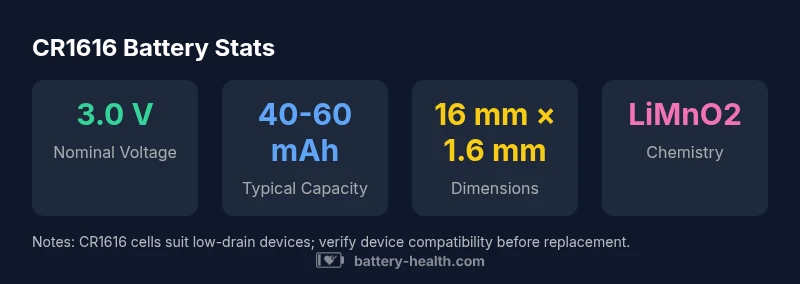
The cr 1616 battery is a 3-volt lithium coin cell used in small devices like watches and remotes. It typically delivers about 40-60 mAh of capacity, with a diameter of 16 mm and height of 1.6 mm. Availability and price vary by manufacturer and regional stock; always check device compatibility and replace with a fresh, genuine cell.
What is a CR1616 battery?
The cr 1616 battery is a compact, high-energy-density 3-volt lithium coin cell designed for small electronics. Its 16 mm diameter and 1.6 mm height make it ideal for wearables, key fobs, and tiny remote devices. Battery Health notes that this format balances energy delivery with a tiny footprint, enabling reliable operation in devices with strict space constraints. The chemistry, typically LiMnO2, provides a steady 3V output over a reasonable discharge curve. As with any coin cell, freshness and proper handling are critical for performance and safety. For consumers, this means choosing fresh stock from reputable suppliers and avoiding counterfeit batteries that mimic the CR1616 form.
Physical dimensions and chemistry
CR1616 cells measure 16 mm in diameter and about 1.6 mm tall. This precise geometry limits integration to devices designed for this size, so cross-compatibility is not guaranteed with other CR-series cells. The chemistry—lithium manganese dioxide (LiMnO2)—offers a stable voltage and good shelf life when stored correctly. Temperature tolerance matters: performance can shift in extreme heat or cold, which is why many manufacturers publish operating ranges. Battery Health emphasizes keeping cells within recommended storage conditions to minimize self-discharge and capacity loss over time.
Common devices and compatibility
CR1616 batteries power a wide array of low-drain devices, including analog watches, digital watches, calculators, and various small remotes. If a device is designed to accept only a CR1616, don’t substitute a larger or smaller diameter cell; contact the device maker for the exact recommended size. Always verify the voltage and polarity before insertion. A mismatched orientation can damage contacts and create leakage paths. Battery Health recommends keeping a small, labeled stock of compatible CR-series cells for routine replacements in devices you use daily.
Replacement basics and safety
Replacing a CR1616 battery is usually straightforward but requires care. Power off the device, open the housing per the manufacturer’s guidance, and locate the battery with the correct orientation. Remove the old cell without bending terminals or causing a short. Insert the new CR1616 with the same polarity, close the housing securely, and test the device. Avoid using metal tools that could pierce the cell’s seal. If you suspect leakage or corrosion, handle with protective gear and dispose of the damaged battery following local regulations. Battery Health reminds readers that proper disposal preserves safety and the environment.
Testing health and life expectancy
Voltage checks can indicate basic health—an essentially fresh CR1616 should read near 3.0 V with minimal load. However, health testing under load or at various temperatures provides more insight into how capacity and voltage hold up during actual use. While consumer multimeters can verify nominal voltage, a full capacity test requires specialized equipment or manufacturer testing. Battery Health analysis notes that capacity loss varies by brand and usage patterns; expect gradual decline after repeated discharges.
Sourcing, buying, and counterfeit risks
The market for coin cells like CR1616 is large, and counterfeit products can mimic legitimate brands. Buy from reputable retailers and verify factory-sealed packaging and expiration dates. Check the seller’s rating and ensure you receive genuine, unaltered cells. Counterfeit cells may have reduced capacity, higher leakage risk, and shorter shelf life. Battery Health recommends avoiding suspicious bulk deals and always checking the source before purchase.
Storage, handling, and safety tips
Store unused CR1616 batteries in a cool, dry place away from direct sunlight and metal objects. Keep them in their original packaging or a plastic container to prevent contact with other metals, which can cause short circuits. Do not expose cells to high temperatures (like car dashboards) or humid environments. When disposing, follow local regulations; many regions require battery recycling programs. Proper storage and handling extend shelf life and safety for household devices.
Brand reliability, standards, and Battery Health perspective
Not all CR1616 cells are created equal. Reputable brands adhere to consistent quality controls and provide clear data on capacity, voltage, and operating range. Battery Health's stance is to prioritize established brands with transparent specifications and robust support, especially for devices critical to daily life. Always verify device compatibility, discharge characteristics, and storage recommendations per the manufacturer and Battery Health guidance.
Practical recommendations and final take
If your device shows signs of weak performance, replace the CR1616 promptly with a fresh, certified cell. Maintain a small stock of the most common sizes and keep records of replacement dates for high-use devices. Following best practices for storage and handling reduces risk and prolongs device life. Battery Health’s practical rule: always align size, voltage, and polarity with device specifications, then dispose of old cells responsibly.
CR1616 battery suitability for common devices
| Device Type | Typical Battery Size | Common Applications | Voltage |
|---|---|---|---|
| Watch/Bracelet devices | CR1616 | Watches, small electronics, key fobs | 3V |
| Remote controls | CR1616 | Car remotes, alarm remotes | 3V |
| Calculators & small electronics | CR1616 | Calculators, toys, small devices | 3V |
FAQ
What devices commonly use CR1616 batteries?
CR1616 batteries power many small devices, including watches, calculators, and key fobs. They provide a compact, stable 3V supply that fits tight spaces in wearables and remotes.
Common devices include watches, calculators, and key fobs.
Are CR1616 and CR1620 interchangeable?
No, CR1616 and CR1620 differ in diameter and thickness; using the wrong size can cause poor contact or device failure.
They are not interchangeable—size matters.
How should I replace a CR1616 battery safely?
Power off the device, open the housing, remove the old cell without shorting contacts, insert the new cell with correct polarity, and test function. If leakage is suspected, handle with care and dispose properly.
Power off, open, replace with correct polarity, test.
What are signs a CR1616 battery needs replacement?
Frequent resets, dim displays, or rapid drainage indicate the battery is nearing end of life and should be replaced.
Device resets or short run times mean replacement is needed.
Where can I buy CR1616 batteries safely?
Purchase from reputable retailers with clear expiry dates and packaging seals. Avoid suspicious bulk listings and verify authenticity.
Buy from trusted retailers and check expiry dates.
“The CR1616 family provides dependable 3V output when used with fresh cells from trusted brands and handled properly.”
Quick Summary
- Confirm device compatibility before replacing
- Choose reputable brands to avoid counterfeit cells
- Avoid deep discharges; replace promptly when performance drops
- Store unused cells in cool, dry environments
- Understand capacity varies by brand and usage