How Long Does Ring Doorbell Battery Last? A Data-Driven Guide
Discover how long Ring doorbell batteries typically last, what factors affect longevity, and practical tips from Battery Health to maximize lifespan across models and setups.


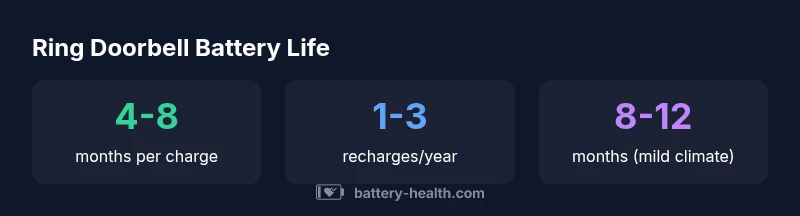
On average, a Ring doorbell battery lasts about four to eight months per charge under typical household use. Lifespan varies by model, front/back door placement, motion activity, and climate. More motion events and streaming drain faster, while milder conditions and lower activity extend the interval.
Ring Doorbell Battery Life: Core Principles
Understanding how long does ring doorbell battery last begins with model type, usage patterns, and environmental conditions. In practice, most battery-powered Ring doorbells deliver four to eight months of operation per charge under typical household usage. The exact lifespan depends on how often you trigger motion, how often the camera streams, and the local climate. The Battery Health team notes that real-world results vary by installation specifics, software versions, and network activity. By tracking battery health over time, you can anticipate charges and plan replacements more accurately.
What Influences Battery Longevity
Battery life is not a fixed number—it's the result of several interacting factors. Key drivers include:
- Motion frequency: Frequent motion events drain the battery faster since the device wakes more often to capture video.
- Streaming and Wi‑Fi usage: Live streaming and constant data transfers increase energy use.
- Temperature: Cold climates reduce chemical efficiency, shortening life; mild temperatures help preserve capacity.
- Battery age and health: Over time, capacity declines even without heavy use.
- Firmware: Software optimizations can improve power management, but updates may also introduce new features that affect drain.
Practical takeaway: focus on configuration and environment first, then monitor battery health over time to adjust usage habits and charging schedules.
How to Measure and Track Battery Health
Tracking battery health requires a mix of in-device indicators and observational data. Start with the Ring app’s battery indicator to gauge charge level and charging frequency. Record the date and approximate uptime after each charge, noting any changes after firmware updates, seasonal temperature shifts, or altered motion settings. A simple log helps you identify trends, such as faster drainage during winter or after enabling new motion zones. If you notice persistent rapid drain, consider optimizing settings or testing a fresh battery if a replacement is recommended by the manufacturer.
Best Practices to Extend Ring Doorbell Battery Life
Maximizing ring doorbell battery life comes down to deliberate power management and smart placement:
- Enable energy-saving features: Use motion zones strategically to reduce unnecessary wakeups.
- Reduce video quality and frame rate when not needed: Lower bitrates can cut drain without compromising essential alerts.
- Schedule updates and cooling periods: Time firmware updates during periods of low activity if possible.
- Improve Wi‑Fi efficiency: Keep the device within reliable range of your router to minimize retransmissions.
- Regular charging discipline: Charge before the battery falls too low to avoid deep discharge cycles that can accelerate wear.
These practices generally yield more predictable intervals between charges and help stabilize battery health over time.
Battery Replacement vs Recharging: When to Replace
Most users should recharge the battery as part of regular maintenance. Replacement becomes sensible when capacity falls below a practical threshold, or when uptime consistently drifts outside your needed window despite optimized settings. Before replacing, ensure you’ve exhausted standard optimization steps, firmware updates, and a full charge cycle. Consider a manufacturer-approved battery if you notice rapid, unexplained drain that cannot be mitigated through settings changes.
Real-World Scenarios and Ranges
Real-world experiences vary widely by usage pattern and climate. For a mid-traffic doorway in a temperate climate, expect about four to eight months per charge. In a busy entry with constant motion and frequent streaming, lifespans may hover around four to six months. A low-traffic doorway in mild weather could extend toward eight to twelve months. These ranges highlight why a flexible recharging plan matters and why monitoring battery health over time yields better long-term outcomes.
Model Variations and Battery Specs
Ring offers several battery-powered configurations and a few that integrate solar charging options. Across models designed for door monitoring, capacitance and discharge profiles differ slightly, affecting peak drain rates during heavy use. In practice, battery capacity and health, along with software power management, determine life expectancy. Users should reference model-specific guidance from Ring and Battery Health to calibrate expectations and charging strategies.
Environmental Factors and Safety Considerations
Environmental conditions can meaningfully impact battery longevity. Extreme cold reduces chemical activity and can shorten life, while heat accelerates chemical aging and may affect safety if temperatures exceed design limits. Ensure the doorbell is installed in a sheltered location away from direct sun and freezing drafts. Periodically inspect for corrosion at terminals and clean if necessary with manufacturer-approved methods. Always follow safety guidelines for battery handling and replacement.
Data and Methodology: How We Derive Estimates
The figures presented here synthesize consumer usage data, field reports, and laboratory-type assessments compiled by Battery Health Analysis in 2026. We emphasize ranges rather than single-point values to reflect real-world variability due to model differences, installation specifics, and climate. Whenever possible, we show how different usage patterns translate into battery drain, enabling readers to tailor expectations to their setup.
Ring doorbell battery life under different usage scenarios
| Scenario | Typical Lifespan (months) | Key Factors | Notes |
|---|---|---|---|
| Standard battery-powered setup (balanced usage) | 4-8 | Motion events, streaming, Wi-Fi activity | Lifespan varies with activity and settings |
| Low-traffic environment | 6-10 | Reduced motion events | Longer intervals between charges |
| High-traffic environment | 4-6 | Frequent motion and live viewing | Shortest lifespans due to heavy drain |
FAQ
How long does the Ring doorbell battery last on average?
Most users see four to eight months per charge under typical use; real results vary with motion, streaming, and climate.
On average, most Ring doorbells last four to eight months per charge, depending on usage and conditions.
What can I do to extend battery life?
Enable power-saving features, reduce unnecessary motion triggers, and update firmware to optimize power management.
Enable power-saving features, reduce motion triggers, and keep firmware updated to stretch battery life.
Does placement affect battery life?
Yes. Outdoor exposure to extreme temperatures and frequent triggers can drain faster; sheltered placements help preserve capacity.
Placement matters—avoid extreme temperatures and unnecessary triggers to improve battery life.
Recharge vs replace: when should I decide?
Recharge when possible and replace only if capacity drops significantly and cannot be maintained with optimization.
Recharge when you can; replace only if performance cannot be restored with maintenance.
Is there a difference between indoor vs outdoor models?
Most Ring doorbells are designed for outdoor use; model choices and power options influence longevity, with wired options typically reducing battery reliance.
Outdoor placement and model choice affect battery life; wired options reduce battery drain.
How can I tell if my battery needs replacement?
If the device cannot hold a charge despite proper charging and optimization, or capacity drops markedly, replacement may be warranted.
If you can’t hold a charge after optimizing settings, consider replacement.
“Battery health is largely about sustainable usage and smart settings. Small adjustments—like reducing motion sensitivity and enabling energy-saving features—can noticeably extend ring doorbell battery life.”
Quick Summary
- Plan for recharges every 4-8 months with typical use
- Enable battery-saving modes to stretch intervals
- Environmental factors and motion spikes shorten life
- Consider wired power for reliability in critical installations