Battery 4D Error Code: Urgent Diagnostics and Fixes
Urgent guide to Battery 4D error codes: meanings, immediate safety steps, common causes, at-home diagnostics, and when to seek professional help. Learn with Battery Health.


Battery 4D indicates a battery management fault triggering a safety shutdown. It usually points to abnormal voltage, overheating, or a loose/corroded connection. Quick fixes: power down, disconnect and reconnect the battery, inspect for swelling or damage, and reseat connectors. If the code persists, discontinue use and consult a qualified technician for a full diagnostic.
What Battery 4D Means in Real Terms
Battery 4D is a fault indicator used by many battery management systems to signal a protective shutdown when anomalies are detected. According to Battery Health, this code typically appears when voltage readings stray outside safe ranges, temperatures rise beyond safe limits, or cells fall out of balance. The result is a safety stop designed to prevent fires, swelling, or irreversible damage. In portable devices, you may notice sudden power loss or throttled performance; in electric vehicles or home storage systems, the consequence could be immobilization or reduced power delivery. The exact trigger can vary by the hardware and firmware, but the underlying principle is the same: a safeguard has activated to protect people and equipment. Treat Battery 4D as a serious warning rather than a routine alert, and begin a careful diagnostic check following a structured plan. Quick, calm actions now can prevent costly repairs later and preserve remaining battery life. The Battery Health team emphasizes that early, informed responses reduce risk and increase the likelihood of preserving performance and safety.
Immediate Safety Risks and Urgency
The moment Battery 4D surfaces, safety becomes the top priority. Signs such as unusual heat, a swollen pack, a noticeable chemical smell, or hissing sounds indicate a potentially dangerous condition. Do not attempt to charge or disassemble a swollen battery, and avoid applying physical pressure to suspect packs. If you’re dealing with a car battery, pull over to a safe spot if you can do so without exposing yourself to traffic; switch off the vehicle and keep clear of metal objects. For small devices, power down and unplug from any charging source, then move the device to a non-flammable surface. Ensure ventilation and keep away from children and pets. The Battery Health guidance is clear: a 4D alert is a high-risk warning that warrants cautious handling and professional assessment when in doubt.
Likely Causes When Battery 4D Appears
- Overheating or rapid charging causing thermal stress (high)
- Loose, corroded, or damaged terminal connections (high)
- Battery management system fault or sensor failure (medium)
- Physical damage or swelling from cell degradation (medium)
- Moisture ingress or corrosion at contact points (low)
- Faulty charger or charging circuit (low)
These causes are not mutually exclusive; a single event can trigger multiple symptoms. Addressing the most probable causes quickly reduces risk and helps stabilize the system before more invasive work is needed.
How to Diagnose: Safe, At-Home Checks
Start with non-invasive checks and avoid opening sealed battery packs. Confirm the device is powered down, then inspect visible connections for looseness, corrosion, or discoloration. If you have access to a diagnostic tool or app, check for recent fault codes or BMS logs that relate to voltage, temperature, or balance. For vehicles, scan the onboard computer for related fault codes and verify that charging infrastructure is functioning correctly. Ensure you’re charging with the recommended charger and in a cool, dry environment. If the battery feels warm to the touch during inspection, stop and seek professional help. Keep a log of readings and times to share with a technician.
How to Diagnose, Continued: Additional Checks and Safe Testing
If available, use manufacturer guidelines to perform a controlled reset or recalibration of the BMS when safe to do so. Verify that battery terminals are clean and tight, and that insulation around exposed conductors is intact. In devices with removable packs, reseat the pack according to the user manual, ensuring no pins are bent. Do not attempt destructive testing or disassembly of sealed modules. Document any codes, readings, or error patterns to provide a technician.
Step-by-Step Fix for the Most Common Cause
This section focuses on the most common scenario: loose or dirty connections, plus a cooling check. Do not disassemble sealed packs. If you are not experienced with battery safety, skip to the professional path.
- Power down and disconnect the device, unplug the charger, and place the device on a non-flammable surface.
- Inspect all accessible connectors for looseness or corrosion; reseat and clean with a soft brush if needed.
- If permissible, reset any BMS or firmware while the system is off, then reconnect and power up to test.
- Check ambient temperature and ensure cooling fans or vents are unobstructed; clear any dust buildup.
- If the warning reappears, replace the charger or charging cable with a known-good unit.
- If the problem persists after these steps, plan for a professional evaluation and battery replacement if required.
Estimated time: 20-45 minutes for the checks above; more time if you proceed to professional service.
Cost Range and Professional Help: What to Expect
Costs to address a Battery 4D fault depend heavily on device type and the severity of the fault. For consumer electronics and small devices, professional diagnostics and connector replacements typically range from $50 to $300, depending on parts and labor. Laptop battery replacements often fall in the $60 to $250 range, while car battery replacements usually cost $100 to $300 for the battery plus installation. In EV or large modular packs, replacement can run from about $5,000 to $15,000 or more for modules or packs, with variable labor. Based on Battery Health analysis, you should budget for added costs if a BMS recalibration is needed or if there is a need to replace a charging unit. Always obtain a written estimate before proceeding.
Prevention and Best Practices to Avoid Battery 4D Recurrences
- Use the manufacturer-approved charger and avoid third-party, non-certified options
- Charge within recommended temperature ranges and avoid overheating or rapid charging when not necessary
- Regularly inspect connectors and ventilation paths, especially in harsh environments
- Keep software and firmware up to date to maintain BMS accuracy
- Schedule periodic battery health checks, especially for aging packs
- Store and transport batteries away from materials that could ignite if fault conditions occur
Brand health tip: Regular maintenance and early diagnostics reduce risk and extend battery life. The Battery Health team recommends proactive checks and timely professional evaluation when warnings appear.
Steps
Estimated time: 20-45 minutes
- 1
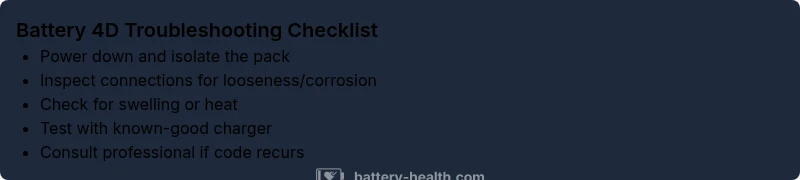
Power down and isolate the pack
Shut down the device, unplug chargers, and place the unit on a non-flammable surface. Do not apply pressure to the battery.
Tip: Use insulated gloves and avoid metal jewelry near terminals. - 2
Inspect accessibility and reseat connections
Check visible terminals for looseness, corrosion, or damage. Reseat connectors firmly and ensure clean contact surfaces.
Tip: If you see green/blue corrosion, stop and seek expert help. - 3
Check for swelling or odor
Gently inspect for swelling, cracks, or unusual smells. Do not press or puncture a swollen pack.
Tip: Swelling means immediate professional intervention is needed. - 4
Reset BMS or firmware (if safe to do so)
If the device allows, perform a safe reset or recalibration after power is off. Do not attempt while energized.
Tip: Follow manufacturer guidance to avoid firmware bricking. - 5
Test with a known-good charger
Use a charger that is confirmed to work with the device. Observe whether the Battery 4D code recurs.
Tip: Avoid using incompatible chargers that could cause further faults. - 6
Plan professional evaluation
If the code returns, schedule a professional battery assessment and potential replacement.
Tip: Request a written estimate outlining parts and labor costs.
Diagnosis: Battery 4D error code on device
Possible Causes
- highOverheating or thermal stress from high charge rate
- highLoose or corroded terminal connections
- mediumBattery management system fault or sensor failure
- mediumPhysical damage or swelling from cell degradation
- lowMoisture ingress or corrosion at contact points
- lowFaulty charger or charging circuit
Fixes
- easyPower down and allow cooling; remove from charging zone
- easyInspect and reseat all accessible connections; clean corrosion
- mediumUpdate BMS firmware or recalibrate sensors if available
- easyTest with a known-good charger or replace charging cable
- hardReplace battery pack or module (professional service)
FAQ
What does Battery 4D mean and is it serious?
Battery 4D signals a battery management fault that triggers a safety shutdown. It indicates abnormal voltage, temperature, or cell imbalance and requires careful inspection. Treat it as urgent rather than routine.
Battery 4D means there’s a safety fault in the battery system. It’s serious and should be checked promptly.
Can I reset Battery 4D myself?
Some devices offer a software reset or BMS recalibration, but do not attempt resets on sealed packs or if you notice swelling or heat. Always follow manufacturer guidelines and seek professional help if you’re unsure.
You may be able to reset some systems, but don’t DIY if you see swelling or heat.
Is Battery 4D dangerous?
Yes, a 4D warning can indicate thermal or electrical hazards. If you notice heat, swelling, or burning smell, stop using the device and seek professional diagnostics.
It can be dangerous—stop using it and get a professional check.
When should I replace the battery after a 4D error?
Replacement is typically considered when fault recurrence persists after safe at-home checks, or if swelling, damage, or persistent faults are evident. Costs vary by device type and battery brand.
If the fault keeps coming back after checks, a replacement is usually needed.
Does firmware update fix Battery 4D?
Firmware updates can resolve BMS sensor glitches in some cases, but they won’t fix physical damage or swelling. Use updates as part of a broader diagnostic plan.
Firmware updates help if the issue is a sensor glitch, not if the battery is physically damaged.
Watch Video
Quick Summary
- Treat Battery 4D as a safety warning.
- Prioritize safety and quick checks over risky fixes.
- Secure connections and proper cooling address most common causes.
- Costs vary by device type; seek written estimates.
- Professional help is advised when swelling or repeated faults occur.