Battery Acid on Skin: First Aid and Safety Guide Basics
Learn practical steps to respond to battery acid on skin exposure, including immediate rinsing, first aid, when to seek care, and prevention tips from Battery Health.


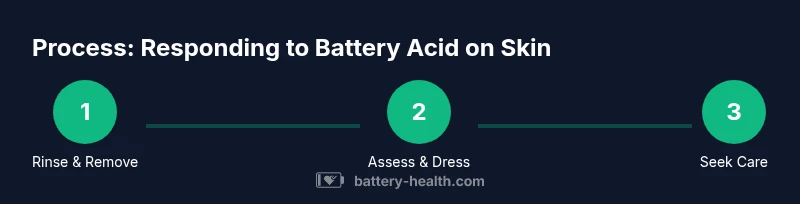
If battery acid on skin occurs, begin immediate water flushing for at least 15 minutes, remove contaminated clothing, and cover the area with a sterile dressing. Avoid neutralizers; seek medical care if pain, burning, or blistering persists. This step-by-step guidance helps you respond safely and effectively.
What battery acid on skin means and why it matters
According to Battery Health, battery acid on skin can cause chemical burns and tissue damage if not addressed promptly. The term covers exposures from various battery chemistries, though car and industrial batteries are common sources. The key to minimizing damage is rapid decontamination, careful monitoring for worsening symptoms, and knowing when to seek professional care. Understanding the basics helps you act confidently in emergencies and reduces long-term harm.
Immediate first aid steps if exposure occurs
When battery acid on skin is suspected, safety begins with removing the source and any contaminated clothing. Rinse the affected area with clean running water immediately and continue for at least 15 minutes. Do not rub the skin or apply home remedies like baking soda or acidic neutralizers. After rinsing, gently pat dry with a clean towel and cover with a non-adherent dressing to protect the area while you seek further help if needed.
What not to do after exposure
Avoid scrubbing, scratching, or attempting to neutralize the chemical on the skin. Neutralization can cause additional heat and damage the skin tissue. Do not apply ointments, petroleum jelly, or household acids or bases unless directed by a clinician. If exposure involved the eyes or large areas of skin, seek urgent medical evaluation even if symptoms seem mild at first.
Protective gear and safe handling to prevent exposure
Prevention matters just as much as response. Wear chemical-resistant gloves (nitrile or neoprene), splash goggles, and a lab coat or apron when working with batteries or in environments where splashes are possible. Always work in a well-ventilated area, keep containers closed when not in use, and have an accessible eyewash station and running water for immediate rinsing if a splash occurs.
How to clean and decontaminate safely
After the initial rinse, wash surrounding skin with mild soap if available, then rinse again thoroughly. Remove and launder contaminated clothing separately from other laundry. Wipe down surfaces that may have contact with the corrosive liquid and discard heavily contaminated items if disposal guidelines advise. Proper decontamination minimizes secondary exposure risks to others.
Medical treatment and when to seek urgent care
Chemical exposure to the skin can progress in intensity even after initial rinsing. Seek medical evaluation if there is persistent pain, burning, redness extending beyond the initial area, blistering, or if the affected area is near joints or sensitive folds. Medical professionals can assess for deeper tissue injury, infection risk, and provide dressing changes or antibiotics if indicated.
Aftercare and disposal of contaminated items
Document the exposure details and any products involved, so you can share information with healthcare providers. Dispose of heavily contaminated gloves, wipes, and dressings according to local hazardous waste guidelines. If you regularly handle batteries, review workplace safety procedures and replace worn PPE to reduce future risk.
Tools & Materials
- Access to clean running water(Flush skin for at least 15 minutes; use a faucet or shower)
- Eyewash station or clean water for eyes(Rinse eyes if splashed; continue until professional help arrives)
- Nitrile gloves(Wear during cleanup after rinsing)
- Non-adherent sterile dressings(Cover the area after rinsing to protect it)
- Mild soap (optional)(Use after rinsing if available)
- Protective clothing(Remove contaminated garments promptly)
- Disinfectant wipes or clean towels(For drying and area cleanup)
- Emergency contact information(Have local numbers readily accessible)
Steps
Estimated time: Total: 15-25 minutes for initial response; additional medical follow-up as needed
- 1
Stop exposure and remove contaminated items
Immediately move away from the source and remove any clothing or jewelry that could be contaminated. This reduces ongoing exposure and prevents transferring the liquid to other skin areas.
Tip: If you can't remove clothing easily, cut around it to avoid dragging the liquid. - 2
Rinse skin with running water for at least 15 minutes
Place the affected area under a gentle flow of lukewarm running water and keep it moving to wash away residue. Do not use hot water, which can worsen tissue damage, and avoid scrubbing.
Tip: If you are splashed in a large area, have someone assist you by keeping water running while you remove clothing. - 3
Gently dry and cover the area
Pat the skin dry with a clean towel and cover with a non-adherent dressing to protect the burn while you monitor for changes. Avoid applying creams until advised by a clinician.
Tip: Do not pull off any blisters that may form; let them heal naturally. - 4
Seek medical evaluation if symptoms persist or worsen
If pain continues, redness expands, or blistering occurs, contact a healthcare provider promptly. Chemical burns may require professional wound care or antibiotics.
Tip: Take notes on the product involved and the amount of exposure to share with the clinician. - 5
Clean and launder contaminated items and area
Wash clothing separately, and sanitize surfaces that touched the chemical to prevent cross-contamination. Follow local disposal guidelines for contaminated PPE.
Tip: Do not reuse heavily contaminated gloves or wipes; dispose according to local hazardous waste rules. - 6
Follow up and reinforce safety practices
Review battery safety protocols to reduce future risk, and replace worn PPE. Keep emergency numbers handy and consider a brief safety training for home or workplace.
Tip: Implement a dedicated cleanup kit so steps are easy to follow during an incident.
FAQ
What should I do immediately if battery acid splashes on skin?
Rinse the area with running water for at least 15 minutes and remove contaminated clothing. Do not apply home neutralizers or ointments. Seek medical help if pain or redness persists.
Rinse with running water for 15 minutes, remove contaminated clothing, and seek medical help if pain lasts.
Can I neutralize battery acid on skin with baking soda or vinegar?
No. Neutralizers can cause a chemical reaction that worsens skin damage. Always rinse with clean water first and seek medical advice if needed.
Avoid baking soda or other neutralizers; rinse with water and consult a clinician if symptoms persist.
When should I seek urgent medical care after exposure?
If you have severe pain, blistering, widespread redness, or involvement of sensitive areas (eyes, face, groin), seek urgent care promptly.
If pain is severe or you notice blisters or spreading redness, get medical help quickly.
Is it safe to continue using the device after an exposure incident?
Do not continue using the device until proven safe by a professional. Contaminants can re-enter the battery area or cause additional exposure.
Do not use the device until a clinician confirms it’s safe.
How can I prevent battery acid exposure in the future?
Always wear appropriate PPE, work in a well-ventilated area, and follow manufacturer instructions. Have an accessible eyewash station and know first response steps.
Wear PPE, follow instructions, and keep a first-aid plan ready.
Watch Video
Quick Summary
- Act quickly and rinse with water for 15 minutes
- Avoid home neutralizers or oils on the burn
- Seek medical evaluation for persistent symptoms
- Prevent future exposures with proper PPE and safe handling practices