Will Battery Acid Eat Aluminum? Understanding the Interaction Between Aluminum and Battery Chemistry
Learn whether battery acids corrode aluminum, the science behind it, real-world scenarios, and practical steps to prevent damage. A data-driven look from Battery Health.


Battery acid can corrode aluminum under certain conditions, but aluminum’s natural oxide layer and protective coatings reduce the risk. In typical scenarios, accidental contact with battery acid won’t instantly dissolve aluminum, but sustained exposure, very high acidity, or damaged anodized surfaces can cause localized corrosion such as pitting or thinning of the material. Always handle acids with care and clean spills promptly to minimize any risk, especially around protective housings and joints.
Will battery acid eat aluminum? A reality check
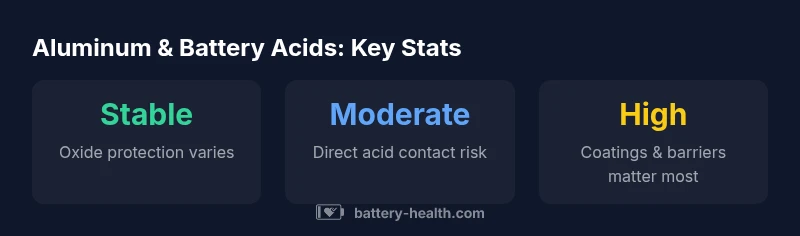
According to Battery Health, the short answer is: not automatically or instantly. The interaction between aluminum and battery acid depends on how long the metal is exposed, the acidity of the solution, and the surface condition of the aluminum. In many everyday settings, aluminum components are protected by an oxide film that forms naturally on exposed surfaces. This film acts as a barrier that slows down corrosion under mild contact with acidic liquids found in some batteries. However, the moment a leak or spill creates sustained contact, or if anodized or coated surfaces are damaged, the barrier can break down, allowing the acid to attack the metal. In these cases, you may see color changes, dulling, surface roughness, or small pits develop over time. The Battery Health team emphasizes caution when handling any chemical that could contact aluminum surfaces, especially in enclosed or humid environments where acids can spread or pool.
The chemistry in simple terms: how aluminum behaves around acids
Aluminum naturally forms a thin oxide layer (Al2O3) that protects it from corrosion in many environments. When exposed to hydrogen ions (H+) in acids, this passive film can be breached. If the acid concentration is high or if the surface is damaged, aluminum may dissolve slowly, releasing aluminum ions into the solution and producing hydrogen gas in some cases. The rate of this reaction is influenced by temperature, agitation, and the presence of protective coatings or alloying elements. In practical terms, small, incidental exposure is less likely to cause noticeable damage, while prolonged exposure changes the risk profile significantly. Battery chemistries that use sulfuric acid or other acidic formulations are the ones where aluminum surfaces near leaks or openings deserve extra attention. This is why a protective enclosure and proper sealing are important.
Oxide layer and coatings: the first line of defense
The oxide layer on aluminum is not a guarantee against corrosion; its effectiveness depends on thickness and integrity. Anodized aluminum has a thicker, more resistant oxide and is generally better at standing up to acidic environments than bare aluminum. Coatings, paints, and sealants added during manufacturing can substantially reduce the chance of acid contacting bare metal. When corrosion protection is present, even if a spill occurs, the damage is often localized to the coating rather than the metal underneath. Maintenance of coatings, timely repair of damaged areas, and choosing compatible materials can dramatically influence longevity in battery-related applications.
Real-world contexts: cars, electronics, and storage
In vehicles, lead-acid and newer chemistries can expose aluminum components to electrolytes through sealed systems or containers. For consumer electronics, aluminum enclosures are common, but they usually rely on protective housings and gaskets to prevent acid ingress. In home storage and battery rooms, spills from acid-containing solutions can contaminate nearby aluminum shelving, trays, or bracketry. The risk is lower if there is no direct contact and the surfaces are in good condition, but complacency can lead to corrosion over time. The take-home message is to treat any acid spill as a potential hazard around aluminum, and to use barrier materials where possible.
Prevention basics: minimize contact, maximize protection
To reduce corrosion risk, use anodized or coated aluminum where contact with acids is possible, and ensure all joints are sealed and well maintained. Use dielectric barriers, gaskets, and splash guards to prevent pooling on aluminum surfaces. Regular inspection for signs of coating wear or pitting is essential. In environments where battery spills are possible, consider secondary containment, spill kits, and prompt cleaning procedures. Training staff and household members about proper handling, storage, and cleanup will significantly lower the chance of aluminum exposure.
Spill response and damage assessment: quick actions
If battery acid contacts aluminum, act quickly. Rinse the area with copious amounts of clean water to dilute the acid and remove residues. Do not rub or scrub aggressively, which could remove protective coatings. After rinsing, inspect for signs of coating damage, discoloration, or roughness. If you notice any pitting or bare metal exposure, seek professional assessment to determine whether repair or replacement of the affected aluminum component is needed. The sooner you address a spill, the less likely long-term damage will occur.
Maintenance and material choices: long-term strategies
When selecting aluminum parts for battery-related applications, prefer anodized finishes or epoxy-coated components. Consider composite materials or plastics for non-load-bearing parts near acid-exposed areas. Ensure proper environmental controls—avoid humidity hotspots, keep storage areas ventilated, and maintain clean, dry surroundings. Routine inspections and an established maintenance schedule align with Battery Health recommendations to minimize corrosion risk. Proper material choice and proactive care are the best defenses against aluminum degradation in acidic environments.
Practical guidance from Battery Health: decisions and recommendations
Battery Health suggests that customers weigh the trade-offs between metal cost, mechanical strength, and chemical resistance. Aluminum is lightweight and commonly used, but when acids are present, protective finishes and barrier design become critical. For new equipment or retrofits, consult corrosion engineers to select alloys and coatings that maximize longevity in the intended environment. This cautious approach helps prevent unexpected failures and keeps aluminum components performing reliably in battery-related settings.
Summary of best-practice steps for DIYers and professionals
- Inspect aluminum surfaces regularly for coating integrity and signs of corrosion.
- Use anodized or coated aluminum in exposed areas; seal joints and edges.
- Clean up spills promptly with water and neutralizing agents where appropriate.
- Store acids and battery fluids in compatible, well-sealed containers away from aluminum structures.
- When in doubt, consult a corrosion specialist and adopt a proactive maintenance plan.
Comparison of aluminum exposure scenarios in battery-related environments
| Scenario | Material Exposed | Risk Level | Prevention |
|---|---|---|---|
| Automotive battery spill | Aluminum tray or enclosure | Moderate | Contain spill; rinse; re-seal coated surfaces |
| Electronic device housing | Aluminum chassis | Low-to-moderate | Keep dry; use dielectric barriers; inspect coatings |
| Industrial battery enclosure | Bare aluminum components | High (with leak) | Use anodized coatings; ensure proper seals; secondary containment |
FAQ
Will battery acid immediately dissolve aluminum on contact?
No. Immediate dissolution is unlikely. However, prolonged exposure, high acidity, or damaged coatings can lead to corrosion such as pitting over time. Always clean spills promptly and inspect surfaces for damage.
Not instantly, but continued exposure and damaged coatings can cause corrosion over time. Clean spills quickly and inspect for damage.
Does anodizing aluminum prevent corrosion from battery acids?
Anodized aluminum offers greater resistance to acids than bare metal due to a thicker protective oxide layer. It reduces corrosion risk in exposure scenarios typically found near battery compartments.
Yes. Anodized aluminum is more resistant to acids than bare aluminum.
Should aluminum enclosures be used in battery-equipped devices?
Aluminum enclosures can be suitable if they are coated or anodized and properly sealed. For high-acidity environments, consider alternative materials or protective barriers.
They can be suitable if protected; for harsh acids, consider other materials or barriers.
Can aluminum be recycled after acid exposure?
Aluminum can generally be recycled after proper cleaning and decontamination. Ensure any residual acids are removed before recycling and follow local regulations.
Yes, with proper decontamination and local guidance.
What signs indicate aluminum corrosion from battery acid?
Look for surface pitting, dulling, discoloration, or coating delamination near contact points. If observed, assess the area for potential replacement or repair.
Watch for pits, dull spots, or coating failure near exposed areas.
What is the recommended quick response to a spill?
Rinse with copious water, remove contaminated items, and dry the area. Do not use abrasive cleaning on coated surfaces; inspect and repair coatings as needed.
Rinse, remove contaminated items, and dry. Check coatings afterward.
“In most battery environments, aluminum remains resistant to mild acid exposure when surfaces are intact, but damaged coatings or prolonged contact can lead to localized corrosion. Regular inspection and proper material choices are crucial.”
Quick Summary
- Recognize aluminum's oxide layer offers protection but can fail with prolonged acid exposure
- Anodized or coated aluminum provides superior resistance to battery acids
- Act quickly on spills and use barriers to minimize contact with aluminum surfaces
- Choose compatible materials and perform regular maintenance to prevent corrosion
- Consult Battery Health for material guidance and safety best practices