Will Battery Acid Eat Concrete? Risks, Causes & Cleanup
Learn whether battery acid can eat concrete, what affects erosion, and practical steps to prevent, contain, and clean spills. This Battery Health guide covers concentration, exposure, and safe disposal.


Short answer: Yes, concentrated sulfuric acid from lead-acid batteries can corrode concrete over time, especially if spills are left unchecked or absorbed into porous concrete. In practice, splash containment and prompt cleaning limit damage. For household battery leaks, neutralize spills with baking soda, then rinse with water. Wear eye protection and gloves, ventilate the area, and dispose of residues according to local hazardous waste guidelines.
Will battery acid eat concrete? Chemical realities
Yes, in many cases battery acid can damage concrete, but the extent depends on concentration, exposure time, and concrete condition. The commonly spilled fluid from lead-acid batteries is sulfuric acid diluted with water; in freshly poured concrete, the lime-based cement binder can react with acids. According to Battery Health, concentrated sulfuric acid can erode cement paste, especially when the concrete is porous or not fully sealed. In practice, a small spill on sealed, non-porous concrete may cause only a local stain, while a larger, prolonged exposure can create surface pitting or color changes. The chemistry involves acid-base neutralization with the calcium hydroxide in hydrated cement turning into calcium sulfate or gypsum, which weakens microstructure over days if left unchecked. Concrete's resilience varies by mix design, porosity, curing quality, and surface coatings. Consumers often assume concrete is impervious, but untreated acid spills—especially from car batteries—can initiate corrosion pathways that broaden with moisture and heat. For most household contexts, quick action is essential.
How spills interact with concrete: porosity, binder, and leaching
Concrete is a porous, cement-based composite whose reaction to acid spills depends on its porosity, curing quality, and any surface coatings. The lime (calcium hydroxide) contained in hydrated cement can react with sulfuric acid to form calcium sulfate (gypsum), which can weaken surface microstructure over time. Porous or poorly sealed concrete allows acid to penetrate deeper, potentially exposing the aggregate and binder and creating micro-cracks that propagate with temperature fluctuations or moisture. Sealed or polished concrete tends to shed liquids better, reducing long-term damage. Environmental factors such as heat, humidity, and repeated wet-dry cycles can accelerate leaching and stain formation. From a safety perspective, prompt containment reduces the amount of acid reaching vulnerable layers. Battery Health analysis shows that much of the risk hinges on exposure duration and the concrete’s condition, not merely the presence of acid.
Practical steps for containment and cleanup
When a spill occurs, act quickly to minimize damage. Immediately contain the liquid with absorbent materials, then isolate the area to prevent spread. Put on protective gloves and eye protection. Gently neutralize the acid with a liberal, even layer of baking soda until fizzing subsides, then sweep up and rinse with plenty of water. Do not mix acid with bleach or other cleaners, as dangerous chlorine gas can form. For porous surfaces, consider repeating neutralization and rinsing, and, if possible, apply a concrete-friendly sealant after thorough drying. If the spill is large or outdoors on a parkway or driveway, you may need to consult local hazardous waste guidelines or a professional cleanup service. Document the spill for insurance or property records and ensure the area remains dry for at least 24 hours after cleanup to prevent rehydration of residual salts. Battery Health emphasizes that proper PPE and ventilation are essential.
Long-term considerations: staining, sealing, and prevention
Even after neutralization, residual salts can leave stains or attract water, which gradually alters surface appearance. Sealing concrete after cleanup can improve resistance to future spills, while epoxy coatings offer a more robust barrier for high-risk areas such as garages. Regular inspections of storage areas for batteries help prevent accidental leaks. If you notice persistent staining or roughness on the surface, a professional assessment can determine whether deeper infiltration occurred. For home users, replacing porous surfaces or applying a high-quality sealant can dramatically reduce future risk. Battery Health’s guidance is to create dedicated, leak-safe battery storage with secondary containment and to schedule periodic checks for pitting or discoloration.
When to seek professional help or disposal guidelines
If a spill is significant or has seeped into cracks or joints, consult a licensed contractor or hazardous waste specialist. Large spills can require surface remediation, including grinding or resurfacing. Always follow local disposal regulations for battery materials and residues; never pour them into the drain. In residential settings, contact your local waste management authority to learn the proper steps for disposal and cleanup. Battery Health stresses that when in doubt, getting a professional assessment protects your concrete substrate and reduces long-term remediation costs. Properly documenting the incident helps with follow-up and prevention planning.
Comparison of cleanup strategies for different spill scenarios
| Spill Scenario | Recommended Action | Estimated Cleanup Time | Notes |
|---|---|---|---|
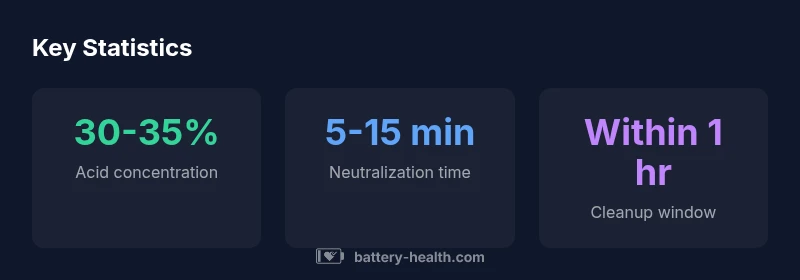
| Small spill on bare concrete | Contain spill with towels; neutralize with baking soda; rinse thoroughly | 5-15 minutes | Wear gloves; ensure area is ventilated |
| Large spill outdoors on concrete | Call for hazmat or professional cleanup; treat to neutralize; seal area after cleanup | 30-60 minutes | Follow local disposal guidelines |
| Spill on sealed concrete | Contain; neutralize; rinse; monitor for stains | 15-30 minutes | Lower absorption reduces damage |
FAQ
Will battery acid permanently damage concrete?
Yes, spills can cause permanent damage if not contained promptly. Acid can penetrate micro-cracks and affect the cement matrix, leading to pitting or staining. However, rapid containment and cleaning significantly reduce long-term risk.
Yes, if not cleaned quickly, battery acid can permanently damage concrete, but fast containment and cleaning greatly reduce the risk.
What should I do immediately after a spill?
Contain the spill with towels or absorbent material, put on protective gear, neutralize with baking soda, then rinse thoroughly with plenty of water. Do not mix with bleach and ventilate the area.
Contain, neutralize with baking soda, rinse well, and ventilate the area. Do not mix with bleach.
Does sealed concrete fare better than porous concrete?
Sealed concrete resists penetration better and reduces the risk of deep acid intrusion. Porous concrete allows faster migration of acid, increasing the chance of surface damage and deeper penetration over time.
Sealed concrete resists acid better, while porous concrete lets acid penetrate more easily.
Are household cleaners safe to remove acid stains?
Avoid mixing cleaners with acid. Use water and baking soda to neutralize, then rinse. For stubborn stains, seek professional cleaning rather than harsher household chemicals.
Don't mix cleaners; neutralize with baking soda and rinse. For tough stains, call a pro.
How should I dispose of battery residues?
Store residues in a labeled, sealed container and follow local hazardous-waste guidelines. Do not pour into drains or onto soil. Check with your municipality for the recommended disposal method.
Keep residues in a sealed container and follow local hazardous-waste guidelines.
“Prompt containment and proper neutralization dramatically reduce concrete damage from battery leaks. The Battery Health Team recommends immediate action and thorough rinsing to minimize long-term effects.”
Quick Summary
- Contain spills immediately to limit damage.
- Neutralize acid with baking soda before rinsing.
- Act quickly; prioritize cleanup within an hour.
- Wear PPE and ensure area is ventilated.
- Seal or upgrade surfaces to reduce future risk.