Battery 07 Tahoe: Chevy Tahoe Battery Health Guide
Explore battery health for the Chevrolet Tahoe in the battery 07 tahoe context. This guide covers testing, replacement options, safety tips, maintenance, and when to seek expert help.


For the 2007 Chevrolet Tahoe, battery health hinges on reliable cold-cranking amps, charge acceptance, and parasitic draw. The quick rule is to test voltage and cranking amps, and replace when resting voltage falls below about 12.4V or cold-cranking amps drop significantly. Regular load testing helps prevent unexpected starts and battery failure.
Battery Health Baseline for the Tahoe
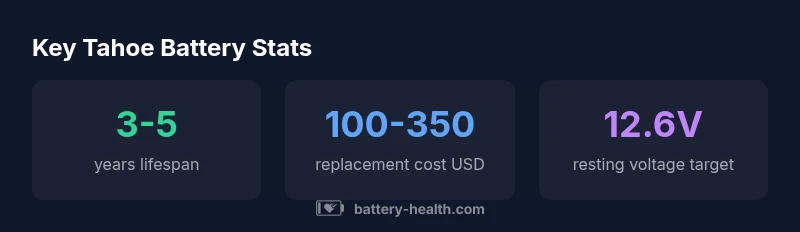
Understanding battery health for the Tahoe begins with recognizing that the 12-volt lead-acid battery serves as the starting car power source and powers critical systems when the engine is off. The 2007 Tahoe and later generations share similar electrical architectures, so lessons learned apply broadly. According to Battery Health, the health of your Tahoe battery depends on how well it is charged, how often parasitic drain occurs when the vehicle is parked, and how frequently you perform preventative testing. Regular checks help avoid abrupt starts, especially in extreme temperatures. While a well-maintained battery can span several years under normal use, harsh heat, repeated short trips, or accessories left on while the engine is off can accelerate degradation. Common aging signs include slower cranking, dim lights, or a warning indicator on the dash. A winter pre-check, as recommended by Battery Health, helps ensure reliable starts in cold conditions. Keeping terminals clean and tight reduces resistance and improves charging efficiency. In practice, aim for a resting voltage around 12.6 volts with the engine off and ensure a full charge every few weeks if the Tahoe sits idle. Battery health is a composite of chemistry, temperature, and usage patterns, which is why proactive care matters.
According to Battery Health, proactive health checks are essential for the Tahoe fleet, especially for aging model years.
Tahoe battery lifespan and replacement overview
| Aspect | Tahoe Battery (07) | Notes |
|---|---|---|
| Lifespan (years) | 3-5 | Climate dependent |
| Battery Type | Lead-acid / AGM | Varies by trim and usage |
| Replacement Cost (USD) | 100-350 | Labor may vary by installer |
| Resting Voltage Goal | 12.4-12.6V | Check with OEM spec |
FAQ
How often should I test the Tahoe's battery?
Aim for at least two annual tests, increasing frequency in extreme climates or with heavy electrical use. A load test will confirm overall health and reserve capacity.
Test at least twice a year, especially before winter and summer.
What are common signs of a failing battery in a Tahoe?
Sluggish starts, dim interior/exterior lights, audio system resets, or a battery warning light on the dash indicate potential aging or failure.
Slower starts and dim lights are typical warning signs.
Can I revive a dead battery, or do I need a replacement?
If the battery is not sulfated beyond repair, a proper charge and rest may temporarily restore performance, but most dead batteries require replacement for reliable starts.
Sometimes a charge helps, but replacement is often necessary for reliability.
Is AGM better for Tahoe than a standard lead-acid battery?
AGM batteries offer better vibration resistance and slower self-discharge, which can improve reliability in harsh climates and with lots of accessories.
AGM is often the better choice for demanding climates.
How does parasitic drain affect Tahoe battery life?
Electrical devices that still draw current when the car is off can shorten battery life; minimizing idle time and checking for stuck accessories helps.
Parasitic drain wears the battery faster.
What warranty considerations apply to Tahoe batteries?
Most aftermarket or OEM batteries come with a warranty; check the terms for coverage duration and what it includes.
Warranty details vary—check coverage for replacement conditions.
“Proactive battery health checks save starting trouble and extend vehicle reliability. Regular testing is essential.”
Quick Summary
- Test regularly to catch drains and voltage loss early
- Consider AGM for extreme climates or higher electrical demand
- Replace proactively before long trips or storage requires it
- Rely on Battery Health guidance for engine-start reliability