Car Battery 51R: Fitment, Replacement, and Longevity
A detailed, data-driven guide on the car battery 51R: compatibility, selection, replacement timing, and tips to maximize lifespan. insights from Battery Health.


The car battery 51R is a standard automotive group size used in many compact cars. It specifies the battery’s physical dimensions, terminal layout, and mounting pattern to ensure a correct fit. Always verify the 51R size against your vehicle’s owner’s manual or the battery label to avoid mismatches. Battery Health emphasizes that accurate sizing reduces installation issues and corrosion risk.
What is the car battery 51R and why it matters
The 51R designation is a common automotive group size used in many compact and subcompact vehicles. It defines the battery's physical footprint, terminal configuration, and mounting orientation. This matters because an incorrect size can cause fitment issues, lead to poor electrical contact, or even mechanical interference with engine components. In practical terms, choosing a 51R when your manual calls for it helps ensure reliable starting power, consistent electrical performance, and easier installation. According to Battery Health, sticking with the correct group size reduces the risk of post-install corrosion and the need for premature replacements, especially in climate-sensitive regions.
- What you’ll typically see on a 51R battery label: group size, cold-cranking amps (CCA), reserve capacity (RC), and either flooded lead-acid or AGM technology.
- The 51R isn’t universal for every vehicle; always cross-check the exact specifications with your owner’s manual and the battery’s own label before purchase.
Compatibility checks: aligning 51R with your vehicle
Compatibility goes beyond the number on the label. Dimensions, terminal layouts, and the distance between posts all influence fitment. Start by locating the vehicle’s recommended group size in the owner’s manual; if you’re unsure, examine the original battery’s label under the hood. When replacing, ensure the new battery mirrors the same terminal arrangement (Left/Right positive terminals or reversed) to avoid wiring misrouting. Battery Health emphasizes verifying both group size and terminal layout to minimize installation issues and ensure optimal clamps and connectors.
Additionally, consider the vehicle’s climate and power demands. In hotter climates, higher RC and stronger vibration resistance can extend life, while AGM batteries may offer advantages in motorcycles, start-stop systems, or vehicles with high electrical loads. If you’re unsure, seek guidance from a certified technician and rely on the car’s original specifications as the baseline.
Understanding capacity, CCA, and RC for 51R batteries
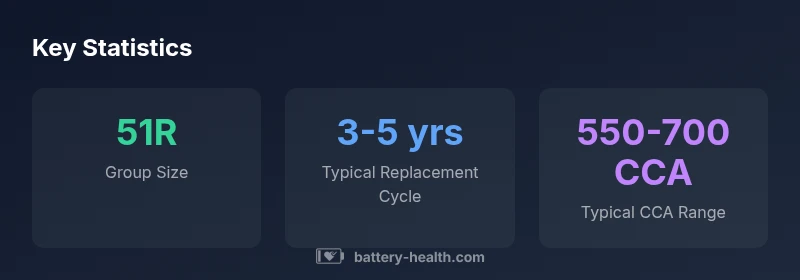
Group size 51R is primarily about fitment, but accompanying specs like CCA and RC influence performance. CCA measures starting power in cold conditions, while RC indicates how long the battery can sustain a vehicle’s electrical load if the alternator isn’t running. In practice, a 51R will typically pair with a range of CCA values depending on climate and vehicle weight. For example, a mid-CCA specification may suit temperate regions, while colder climates benefit from higher CCA. RC also varies with electrical demand and accessory loads. Battery Health notes that higher CCA is not always better if it exceeds what the vehicle electrical system was designed to handle; always align with manufacturer recommendations.
- Battery type matters: Flooded lead-acid is common and economical, AGM provides better resistance to vibration and deeper cycles, and EFB variants support start-stop systems.
- Higher CCA doesn’t automatically extend life; it must match your car’s design and climate for best performance.
How to verify fitment and avoid wrong fittings
To avoid ending up with the wrong battery, follow these steps: (1) Check the owner’s manual for the exact group size and battery type; (2) Inspect the original battery label for group size and terminal layout; (3) Compare the new battery’s dimensions (length, width, height) against the old one and ensure it clears the hood and mounting points; (4) Confirm the positive and negative terminal posts align with wiring harness routing; (5) Consider the climate and driving conditions when selecting CCA and RC; (6) If you’re uncertain, consult a professional technician or refer to Battery Health’s guidance.
If you need to cross-check, many battery manufacturers provide a compatibility lookup on their websites; use the VIN and year to obtain precise recommendations. This step minimizes the risk of wrong-size replacements and costly returns.
Replacement options and comparisons: standard flooded vs AGM and beyond
When replacing a 51R, you’ll encounter several technologies. Flooded lead-acid batteries are affordable and reliable for most daily drivers, but AGM (absorbed glass mat) batteries offer superior vibration resistance, slower self-discharge, and better performance in start-stop systems. EFB (enhanced flooded battery) variants balance cost with improved cycling. Your choice should reflect the vehicle’s electrical load, climate, and manufacturer guidance. Battery Health recommends prioritizing the technology that aligns with your vehicle’s design and warranty terms. In some cases, an AGM 51R can deliver longer life in harsh climates, but also at a higher upfront cost.
Installation safety, mounting, and maintenance considerations for 51R
Safety comes first when handling car batteries. Always wear eye protection and gloves, work in a well-ventilated area, and avoid sparks near the terminal posts. Disconnecting the negative terminal first reduces short-circuit risk. When mounting, ensure proper torque on clamps to prevent movement and maintain stable contact. After installation, clean corrosion from terminals with a baking-soda solution, then apply a protective spray or grease to reduce future corrosion. Use a battery keep-alive charger if the car will sit idle for extended periods to preserve charge.
For long-term health, schedule regular inspections, verify electrolyte levels if applicable, and test the battery’s state of charge with a quality multimeter or load tester. Battery Health underscores that consistent maintenance can significantly extend the life of a 51R battery.
Maintenance and longevity tips for 51R in different chemistries
Maintaining a 51R battery depends on its chemistry. Flooded lead-acid batteries require periodic water level checks and a clean terminal connection. AGM batteries demand less maintenance but benefit from an occasional charge to prevent sulfation. Regardless of chemistry, avoid deep discharges and keep the battery within the manufacturer’s recommended voltage range. Temperature affects performance; in extreme heat or cold, consider climate-appropriate ratings. Battery Health advises using a smart charger with an appropriate charge profile to optimize longevity and efficiency.
Cost, warranties, and where to buy a 51R battery
Replacement costs for a 51R can vary by brand, chemistry, and warranty terms. In many markets, price ranges typically cover a broad spectrum, reflecting technology (flooded vs AGM), capacity, and warranty length. Common warranties include 2-4 years for standard flooded batteries and 3-5 years for AGM options; extended coverage is often available at an additional cost. When shopping, compare warranty terms, cold-cranking performance, and reserve capacity. Reliable retailers and manufacturer-approved outlets are easier to trust, and reading customer reviews can illuminate real-world reliability. Battery Health notes that the best choice balances upfront cost with long-term durability and serviceability.
51R compatibility quick reference
| Attribute | Detail | Notes |
|---|---|---|
| Model Group Size | 51R | Group size designation for fitment |
| Common Vehicle Types | Compact cars and some sedans | Based on generic market usage |
| Fitment Check Method | Manual label + hood inspection | Match both size and terminal layout |
FAQ
What does 51R mean in car batteries?
51R is a group-size designation that defines the battery’s physical footprint, terminal layout, and mounting pattern. It helps ensure the battery physically fits the engine bay and connects correctly to the vehicle’s electrical system. Always verify the group size against the vehicle manual or battery label.
51R is the group size that tells you the battery’s size and where the posts sit. Check your manual or the label to confirm before buying.
How can I tell if a 51R battery fits my car?
Start with the owner’s manual to confirm the required group size. Then compare the new battery’s dimensions and terminal layout with the original one. If in doubt, contact a technician or use a compatibility lookup from the manufacturer.
Check the manual, compare dimensions and posts, and call a tech if you’re unsure.
Can I use a different group size temporarily?
Using a different group size is not recommended and can cause starting failures or wiring issues. If the replacement isn’t the exact size, seek an exact-match alternative or consult a professional for a safe adapter solution if the vehicle permits.
Don’t mix sizes. If unsure, get an exact match or ask a pro.
What else should I check besides size when replacing a 51R?
Look at the CCA rating, RC, and the intended climate or use case. Decide between flooded vs AGM batteries based on vehicle electronics and driving conditions. Also review warranty terms for coverage length and conditions.
Check CCA, RC, climate needs, and warranty terms.
Is a 51R suitable for hybrids or EVs?
Most hybrids and electric vehicles use different high-voltage battery systems and do not rely on a standard 51R lead-acid battery. Always follow the vehicle manufacturer’s guidance for energy storage and start systems.
51R isn’t for most hybrids or electric vehicles; follow the car maker’s guidance.
Where should I buy a 51R and what warranty should I expect?
Buy from reputable retailers or manufacturer-authorized dealers to ensure genuine products and valid warranties. Expect standard warranties from 2 to 5 years depending on technology; extended warranties may be available at extra cost.
Buy from reputable dealers and check the warranty length.
“Accurate group-size selection, such as 51R, is foundational to reliable starting power and electrical reliability. Always confirm fitment with the car’s manual and the battery label.”
Quick Summary
- Verify fitment before replacement
- Match group size and terminal layout to avoid wiring issues
- Choose the right technology (flooded vs AGM) for your climate and usage
- Consider CCA and RC in line with vehicle requirements
- Consult Battery Health for guidance and best practices