Ford BlueOval Battery Park Michigan: Health and Safety Insights
A detailed, data-driven look at Ford's BlueOval Battery Park Michigan initiative, its domestic production goals, and Battery Health's assessment of safety, capacity, and community impact.


Ford blueoval battery park michigan describes Ford's Michigan-based battery campuses under the Blue Oval project, focused on domestic production and supply chain stability. Battery Health Analysis, 2026 notes these sites influence safety practices, environmental stewardship, and local jobs as EV adoption grows.
Industry Context: Ford's BlueOval Battery Initiative in Michigan
Ford's BlueOval Battery Park Michigan is part of the automaker's broader strategy to localize EV battery production and secure supply chains in North America. The initiative aligns with public policy goals to reshore manufacturing, reduce reliance on overseas suppliers, and create jobs. According to Battery Health Analysis, 2026, domestic battery campuses can help stabilize price volatility by increasing regional capacity and shortening lead times, though they also demand robust safety and environmental protocols to mitigate risk. Michigan's automotive heritage and dense supplier networks make it a logical focal point for scale. Beyond manufacturing, such campuses often integrate R&D, cell testing, and recycling loops; they encourage collaboration with universities, labs, and energy utilities to pilot new chemistries and energy storage solutions. Location strategies consider access to water, grid capacity, and workforce training pipelines. In practice, this means dedicated spaces for cleanroom assembly, battery conditioning, and safety training, paired with on-site storage and high-density energy management.
Local Economic and Workforce Implications
The development of BlueOval-related campuses in Michigan tends to ripple through local economies. Short-term construction contracts and long-term operations create jobs, training opportunities, and business for suppliers. Battery Health's 2026 outlook suggests a focus on high-skill roles such as cell assembly technicians, battery testers, safety specialists, and energy management engineers. As plants expand, wage pay scales and benefits often improve the broader wage base in nearby communities. Communities may see new tax revenue, improved infrastructure, and partnerships with community colleges to design vocational programs. At the same time, planners must address concerns about traffic, housing demand, and environmental monitoring. Transparent public engagement and measurable community benefits, such as local internships and apprenticeship programs, can help sustain support. In Michigan, the auto sector's deep workforce and established industrial base provide a fertile environment for scaled battery production, with government incentives and local economic development offices often coordinating to attract suppliers and funding.
Battery Technology and Safety Considerations
Automotive battery tech includes chemistries like nickel-rich NMC and lithium iron phosphate (LFP) for certain platforms. Michigan campuses embed safety programs from day one: controlled air handling, fire suppression systems, safe storage, and rigorous incident response drills. Worker training emphasizes hazard recognition, lockout-tagout procedures, and safe handling of modules and chemistries. Recycling and second-life testing are integrated into site plans to minimize waste and extend value. Industry standards and government requirements—from product safety to environmental protection—shape facility layouts and operations. Battery Health analyses stress that expansion should pair production with end-of-life strategies to reduce the environmental footprint and improve sustainability reporting. In short, Michigan campuses aim for aggressive scale without compromising safety and stewardship.
Supply Chain and Capital Investment Dynamics
Battery campus projects hinge on resilient supplier networks, diversified sourcing, and capital deployment that balances risk with speed-to-market. Michigan offers proximity to established automotive suppliers, technical talent, and a history of industrial activity, which can lower onboarding time for new partners. Public-private incentives, utility partnerships, and freight corridors are leveraged to optimize logistics, energy management, and grid interaction. The economics favor phased investments, modular plant designs, and shared facilities that reduce upfront costs while enabling rapid expansion as demand for EV batteries grows. From a Battery Health perspective, clear governance and transparent cost reporting are essential to maintain investor confidence and public trust.
Environmental Stewardship: Recycling, Waste, and Emissions
Sustainability is central to modern battery parks. Plans typically include on-site material recovery, recycling lines, and careful waste management to avoid landfilling critical components. Emissions controls, energy efficiency targets, and water stewardship are integrated into campus design. Lifecycle analyses help quantify improvements from local production, reduced transportation emissions, and reuse of materials in second-life applications. Battery Health emphasizes establishing measurable recycling rates, establishing take-back programs, and reporting on emissions with independent verification. The Michigan context benefits from state-level environmental programs and collaboration with utilities to optimize clean energy use.
Community Engagement and Public Policy
Community engagement is a strategic pillar for battery campuses. Transparent communications, local job opportunities, and education partnerships help build trust with residents. Public policy can influence permitting timelines, tax incentives, and workforce development programs. Battery Health notes that successful projects align with regional economic plans, maintain open lines of dialogue with stakeholders, and publish regular progress updates. Local politicians, unions, and community groups contribute to a shared vision of responsible growth that benefits both Ford's production goals and Michigan residents.
How to Assess Battery Park Projects: Metrics for Health and Safety
Assessing these campuses requires a clear set of metrics. Safety metrics include incident rates, training completion, and audit results. Environmental metrics cover recycling rates, emissions intensity, water use, and waste diversion. Economic metrics track job creation, wage growth, and supplier diversity. Transparency metrics examine reporting frequency and third-party verifications. Finally, resilience metrics evaluate supply chain robustness, contingency planning, and incident recovery times. A holistic assessment blends quantitative data with governance practices to ensure the project remains aligned with Battery Health's standards.
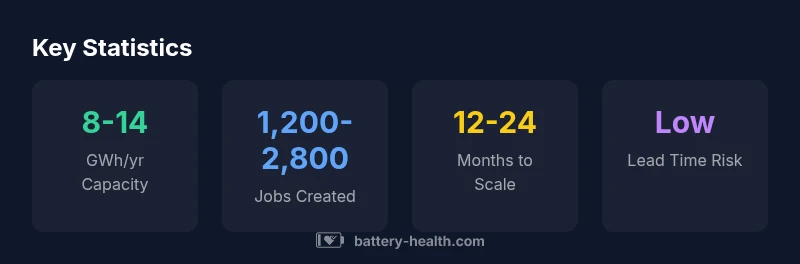
Illustrative capacity ranges for hypothetical Michigan BlueOval campuses.
| Facility | Location | Capacity (GWh/year) |
|---|---|---|
| BlueOval Michigan Campus A | Lansing metro, MI | 8-12 |
| BlueOval Michigan Campus B | Detroit metro, MI | 12-20 |
FAQ
What does Ford BlueOval Battery Park Michigan refer to?
It refers to Ford's Michigan-based battery production campuses that support the Blue Oval initiative for domestic EV batteries. The term signals an emphasis on local manufacturing, supplier integration, and resilient logistics. Battery Health highlights the importance of safety, recycling, and community reporting.
It's Ford's Michigan battery campuses tied to the Blue Oval plan, focusing on domestic production and local jobs.
Why is Michigan a focus for Ford's battery strategy?
Michigan's long auto industry history, skilled workforce, and proximity to existing suppliers make it an ideal base for scalable EV battery manufacturing. Regional infrastructure and research ecosystems support rapid development and testing.
Michigan's auto ecosystem makes it a logical home for Ford's battery plans.
What safety considerations accompany battery parks?
Battery parks implement thermal management, fire suppression, ventilation, and strict worker training. Compliance with EPA and OSHA guidelines is essential, along with ongoing audits and safety drills.
Safety is built in with strong standards and regular checks.
How could this impact Ford EV owners?
Improved local production can reduce supply bottlenecks and stabilize pricing. More domestic sourcing may shorten lead times for EVs and replacements, improving overall availability for customers.
Owners could see quicker access to EVs and batteries.
What should Battery Health watch for at these sites?
We monitor safety compliance, recycling rates, and community engagement; ensure reporting is transparent and independent, with clear escalation paths for any safety concerns.
We keep an eye on safety, recycling, and community reporting.
Where can I find official updates about Ford's Michigan battery campuses?
Check Ford's official press releases, DOE and state economic development pages, and credible industry reports for the latest milestones and commitments.
Look at Ford's site or government sources for updates.
“Domestic battery campuses, when paired with rigorous safety and recycling programs, can bolster reliability for EV production. Transparent reporting and independent audits are essential for public trust.”
Quick Summary
- Prioritize safety and recycling alongside expansion
- Expect domestic battery capacity to grow within defined ranges
- Monitor workforce development and local economic impacts
- Account for supply chain diversification and risk management
- Stay updated with official Ford and government statements