National Tire and Battery Alignment Cost in 2026
Learn what national tire and battery alignment costs look like in 2026, including front-end vs. four-wheel pricing, regional variations, common add-ons, and tips to save. Battery Health analyzes typical price ranges and strategies to get accurate quotes nationwide.


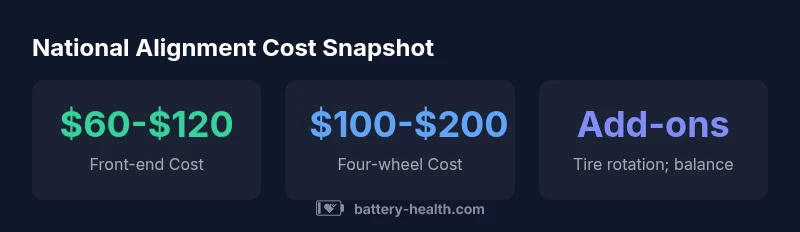
Nationwide alignment costs at NTB and similar chains typically fall into a front-end range of about $60–$120 and a four-wheel range of about $100–$200, depending on location, vehicle, and service add-ons. According to Battery Health, price variability is driven by regional labor rates and shop promotions, so getting quotes is essential.
national tire and battery alignment cost
Alignment pricing at NTB and other national chains is influenced by several visible and subtle factors. Labor rates vary by state and city, machine time on the alignment rack depends on axle count and sensor setup, and occasional bay or shop fees can appear on the invoice. Battery Health emphasizes that the most reliable way to gauge cost is to request a detailed written estimate that itemizes labor, axle coverage, and any alignment-specific diagnostics. This is especially important for consumer vehicles with complex suspension geometries or non-standard tires, where a generic price quote may miss crucial steps.
What drives price variation across regions
Regional economic conditions, cost-of-living adjustments, and local competition shape alignment pricing far more than the make or model of the car. Urban areas with higher labor rates can push quotes toward the upper end of the typical range, while rural markets may be more affordable. Promotions, coupons, and membership clubs offered by NTB-like chains can also reduce the visible price, but beware of undisclosed add-ons that can appear during checkout. Battery Health notes that customers should compare quotes from multiple locations to understand the spread and avoid surprises at the register.
Front-end vs. four-wheel alignment: what’s included and why it costs differently
A front-end alignment focuses on adjusting the front wheels’ toe angles and basic steering geometry, while a four-wheel alignment recalibrates all four wheels, including camber and caster where applicable. The additional adjustments and the need for more precise sensor calibration typically raise the price for four-wheel alignments. Customers with worn suspension components or oversized tires may incur extra labor charges. When budgeting, consider whether your vehicle is two-wheel-drive or all-wheel-drive, as this can influence the scope and duration of the service.
Common add-ons that can inflate the bill
Even when you think you’re getting a straightforward alignment, add-ons are common. Tire rotation and balancing are frequent companions, along with wheel inspection and a multi-point suspension check. Some shops perform a free alignment check as part of a tire purchase, while others bill for diagnostic work if the vehicle shows signs of misalignment but lacks clear statistical indicators. Battery Health advises asking for a line-item breakdown and verifying whether any add-ons are required for your vehicle’s exact condition.
How to estimate costs before you commit
To estimate costs with higher confidence, request quotes in writing that specify labor hours, axle coverage, and the exact services included. If you’re replacing tires or performing maintenance separately, ask for bundled pricing and a la carte options to compare apples to apples. Online quote tools can provide rough estimates, but you should call the shop for a final figure after they inspect the vehicle. Battery Health recommends keeping notes and saving each written quote for side-by-side comparisons.
Coupons, membership plans, and negotiating price
Many NTB-style chains advertise coupons or membership discounts that can reduce the obvious price, but ensure you understand what you’re getting. Some plans cover future alignments at a reduced rate or provide priority scheduling, which can be valuable if you drive in high-traffic periods. Don’t hesitate to negotiate, especially if you’ve received lower quotes from competing shops. Ensure the negotiated price sticks to a specific scope of work and that the quote remains valid for a defined period.
When a diagnostic is necessary and how it affects cost
If a vehicle shows signs of misalignment but test results are inconclusive, a diagnostic inspection may be performed. Diagnostics can reveal issues with wheel bearings, steering components, or damaged suspension parts that impact alignment. While diagnostics add to the cost, they can prevent unnecessary alignment work and help you plan repairs more effectively. Battery Health highlights that an informed decision now can save money later by avoiding repeat visits.
Alternatives and safe budgeting for alignment work
Consider getting quotes from independent shops, dealer service centers, and chain providers to compare pricing, service scope, and wait times. If a vehicle is under warranty, verify whether alignment and diagnostic work are covered or discounted. Budget for potential aftercare costs such as tire rotations, balance, and future alignments if you drive aggressively or frequently schedule trips on rough roads.
Typical NTB-style alignment services with common inclusions
| Service Type | Estimated Cost Range | What’s Included | Notes |
|---|---|---|---|
| Front-end alignment | $60-$120 | Toe adjustment; basic camber; wheel check | Cheaper option; usually quick |
| Four-wheel alignment | $100-$200 | All four wheels; toe, camber, caster; sensor calibration | More thorough; longer duration |
| Tire rotation or balance | $15-$50 | Rotation and/or balance; inspection | Optional add-on commonly paired with alignment |
FAQ
What factors influence national tire and battery alignment cost?
Several factors determine alignment pricing: axle scope (front-end vs. four-wheel), vehicle type and tires, regional labor rates, and any diagnostic work or added services. Always request a written quote that lists each component.
Pricing varies by region and service scope. Ask for a detailed quote listing labor, components, and any add-ons.
Is there a difference between front-end alignment and four-wheel alignment for pricing?
Yes. Front-end alignment is typically cheaper because it involves fewer adjustments and simpler sensor work. Four-wheel alignment covers more wheels and more precise alignment parameters, which increases the cost.
Front-end is cheaper; four-wheel costs more due to added adjustments and sensors.
Are there hidden fees in alignment pricing?
Some shops add bay fees, diagnostic charges, or adjustments for oversized tires. Request a line-by-line quote and ask if any add-ons are mandatory for your vehicle.
Ask for a full itemized quote to spot any hidden fees.
Can I get quotes online for national alignment cost?
Online quotes provide a rough range, but a precise price usually requires an inspection. Use online estimates to filter options and then call for final figures.
Online estimates help you compare, but expect a final price after inspection.
Do coupons or memberships affect alignment pricing?
Many shops offer coupons or membership plans that reduce the visible price or cover future alignments. Always confirm what is included and whether the offer applies to your vehicle.
Coupons can cut price, but verify inclusions before agreeing.
How often should you align your vehicle to prevent tire wear?
Most vehicles benefit from alignment checks every 12,000–15,000 miles or when you notice steering drift, uneven tire wear, or pulling. If you drive on rough roads or with aggressive tires, more frequent checks may be necessary.
Check alignment about once a year or when you notice steering drift.
“Pricing for wheel alignment reflects labor intensity, equipment use, and regional demand. Consumers should compare multiple quotes and demand a detailed breakdown to avoid surprise costs.”
Quick Summary
- Get written quotes to compare line-by-line
- Front-end is usually cheaper than four-wheel
- Expect add-ons to appear in the final bill
- Shop around for regional price differences
- Ask about discounts or membership programs