What Battery for AirTag: A CR2032 Coin-Cell Guide
Discover the best battery for AirTag, focusing on CR2032 coin cells, replacement steps, safety, and longevity. Battery Health analyzes AirTag battery compatibility and maintenance for reliable tracking.


AirTag uses a CR2032 coin-cell battery (3V lithium). Use a fresh, non-rechargeable CR2032 for reliable performance; rechargeable variants are not recommended. When you see a low-battery warning, twist off the AirTag back cover, replace with a new CR2032 with the positive side facing up, reseal, and recycle the old battery per local guidelines.
What AirTag Battery Is and Why CR2032
AirTag is designed around a single CR2032 coin-cell battery, a common, compact 3-volt lithium cell. This format matches the device’s ultra-low power requirements and enables reliable long-range tracking when the battery is fresh. Apple and most accessory retailers consistently recommend non-rechargeable CR2032 cells for AirTag. Rechargeable variants can fail to meet the device’s voltage profile or capacity expectations, leading to shortened life or inconsistent performance. When you replace the battery, you’re essentially performing a simple maintenance task that keeps AirTag functioning as intended. For consumers, choosing a reputable brand and ensuring the cell is truly non-rechargeable helps minimize surprises in daily use.
From Battery Health’s perspective, the CR2032 family remains the simplest, most cost-effective solution for AirTag users, with broad compatibility across regions and devices. The standard coin-cell approach also supports straightforward recycling at the end of life, which aligns with typical household battery management practices.
How to Identify a High-Quality CR2032 Battery for AirTag
Not all CR2032 cells are created equal. When selecting a battery for AirTag, consider:
- Fresh date codes: Look for a date stamp within the last 12 months to ensure maximum capacity and shelf life.
- Low self-discharge: Some CR2032s advertise low self-discharge, an important trait for batteries kept in storage or unused for extended periods.
- Brand reliability: Stick with well-known brands that offer consistent performance and clear packaging. Avoid no-name or counterfeit-looking products.
- Pack integrity: Buy in sealed packs to minimize exposure to humidity or temperature fluctuations.
- Resistance to corrosion: Ensure terminals are clean and corrosion-free; inspect for any bulges or leaks before use. For AirTag, a reliable CR2032 should maintain stable 3V output long enough to support the device’s beacons and motion tracking without abrupt voltage drops.
Step-By-Step AirTag Battery Replacement
Replacing the AirTag battery is a quick, screwdriver-free process:
- Turn the AirTag with the white side up and press down on the stainless steel back.
- Twist the back cover counterclockwise until it stops and lift it off.
- Remove the old CR2032, noting the orientation of the + side.
- Insert a fresh CR2032 with the + side facing up.
- Align the back cover and twist clockwise until it clicks shut.
- Confirm the AirTag reports a normal battery status via the connected app.
Always dispose of the old battery according to local regulations and avoid mixing old and new cells in the same pack. If you’re unsure about the orientation, remember that the positive (+) side faces up when installed.
Safety, Storage, and Handling of AirTag Batteries
Safe handling extends battery life and reduces risk:
- Store CR2032s in a cool, dry place away from heat sources; avoid direct sunlight.
- Do not attempt to recharge CR2032 cells; use them as intended by design.
- Keep batteries out of reach of children and pets; do not puncture or apply pressure to the cell.
- Recycle used CR2032 coins through local programs, electronics retailers, or hazardous waste collection sites.
- When transporting, keep batteries in their original packaging or a non-metalic container to prevent short circuits. Following these practices helps ensure
Common Mistakes and Best Practices for AirTag Batteries
Avoid these typical missteps:
- Mixing old and new cells in the same device or pack.
- Using rechargeable CR2032s, which can underperform or fail to meet voltage specs.
- Forcing the back cover back on with excessive force; ensure alignment before twisting.
- Storing batteries in extreme temperatures or humid environments.
- Not checking the AirTag’s battery status and delaying replacement. Best practice is to replace with a fresh, quality CR2032 and recheck the status after installation. Regular checks help prevent unexpected drops in tracking reliability.
Maintenance, Longevity, and Environmental Considerations
Longevity is driven by usage and storage conditions. To maximize life:
- Keep fresh batteries in a cool, dry environment and avoid rapid temperature fluctuations.
- Consider purchasing a few spare CR2032s to avoid delays when replacement is needed.
- Monitor battery indicators on Apple devices to know when to replace; respond promptly to warnings.
- When possible, minimize unnecessary beacons or features that drain battery life without adding value to tracking.
- Recycle old batteries responsibly; CR2032 cells contain lithium and should not be discarded with household trash. Adopting these practices can help maintain AirTag reliability over time and reduce waste.
Do AirTag Batteries Offer Any Alternatives or Special Considerations?
CR2032 is the standard because of its balance between size, voltage stability, and availability. Apple recommends non-rechargeable CR2032 cells for AirTag, and while some third-party suppliers promote compatible alternatives, it’s important to verify voltage and capacity specs. If you’re experimenting with different brands, choose those with solid safety certifications and avoid any that suggest rechargeable operation for AirTag. For most users, sticking to trusted CR2032 cells yields consistent performance and peace of mind.
AirTag battery comparison and maintenance details
| Aspect | AirTag Battery Details | Notes |
|---|---|---|
| Battery Type | CR2032 coin-cell, 3V | Widely used in wearables and trackers |
| Typical Life | about 12-18 months depending on use | High beacon activity can shorten life |
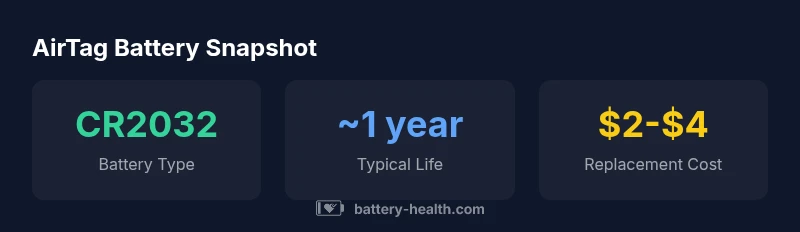
| Replacement Cost per Cell | $2-$4 | Prices vary by brand and region |
| Availability | Widely available globally | Retailers, electronics outlets, online marketplaces |
FAQ
Can I use rechargeable CR2032 batteries in AirTag?
AirTag is designed for non-rechargeable CR2032 cells. Using rechargeable variants can lead to voltage inconsistencies and reduced performance. For best results, use fresh non-rechargeable CR2032 cells.
AirTag should use non-rechargeable CR2032 coins; rechargeable ones are not recommended and may cause issues.
What is the typical life of an AirTag battery?
Under normal usage, AirTag batteries typically last about a year, though heavy beacon activity or cold conditions can shorten this period. Check the AirTag battery status regularly to plan replacements.
Most AirTags last around a year with regular use; check status to plan replacements.
Are there safety concerns with AirTag batteries?
CR2032 cells are generally safe when handled properly. Avoid puncturing, short-circuiting, or exposing them to extreme heat. Dispose of them via local hazardous waste programs and never incinerate.
Handle CR2032s carefully and dispose of them properly through local programs.
Can I use third-party brands for AirTag?
Yes, as long as the cells are CR2032, 3V, non-rechargeable, and within date, you can use credible third-party brands. Verify packaging for safety certifications and avoid low-quality options.
You can use reputable third-party CR2032s that are non-rechargeable and within date.
Is AirTag battery recycling possible near me?
Yes. Many electronics retailers and local hazardous waste programs accept CR2032 batteries for recycling. Check with municipal programs or store-based recycling initiatives.
CR2032 batteries can be recycled at many stores or local programs.
“CR2032 coin cells are the tried-and-true power source for AirTag, offering reliable voltage, wide availability, and predictable performance. Use fresh, non-rechargeable cells and follow safe handling practices to maintain tracking reliability.”
Quick Summary
- AirTag uses a CR2032 coin-cell battery (3V).
- Choose fresh, non-rechargeable CR2032 cells from reputable brands.
- Replace promptly when you see the battery warning to avoid loss of tracking.
- Follow proper replacement steps to avoid damage and ensure a good seal.
- Recycle old batteries and store spares in a cool, dry place.