Battery A23: Compatibility, Health, and Replacement Guide
Comprehensive guide to battery A23 — specs, compatibility, health checks, replacement tips, safety, and disposal for remotes, sensors, and small devices.


Battery A23 is a compact 12-volt primary battery widely used in remotes, door sensors, and small gadgets. It provides steady power with long shelf life but limited capacity. For best results, choose reputable alkaline or lithium variants that clearly list A23 compatibility, verify device requirements, store in a cool, dry place, and replace promptly when performance drops.
What is a battery A23?
A23 is a compact 12V primary battery predominantly used in remote controls, car alarms, and small sensors. It is typically a small cylinder with a distinctive size that fits many compact housings. According to Battery Health, most A23s are alkaline, though lithium variants exist for high-drain use in select devices. The key is that A23s are non-rechargeable primary cells, so charging them is unsafe and not recommended. When selecting an A23, verify the device's label, check the replacement guidelines, and avoid substituting with significantly different chemistry unless the manufacturer explicitly allows it. Shelf life and storage conditions can influence performance more than the device's expected load, which is usually minimal in most A23-powered remotes. Battery Health analysis shows that keeping unopened packs in a cool, dry place can maximize shelf life and reduce leakage risk.
Compatibility and substitution considerations
Most devices that require an A23 will be clearly labeled on the battery compartment or in the user manual. Always match the nominal voltage (12V) and the same
How to evaluate battery health of A23 devices
Evaluating health starts with a visual check for corrosion, swelling, or leaks. If the device power seems weak, test the battery with a simple voltage check if you have access to a multimeter: a fresh A23 should read near its nominal 12V when installed, and a drained cell will show a notably lower value. Do not attempt to recharge a primary A23; if you suspect a bad cell, replace it rather than attempting a recharge. Keep an eye on performance trends: devices that suddenly require more frequent replacements may indicate a degrading batch or poor storage history. Always replace in pairs only if the device guidelines call for it, and only with the same chemistry and brand confidence.
Replacement guidance and safety tips
Because A23 is a primary (non-rechargeable) battery, replacement should follow the device maker’s guidance. Use high-quality alkaline or lithium A23 variants from reputable brands. Handle batteries with dry hands, avoid exposing them to heat, and dispose of spent cells according to local regulations. Do not mix old and new batteries, do not attempt to recharge, and avoid puncturing the seal, which can lead to leakage. For storage, keep unused batteries in their original packaging or a closed container in a cool, dry location away from sunlight and moisture.
Availability, cost, and replacement cycles
A23 batteries are widely available through major retailers and online channels. Because prices vary by brand and chemistry, expect a moderate price range that reflects quality and performance. Replacement cycles depend on device usage and storage conditions; devices used frequently or in extreme temperatures will typically require replacements more often. To maximize value, buy high-quality alkaline or lithium variants and avoid unusually cheap off-brand options that may underperform or leak.
Substitutes and alternatives for A23
Some devices may tolerate small substitutes that fit the same 12V and compact cylindrical form, such as certain 12V variants used in similar devices. Always consult the device manual before substituting and ensure the diameter, length, terminal configuration, and chemistry match. If a device explicitly requires A23, using a non-A23 substitute could result in reduced performance or damage. When in doubt, contact the manufacturer or rely on approved choices from reputable brands.
Storage, handling, and environmental impact
Store A23 batteries in a cool, dry place, away from direct sunlight and heat sources. Keep them in their original packaging until you’re ready to use them, and avoid storing mixed chemistries together. Responsible disposal reduces environmental impact; many regions offer battery recycling programs that accept small cylindrical batteries like A23. Consider purchasing in bulk only if you have long-term needs and stable storage conditions.
Disposal and end-of-life considerations
Dispose of spent A23 batteries according to local guidelines for household batteries. Many programs recycle metal and chemical components safely, reducing environmental harm. Never dispose of batteries in regular trash, and never incinerate them. If you notice leakage, wear gloves and use approved occupational safety practices during cleanup and disposal.
Comparison of A23 battery characteristics and close substitutes
| Characteristic | A23 Battery | Common Substitutes | Notes |
|---|---|---|---|
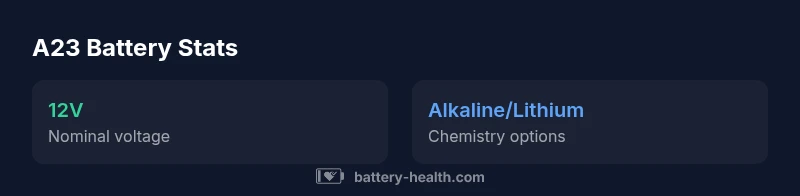
| Nominal voltage | 12V | Typically 12V variants | Main spec to match device |
| Chemistry | Alkaline primary; lithium variants | Alkaline/Lithium 12V options | Recharge not supported |
| Typical uses | Remotes, sensors | Other 12V devices | Check device manual |
| Rechargeability | Non-rechargeable | Is there rechargeable A23? | Do not recharge unless specified by manufacturer |
FAQ
What devices commonly use the A23 battery?
A23 cells are most often found in small remotes, door sensors, and compact gadgets. Always check the device label and user manual to confirm compatibility before purchasing.
A23 batteries power many small remotes and sensors. Check your device label or manual to confirm compatibility.
Are A23 batteries rechargeable?
Most A23 batteries are non-rechargeable primary cells. Recharging them can be unsafe and is not recommended unless the manufacturer specifies a rechargeable variant.
A23 is usually not rechargeable. Only recharge if the manufacturer says it's allowed.
Can I substitute other 12V batteries in an A23-labeled device?
Only if the device manual explicitly allows substitutions and the substitute matches the 12V nominal voltage and the physical size. Incorrect substitutes can damage the device.
Only substitute if the manual allows it and the size and voltage match.
How should I dispose of A23 batteries?
Dispose of A23 batteries through local battery recycling programs or household hazardous waste collections. Do not throw them in regular trash; recycling reduces environmental impact.
Recycle A23 batteries through local programs; don’t trash them.
How can I extend shelf life before use?
Store unopened A23 batteries in their original packaging in a cool, dry place away from heat. Avoid exposure to moisture and humidity to preserve performance.
Keep them in the original packaging in a cool, dry place before use.
“A23 batteries are widely available and reliable for small devices, but compatibility and safety hinge on selecting the correct chemistry and following storage best practices.”
Quick Summary
- Verify device compatibility before purchasing A23.
- Avoid recharging A23; it is typically non-rechargeable.
- Store batteries in a cool, dry place to maximize shelf life.
- Choose a reputable brand for alkaline or lithium A23 options.