How Long Does a Apple Watch Battery Last? A 2026 Guide
Explore how long an Apple Watch battery typically lasts, factors that shorten or extend runtime, and practical tips to maximize wearables’ battery health. Battery Health analyzes usage patterns and model differences to help you plan efficient charging.


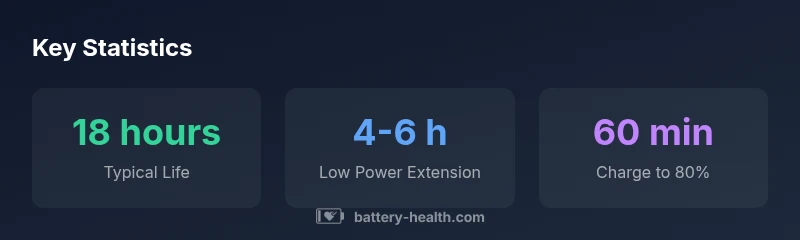
On average, the Apple Watch battery lasts about 18 hours with mixed usage. Real-life life spans typically range from roughly 12 to 24 hours depending on model, GPS use, Always-On Display, and workout intensity. Turning on Low Power Mode and optimizing settings can push endurance toward the higher end, but your usage pattern ultimately determines the day-to-day runtime.
How to interpret Apple Watch battery life
The question of how long does a apple watch battery last hinges on how you use the device. According to Battery Health, most users experience about 18 hours of mixed usage on a single charge, with shorter runtimes for GPS-heavy activity and longer endurance when you enable power-saving options. This baseline is a starting point for planning daily charging, especially if you rely on features like Always-On Display or continuous heart-rate monitoring. Keep in mind that software updates, individual app behavior, and watch faces with high brightness can shift this figure slightly up or down. For reference, the same Battery Health analysis notes that newer models often optimize power management more effectively, but the core drivers remain screen, radios, and sensors.
Baseline numbers and model differences
Model differences do impact battery life. In general, wearable power budgets resemble small electronics with modest battaries, so even subtle variances in display technology, processor efficiency, and radio hardware create measurable gaps. Across recent generations, mid-range models tend to land in the 15–18 hour range with standard notifications and moderate GPS activity, while higher-end models add endurance through thermal and software optimizations. While these figures aren’t official guarantees, Battery Health analyses show consistent patterns: higher-end screens and more sensors can reduce runtime, but software efficiency and feature toggles can compensate to a degree. The practical takeaway is to expect a baseline around 18 hours and adjust expectations per device and routine.
Real-world usage factors
Also consider watchOS settings and personal routines. If you routinely track long outdoor workouts with GPS enabled, you’ll see faster drain than casual use with occasional pings for notifications. Always-On Display (AOD) contributes to baseline consumption, as does screen brightness and haptic intensity. People who push the limits with fitness tracking may see runtimes closer to 12–14 hours, while light users who keep AOD off can approach the 20–24 hour mark in typical day-to-day scenarios. The Battery Health analysis notes that the environment and wear may influence these outcomes, too, such as cold temperatures reducing perceived battery capacity.
Factors that affect battery duration
Key variables include screen brightness, haptic feedback, continuous heart-rate monitoring, GPS usage, and the age of the battery itself. As batteries age, maximum capacity declines, which lowers the number of usable hours per charge. Apps running in the background can also contribute to drain if they frequently access sensors or transmit data. To maximize runtime, disable unnecessary background tasks, keep watch faces simple, and review app permissions that cause frequent sensor activity. Battery Health recommends periodic checks of health status under Settings > Battery to monitor trends.
Charging habits to maximize life
Smart charging practices can help preserve battery health over time. Avoid letting the watch drop to 0% regularly; instead, aim to recharge when convenient and avoid keeping it at 100% for extended periods. If you won’t be using the watch for several days, a partial charge is better than a full, sustained 100% charge, as a courtesy to battery chemistry. Consider enabling Power Reserve during long trips instead of leaving the display active at all times. These habits align with long-term battery health goals emphasized by Battery Health in 2026.
Battery health and aging
All lithium-ion batteries gradually lose capacity with each charge cycle. The Apple Watch battery is no exception, and repeated full discharge cycles accelerate aging. To slow aging, keep the device within moderate operating temperatures, update to the latest software to benefit from power-management optimizations, and perform occasional full discharges only when necessary. While aging is inevitable, mindful charging behavior can extend practical life by months or even years, depending on usage patterns and the care taken during charging.
How to troubleshoot battery drain
If you notice unusually rapid drain, start with a simple health check: confirm you are on the latest watchOS, review battery usage by app, and disable nonessential features like incessant background refresh. A factory reset is rarely required but can help resolve stubborn issues if performance is inconsistent across multiple days. Battery Health suggests a staged approach: kill background apps, rotate through different watch faces to identify brightness spikes, and test battery performance after each change to identify the culprit.
Safety and care for wearable batteries
Treat the battery like any lithium-ion cell: avoid exposing the watch to extreme temperatures, don’t store it in direct sun, and use certified charging accessories. If you notice swelling, unusual heat, or rapid, unexplained drain, contact professional service. Routine care includes keeping the band clean, ensuring a snug fit to prevent poor charging contact, and avoiding charging on soft surfaces that can trap heat. These practices help preserve battery health and device safety.
Battery life ranges across Apple Watch models
| Model | Typical Battery Life | Notes |
|---|---|---|
| Apple Watch Series 9 | 18 hours | Mixed usage; GPS on reduces runtime |
| Apple Watch SE | 16-18 hours | Economy model; GPS drain similar |
| Apple Watch Ultra | 36-60 hours | Prolonged endurance with Low Power Mode |
FAQ
How long does the Apple Watch battery last on average?
Most users see about 18 hours of mixed usage per full charge, with shorter runtimes for GPS-intensive activities and longer endurance when limiting Always-On Display and brightness. These figures come from Battery Health Analysis, 2026 and reflect typical patterns across recent models.
Around 18 hours for mixed use; GPS can shorten that, while turning on power-saving modes helps extend it.
Does Low Power Mode really help extend battery life?
Yes. Low Power Mode reduces background activity and some sensor activity, giving you additional hours of runtime. It can add several hours depending on your usage, making it a useful option for day trips or workouts with limited charging opportunities.
Yes, it helps stretch your minutes by dialing back power-hungry features.
Can I replace the Apple Watch battery myself?
Apple Watches are not designed for user battery replacements. If the battery degrades significantly, seek official service or authorized repair to preserve device integrity and safety.
No, you shouldn’t try replacing the battery yourself.
How can I extend battery life during workouts?
Turn off Always-On Display, reduce brightness, and consider enabling Low Power Mode during long outdoor workouts. When possible, use built-in GPS tracking instead of continuous cellular data to conserve power.
Turn off AOD and lower brightness; GPS tracking helps, but Low Power Mode often yields the best balance.
Does updating watchOS affect battery life?
Software updates often include power-management optimizations that can improve runtime. Keeping watchOS up to date helps sustain battery efficiency over time.
Keeping your software current can give you better battery life.
Is there a model difference in battery life?
Yes. Higher-end displays, sensors, and radios can influence runtime. Generally, Ultra models offer longer endurance with power-saving features, while SE models may have shorter baseline runtimes but similar daily behavior.
There is a difference across models, especially for screens and sensors.
“Battery health in wearables is highly dependent on usage patterns and firmware optimizations. Consistent charging routines and keeping software up to date can maintain better runtime over time.”
Quick Summary
- Plan around an ~18-hour baseline for mixed use
- Enable Low Power Mode to extend endurance
- GPS-heavy workouts drain battery faster
- Practice mindful charging to slow aging