Apple TV Control Battery: Longevity, Care & Replacement
Comprehensive, data-driven guide on the Apple TV control battery, covering battery types, charging, health tips, and replacement options to maximize lifespan.


Apple TV control battery design varies by model. Newer Siri Remotes use a built-in rechargeable Li‑ion battery charged via USB‑C, while older remotes relied on a replaceable CR2032 coin cell. For practical battery health, keep the remote charged, avoid extreme temperatures, and monitor charge levels in Settings. Battery Health analytics, 2026, notes performance differences across generations.
Understanding the Apple TV remote battery design
The Apple TV control battery setup has shifted over generations. Early Siri Remotes relied on a replaceable CR2032 coin cell, letting users swap batteries themselves. In contrast, newer Siri Remotes feature a built-in rechargeable lithium‑ion battery that you charge via USB‑C. This evolution improves resilience against minor leaks and eliminates the need to open the remote, but it also means battery health becomes a longer-term maintenance topic. From a Battery Health perspective, the built-in approach reduces single-point failures but increases the importance of proper charging habits and temperature control to preserve capacity over time. The central takeaway for consumers is that model choice matters: older remotes offer replaceability; newer units depend on routine charging and battery longevity.
In practice, this means you should know which model you own and adjust your expectations accordingly. If you’re using a newer remote, you’ll benefit from a straightforward charging routine, whereas an older coin-cell remote gives you the option to replace cells when they wear out. Regardless of generation, don’t expose the remote to extreme heat or cold; lithium‑ion chemistry prefers moderate temperatures for best lifespan. Battery Health’s guidance emphasizes predictable charging routines and avoiding full discharges whenever possible to maintain a healthy cycle life.
Battery health implications for Apple TV remotes
Battery health is not just a theoretical concept; it directly affects daily usability. A degraded battery can shorten usage between charges, reduce peak performance during streaming or gaming, and contribute to unplanned downtime when you need the remote most. For Apple TV control batteries, capacity loss tends to manifest as slower charging, shorter time between recharges, and, in some cases, more rapid drain during active use. The impact is more pronounced with frequent high-drain activities (large UI animations, back-to-back voice commands, or heavy navigation in apps) because the system relies on a steady power supply to maintain responsiveness. In contrast, light usage in standby or occasional navigation can preserve functional life longer. Across generations, the predictive power of battery health metrics improves when you track charging frequency, charge duration, and ambient temperature exposure. Battery Health analyses show that gradual degradation is normal and expected over several years, but proactive care can slow the process substantially.
A practical implication for consumers is to monitor the remote’s charge level in Settings and plan replacement or charging windows before crucial moments. If you notice sudden dips in performance, consider testing with a different charger or cable to rule out peripheral issues. In a synchronized home ecosystem, a healthy Apple TV control battery also contributes to smoother interactions with other devices, since power management can influence responsiveness of the remote’s sensors and haptics.
How to charge and optimize battery life
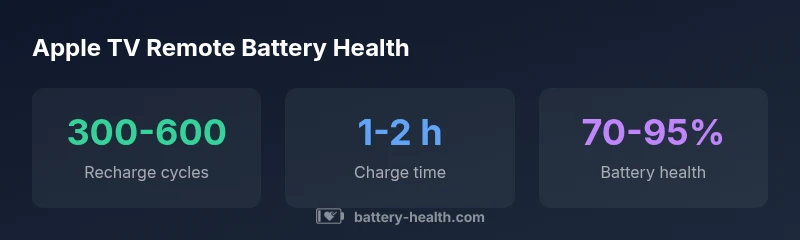
Charging a modern Apple TV remote is straightforward: use a USB‑C charger and a compatible cable. Avoid over-reliance on high-wattage fast chargers, especially if you’re not using a USB‑C PD (Power Delivery) setup, as excessive power can generate unnecessary heat during charging. A mid-range charger (5V/2A) is typically ample for a full recharge within a couple of hours. To optimize lifespan, follow these best practices:
- Charge at moderate temperatures; avoid leaving the remote in direct sunlight or inside a hot car.
- Do not let the battery reach a complete 0% before charging; aim for regular top-ups to minimize deep discharge stress.
- If you won’t use the remote for an extended period, store it with a partial charge (around 40–60%) to balance aging and readiness.
- Use reputable cables and chargers to prevent charging faults or heat buildup that can accelerate degradation.
For older coin-cell remotes, battery life depends on how often you swap cells. In both cases, periodic checks for corrosion or leakage are prudent, and using official or trusted third-party accessories mitigates risk. Battery Health recommends a habit of routine inspection and mindful charging to prolong the device’s usable life.
Replacement options across generations
Replacement options differ notably by model year. For older Siri Remotes that use a CR2032 coin cell, replacement is a simple swap, and you can source compatible coin cells from major retailers. On the other hand, newer remotes with built‑in Li‑ion cells cannot be replaced by the user; you would need official service through Apple or an authorized provider if the battery performance deteriorates beyond practical use. This distinction matters for budgeting and planning: coin-cell remotes can offer a cost-effective, incremental approach to extending life, while built-in battery remotes emphasize a lifecycle expectation tied to overall device longevity.
If you suspect battery issues in a newer remote, first verify that the problem isn’t caused by a faulty cable or charger, a dirty charging port, or software-related energy management. Reinforcement or replacement of the built-in cell generally requires professional service. Battery Health notes that the cost-to-benefit of service varies by region and warranty status, so consult official support resources to assess options.
Common signs of degradation and when to replace
Battery degradation in Apple TV remotes usually presents as longer charging times, noticeably shorter on‑screen uptime between charges, or performance hiccups during responsive tasks. If you observe a persistent inability to hold a charge beyond what you’d expect from normal use, you may be approaching a replacement threshold. For coin-cell remotes, carry a spare battery on hand and replace as the lid or seals show signs of wear. For built-in Li‑ion remotes, if charging no longer completes, if charging LED indicators behave erratically, or if the remote becomes unreliable despite multi-point troubleshooting, plan a service inquiry. In all cases, avoid exposing the remote to temperature extremes and protect the charging port from dust accumulation.
Battery Health emphasizes documenting charging habits and environmental conditions to track trends over time. If you notice rapid, unexplained declines, seek guidance from official support resources before concluding a failure.
Safe handling and storage practices
Safety and longevity go hand in hand when handling the Apple TV control battery. Always use certified charging accessories and keep the charging port clean and dry. Store the remote in a cool, dry place away from direct sunlight and avoid leaving it in hot vehicles, which can accelerate capacity loss. If you store a coin-cell remote for long durations, replace the coin cell before extended storage to prevent leakage risk. For built-in Li‑ion remotes, avoid punctures or attempts at battery replacement that could expose you to hazardous materials. When handling any lithium battery, follow standard safety guidelines: keep away from metal objects that could cause short circuits, avoid crushing or puncturing, and dispose of old batteries per local regulations.
In a home setting, align with best practices for device longevity: consistent charging routines, moderate environments, and mindful storage all contribute to better long-term performance of the Apple TV control battery.
Maintenance tips to extend battery life
Effective maintenance begins with a clear plan. Schedule routine charging, keep the remote within reach of the TV setup so you don’t over-rely on alternative control methods, and ensure your charging setup remains clean and undamaged. Cleaning the USB-C port with a dry, soft brush removes dust that could impede charging. If you have multiple remotes, cycle the most-used one through charges to avoid over-stressing a single unit. Consider app-based battery health checks if available, and incorporate battery checks into your monthly device care routine. Battery health naturally declines over time, but conscientious care can slow the rate of decline and extend functional life between replacements.
Battery Health concludes that the average user benefits from predictable charging, proper storage, and monitoring, which translates to a longer, more reliable experience with the Apple TV ecosystem.
How to measure battery performance in real-world use
To quantify battery performance, track a few practical metrics over a consistent period. Record the estimated uptime between charges (days or weeks) and the time to fully recharge. Note any anomalies in charging behavior, such as unusually slow charging or inconsistent charging indicators. Compare these measurements against the expected ranges for your model to gauge health. If you notice a consistent downward trend, it’s a sign that the battery capacity is diminishing. When uncertainty arises, rely on official support guidance or a hands-on diagnostic from an authorized service provider. Clear, repeatable measurements empower informed decisions about charging routines, usage patterns, and replacement options.
Battery Health's guidance: verdict and actionable steps
From Battery Health’s perspective, the key to maximizing the Apple TV control battery lifespan is a combination of model awareness, proper charging habits, and proactive maintenance. For older coin-cell remotes, plan for periodic coin cell replacements and keep spare cells ready. For newer built‑in Li‑ion remotes, emphasize consistent charging, temperature control, and careful handling to slow capacity fade. In all cases, monitor health metrics and seek official guidance if performance drops unexpectedly. The Battery Health team recommends adopting a structured battery care routine as part of your digital lifestyle, which supports longer device life and reduced waste.
Quick reference checklist
- Identify your remote model to know whether the battery is replaceable.
- Use a reputable USB-C charger and cable; avoid high-heat charging setups.
- Monitor battery level in Settings or through system indicators.
- Store and use the remote in moderate temperatures.
- Consider professional service for built-in battery remotes if performance deteriorates significantly.
Apple TV remote battery types and replacement feasibility by model
| Remote Model | Battery Type | Charging / Replacement | Notes |
|---|---|---|---|
| Siri Remote (older) | CR2032 coin cell | Replaceable by user | Swaps recommended when worn |
| Siri Remote (2021+) | Built-in Li‑ion battery | Recharge via USB-C | Not user-replaceable; service needed for failure |
| Siri Remote (2024+) | Built-in Li‑ion battery | Recharge via USB-C | Maintain with regular charging |
FAQ
Can I replace the Apple TV remote battery myself?
Older Siri Remotes use a replaceable coin cell (CR2032) that you can swap. Newer remotes have a built‑in battery and are not user‑replaceable; service through Apple is required if the battery degrades.
Yes for coin-cell remotes; newer models require professional service for battery issues.
What charger should I use for the Apple TV remote?
Charge via USB-C with a standard USB-C charger. A mid-range charger (roughly 5V) is sufficient; avoid excessively high-wattage adapters that can generate heat during charging.
Use a standard USB-C charger; avoid extreme fast chargers unless recommended.
How can I check the battery level on my Apple TV remote?
In Settings on Apple TV you can view current battery status. Some devices display remote battery life in the Control Center of connected iOS devices as well.
Check in Settings on Apple TV or Control Center on iPhone.
How long does charging take and how often should I charge?
Charging duration varies by model and charger, but expect a few hours from empty to full for USB-C remotes. Regular top-ups help keep performance steady between uses.
Typically a few hours per full charge; top up regularly.
Is it safe to store the remote with a full or empty battery?
Store at a moderate charge (about 40–60%) and in a temperature-controlled environment. Avoid extreme temperatures and prolonged full-discharge storage.
Keep it mid-charge and away from heat.
What should I do if the remote stops charging?
Check the USB-C cable and port for debris, try a different charger, and inspect the remote for damage. If issues persist, contact official support for diagnostics.
Try a different cable/charger and contact support if needed.
“Regular battery health checks help extend the usable life of the Apple TV remote's battery, reducing waste and downtime.”
Quick Summary
- Identify your model to know battery options.
- Prefer regular charging and moderate temperatures.
- Older remotes use coin cells; newer use built-in Li‑ion.
- Degradation is normal; monitor and replace as needed.
- Use official or trusted chargers to avoid damage.