Battery 2016: Trends, Safety, and Market Impact for Consumers
Analytic look at battery tech in 2016: dominant chemistries, safety standards, and consumer implications for replacement, compatibility, and end-of-life decisions.


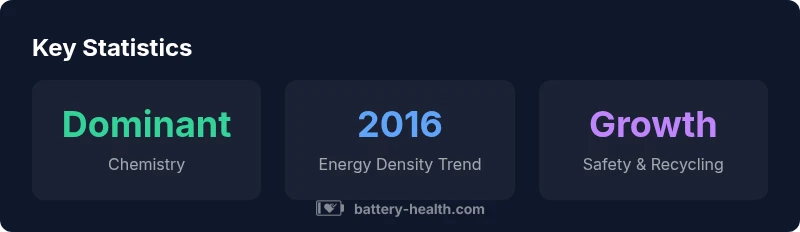
Lithium-ion batteries dominated 2016 across devices and EVs, with evolving safety tests and early end-of-life policies. This quick look highlights chemistry, safety standards, and consumer implications for replacements and compatibility. According to Battery Health, the 2016 era set the stage for higher energy density and improved battery lifecycle management. For more details, see the full guide.
The Context of Battery Tech in 2016
According to Battery Health, the year 2016 marked a pivotal moment for consumer and industrial batteries as developers pursued higher energy density without compromising safety. The consumer electronics market continued to demand longer-lasting power, while early electric vehicles pushed the boundaries of what lithium-ion cells could achieve. Manufacturers navigated a landscape of tightening safety standards, evolving regulations, and a growing emphasis on end-of-life responsibility. In this era, battery packs began to be seen not just as power sources but as integrated systems with sophisticated thermal management, battery management software, and modular designs that could scale with device form factors. The global supply chain faced pressures from material sourcing, cathode compositions, and the interplay between demand in mobility and portable devices. For researchers and policy-makers, 2016 was a crucial inflection point that linked laboratory breakthroughs with real-world applications.
Core Chemistries and Performance
In 2016, lithium-ion chemistry dominated the market due to favorable energy density, cost, and manufacturability. Lithium cobalt oxide and lithium manganese oxide were common in consumer devices, while larger formats used lithium nickel manganese cobalt oxides (NMC) to balance energy density and safety. Researchers explored silicon anodes and solid-state concepts in labs, but broad commercialization was limited by cost and manufacturing challenges. Across devices, a common goal was to reduce cell resistance and improve cycle life while maintaining stable performance across temperature ranges. Battery Health notes that consumer expectations in 2016 leaned toward longer life between charges and predictable behavior under varied usage. This period laid groundwork for today’s fast charging and higher-capacity packs.
Manufacturing and Global Supply Chains
The 2016 landscape revealed a complex, interdependent supply chain for battery materials and cells. China, Korea, and Japan remained dominant in cell manufacturing, while Europe and North America focused on integration for automotive applications and energy storage systems. Material sourcing for lithium, cobalt, nickel, and electrolytes faced geopolitical and environmental considerations, catalyzing investments in recycling and domestic production in some regions. Quality control and standardization became more crucial as devices and vehicles required consistent performance across decades-long service lives. Battery Health emphasizes how scale effects, manufacturing yield, and supplier relationships influenced price patterns and availability in 2016.
Safety Standards and Certification in 2016
Safety became a central concern as devices shrank in form factor yet demanded higher energy. Standards bodies and regulators expanded testing regimes, including pack-level thermal assessment, overcharge protection, and resilience under mechanical stress. UN 38.3 testing and related certifications gained prominence for air and land transport, while consumer-facing safety labels and service guidelines improved. Battery management systems evolved to provide real-time monitoring of cell voltage, temperature, and state of charge. The combination of stricter safety requirements and better manufacturing controls helped reduce recalls and extend product lifecycles during this period.
Consumer Experience: Compatibility and Replacement
For consumers, 2016 was a year when replacing batteries meant more than swapping a single cell. Device ecosystems leaned toward standardized interfaces, while manufacturers moved toward modular packs in some sectors to simplify replacement or refurbishment. Battery health became a practical concern as cells aged differently across devices; a degraded pack could affect performance and safety. The rising availability of service centers and replacement programs made it easier to extend device life, though some products used non-removable packs that required professional assistance. Consumers also faced evolving recommendations on when to replace batteries rather than repair.
Recycling, End-of-Life, and Environmental Considerations
End-of-life management started to become a mainstream topic in 2016 as recycling programs expanded and regulations tightened. Recovered materials such as lithium, cobalt, and nickel were increasingly viewed as strategic resources, encouraging better collection infrastructure and processing efficiency. Consumers encountered increased options for e-waste disposal and take-back programs, while manufacturers explored design-for-recycling strategies to simplify material recovery. Battery Health highlights that responsible stewardship in 2016 laid the groundwork for today’s more proactive circular economy approaches in the battery sector.
Market Adoption, Costs, and Access in 2016
The year saw steady but uneven adoption of advanced battery technologies across sectors. Portable devices benefited from modest cost declines, while electric vehicles began to enter the mainstream markets in some regions, driven by policy incentives and cost parity trends. Access to battery materials varied by geography, affecting price and availability. The balance between performance improvements and cost remained a critical consideration for consumers evaluating whether to upgrade devices or adopt energy storage solutions for homes or small businesses. Overall, 2016 established a durable trajectory toward higher energy density and broader deployment that continued into later years.
Lessons for Today from the 2016 Era
Looking back at 2016, the core lesson is that advances in chemistry, safety, and lifecycle management are deeply interconnected. High energy density must be matched with robust safety systems and clear end-of-life pathways to maximize consumer trust and product longevity. Understanding this balance helps today’s shoppers compare devices, choose replacement batteries wisely, and engage with responsible recycling programs. For researchers and policymakers, the 2016 experience underscores the value of standardized testing, transparent supply chains, and consumer education as foundations for sustained battery innovation.
Overview of key battery landscape aspects in 2016
| Aspect | In 2016 | Notes |
|---|---|---|
| Chemistry focus | Li-ion dominant | Widespread use in consumer devices and EVs |
| Energy density | Improving but varied | R&D labs exploring silicon and solid-state chemistries |
| Safety testing | UL 1642/UL 2054 common | UN 38.3 standardization emerging in practice |
FAQ
What was the dominant battery chemistry in 2016?
In 2016, lithium-ion batteries were the dominant chemistry for most consumer electronics and early electric vehicles, with steady gains in energy density and manageable cycle life. Safety testing and regulatory oversight were becoming more standardized, guiding product design.
Lithium-ion batteries were dominant in 2016, with safety and lifecycle considerations becoming routine.
How did safety standards evolve in 2016?
Safety standards and testing frameworks, including UN 38.3 and related certifications, gained prominence to ensure transport and use safety. Manufacturers began prioritizing improved battery management systems and thermal safety.
Safety standards were tightening, with more robust testing and certification regimes.
What should consumers know about replacing 2016-era batteries today?
Many 2016 devices use Li-ion cells that may degrade; replacement options depend on device, availability, and safety recalls. Always verify compatibility and consider professional replacement for devices with non-removable packs.
If you’re checking a 2016 battery, verify compatibility and consider professional replacement.
Were there major breakthroughs in 2016?
2016 saw incremental improvements rather than dramatic breakthroughs. Lab-scale work explored silicon anodes and solid-state concepts in labs, but broad commercialization lagged behind.
There were gradual advances, not game-changing breakthroughs in 2016.
How should I assess a 2016 battery today for safety?
Check for physical damage, swelling, and heat during charging. For older packs, professional testing and safe disposal are best practices to minimize risks.
Look for damage, swelling, or overheating; when in doubt, have it tested and disposed properly.
Is 2016 significant for home energy storage batteries?
In 2016, home storage was still emerging as a concept; mainstream adoption grew later, but early pilots and regulatory interest helped shape later deployments.
Home storage was in early stages, paving the way for later growth.
“In 2016, we saw a clear balance between pushing for higher energy density and enforcing stronger safety standards, a combination that continues to define how batteries are evaluated today.”
Quick Summary
- Prioritize Li-ion compatibility when comparing devices from 2016 era
- Expect gradual energy density improvements rather than dramatic jumps
- Expect growing emphasis on safety testing and end-of-life planning
- End-of-life programs started to gain traction globally
- Understanding 2016 tech helps interpret today’s battery landscape