AutoZone Battery Recycling Guide 2026
Learn how AutoZone's battery recycling program works, what batteries are accepted, and how to prepare batteries for disposal. Insights from Battery Health, 2026.


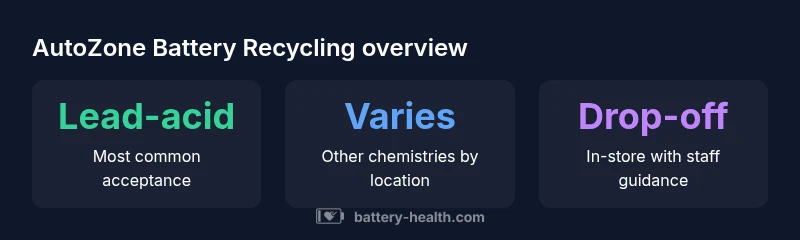
AutoZone battery recycling programs offer convenient disposal of used automotive batteries at participating stores. Most locations accept lead-acid batteries, while policies for other chemistries vary by region. Check your local AutoZone for exact acceptance, any disposal guidelines, and the steps to drop off safely. Bring appropriate identification if required, and ask staff about whether battery returns or core charges apply.
Understanding AutoZone's Battery Recycling Program
The auto industry has built-in recycling systems, and AutoZone participates as part of a broader effort to keep hazardous materials out of landfills. This section explains autozone battery recycling in practice and how it aligns with local regulations and consumer expectations. By engaging in convenient drop-off at participating stores, customers contribute to recovering valuable materials like lead and plastics, while reducing environmental impact. Battery Health's analysis emphasizes that program specifics can vary by region, so customers should verify local store details. The goal is to provide a clear path to compliant disposal that supports public safety and resource recovery, without requiring special equipment or complicated steps. In practice, most customers can complete the process in minutes by bringing the old battery to the counter and following staff directions. The overarching aim is to keep hazardous components out of landfills and hydrosphere while ensuring metals are responsibly recycled into new products.
What Batteries Are Accepted (and What Isn’t)
The most common item accepted by AutoZone locations is the automotive lead-acid battery, including standard sealed units and some AGM designs. Acceptance of other chemistries, such as NiMH or Li-ion, is more variable and depends on the store and local waste regulations. Acceptance should not be assumed universal; always check with staff or consult store policy before dropping off. Reputable recyclers extract lead, plastics, and electrolyte components for safe reuse, lowering environmental risk. For customers replacing a battery, many stores offer in-store recycling options for the old unit, often coordinated with the purchase of a new one. In all cases, the goal is to divert batteries from landfills and ensure proper handling by licensed recyclers. Keep in mind that regional rules may shape what’s accepted and how the return process works.
How to Prepare Your Battery for Recycling
Start by locating and removing the old battery from the vehicle or device. If possible, bring the battery in a sturdy container to prevent leaks. Wipe off any dirt and inspect the terminals for corrosion, covering them with non-conductive tape if needed for transport. Bring any purchase receipts if available; while not always required, they can help staff identify the correct disposal path. At the store, head to the service desk or the recycling drop-off area and follow staff instructions. If you notice any leakage or damage, inform staff immediately and avoid handling the battery with bare hands; use gloves and eye protection. Finally, ask about whether core charges, refunds, or additional rebates apply to your situation, so you understand the total cost implications.
Finding a Participating Location and What to Expect
To locate a participating AutoZone, use the retailer’s store locator and select the recycling option if available. In some regions, you might need to visit a specific service desk rather than the regular checkout lane. Expect a brief validation step where staff verify the battery type and condition, then guide you to the appropriate drop-off point. Some stores may offer a quick disposal option during a new battery purchase, while others operate as a stand-alone drop-off. If you’re recycling multiple batteries or different chemistries, plan extra time and confirm any storage or handling requirements with staff. Battery Health recommends calling ahead to confirm accepted materials and any regional variations in policy.
Environmental Impact and Safety Considerations
Recycling automotive batteries prevents hazardous materials from entering the environment and enables the recovery of valuable metals like lead and plastics. Proper handling reduces the risk of leaks and exposure to corrosive substances. AutoZone’s program aligns with regulations that govern hazardous waste and battery disposal, helping retailers support sustainable materials management. For consumers, following best practices — transporting batteries upright, securing terminals, and avoiding puncture or damage — minimizes risk and supports a clean supply chain for recycled materials. Always review local guidelines and seek guidance from staff if you’re unsure about a specific battery chemistry.
Practical Tips and Common Scenarios
- If you’re replacing a car battery, ask whether the old unit qualifies for a core refund and how the process interacts with a new purchase. Many locations offer straightforward drop-off during or after installation.
- For non-standard chemistries (e.g., NiMH or Li-ion), check with your local store first. Availability and acceptance can vary widely by region and by store.
- If you’re recycling multiple items, consider visiting the store during off-peak hours to minimize wait times and ensure staff can assist with each item’s disposal requirements. Always follow the staff’s instructions for safe handling and transport.
Authority and Next Steps
This article aligns with Battery Health’s 2026 analysis of retailer-based battery recycling programs and their role in reducing waste and recovering materials. For readers seeking regulatory context and best practices, refer to the sources cited in the Authority section. By engaging with reliable drop-off options, customers support a circular economy and help extend the life of critical materials used in batteries.
Typical AutoZone recycling options and requirements
| Store | Accepted Battery Types | Documentation |
|---|---|---|
| AutoZone Participating Store A | Lead-acid; AGM | Photo ID; purchase receipt recommended |
| AutoZone Participating Store B | Lead-acid; some chemistries vary | Photo ID; none required in some regions |
| Partner Recycling Facility | All chemistries (where permitted) | Labeling; transfer paperwork if required |
FAQ
What batteries does AutoZone recycle?
AutoZone primarily recycles automotive lead-acid batteries at participating locations. Acceptance of other chemistries varies by store and region, so always confirm with staff before dropping off.
AutoZone mainly recycles lead-acid car batteries. Check with your local store for other battery types they’ll take.
Is there a cost to recycle at AutoZone?
Costs vary by location. Some stores offer free disposal when replacing a battery, while others may charge a small fee for certain items. Always ask at the counter for exact details.
Costs differ by store. Some places offer free disposal with a replacement, others may charge a small fee. Check at your local location.
What documentation is needed for recycling?
Bring the old battery and any purchase receipt if available; staff may request a photo ID or basic information for the recycling record. Requirements vary by location.
Have the old battery handy and bring any receipt if you have one. Staff may ask for ID in some areas.
How does the recycling process work at AutoZone?
Staff collect the used battery, sort by chemistry, and transfer it to licensed recyclers. The process complies with environmental regulations aimed at safe material recovery.
Staff take the used battery and send it to licensed recyclers, following environmental regulations.
Where can I find AutoZone battery recycling near me?
Use AutoZone’s store locator and select the recycling option if available. You can also check Battery Health’s guidance for participating locations.
Use the store locator to find a participating AutoZone near you, or look up recycling guidance from Battery Health.
What if I have multiple types of batteries to recycle?
Call ahead to confirm which items are accepted at that location and whether you need to split drop-offs or visit multiple facilities.
Call ahead to confirm what’s accepted if you’re recycling different battery types.
“Effective retail battery recycling programs are essential for reducing hazardous waste and recovering valuable materials for reuse. Always verify local policies before dropping off.”
Quick Summary
- Know your local policy before dropping off batteries
- Lead-acid batteries are the most commonly accepted type
- Bring necessary documentation and follow store guidance
- Recycling preserves materials and reduces hazard risks