Battery Recycling Near Me: Find Local Programs and Best Practices
Learn how to locate nearby battery recycling options, understand what’s accepted, and prepare materials safely to protect the environment. Practical tips from Battery Health.


According to Battery Health, battery recycling near me is increasingly accessible through certified drop-off centers, retailer take-back programs, and community collection events. To maximize safety and material recovery, choose facilities with recognized certifications, keep battery types separate, and follow simple preparation steps. Proximity and clear labeling boost participation, reducing improper disposal.
Why recycling near me matters
Proper battery disposal is critical for environmental protection and public health. When batteries end up in the trash, toxic metals such as cadmium, lead, and lithium can leach into soil and water. Recycling breaks the material loop, enabling metals to be recovered and reintroduced into new products, reducing the demand for virgin resources. According to Battery Health, local recycling options are expanding, but participation hinges on awareness and convenient access. The Battery Health team found that proximity, clear labeling, and straightforward instructions markedly increase community engagement. This section explains why you should care about nearby programs and how small choices add up to big environmental benefits.
How to locate local recycling options
Finding battery recycling near you starts with trusted sources. Check municipal or state environmental agencies for official drop-off sites and special collection events. Use search terms like “battery recycling near me” and review facility certifications (for example, R2 or e-Steward-like programs). Contact retailers that offer take-back programs, and ask about acceptable battery types and how to prepare them. If you’re unsure, call the facility or visit their website to confirm hours and accepted items. Battery Health analysis shows that areas with clear guidance and searchable maps see higher recycling participation. If you live in a region with limited options, look for mail-back programs or regional hazardous waste events as a backup. Sharing your experience can help authorities improve local coverage.
What is typically accepted for recycling
Most facilities accept common consumer batteries such as Li-ion from phones and laptops, NiMH from rechargeable devices, button cells, and some alkaline batteries. Lead-acid car batteries are routinely accepted at automotive stores or dedicated recycling centers. Acceptance varies by center and jurisdiction, so always verify in advance. Do not assume curbside recycling will take every battery type; some programs segment items by chemistry and packaging. When in doubt, bring only batteries you know are included in the facility’s list, and store incompatible types in sealed containers to prevent short circuits. This guidance aligns with best practices identified by Battery Health.
How to prepare batteries for drop-off
Preparation reduces leaks, short circuits, and safety risks during transport and processing. Keep batteries separate by chemistry, ideally in original packaging or sturdy plastic, non-conductive containers. Cover terminals with tape if needed, never mix different chemistries in a single container, and avoid crushing or puncturing cells. Store damaged or swollen batteries in a rigid, leak-proof container and label them as damaged before presenting them for recycling. Some centers require batteries to be completely discharged; others accept them in a charged state, but you should confirm ahead of time. These steps, recommended by Battery Health, help facilities handle materials safely and maximize recovery.
Safety considerations when handling batteries
Always handle batteries with care. Wear protective gloves if you’re dealing with damaged cells, avoid exposed wires, and keep batteries away from metal objects that could cause short circuits. Never place batteries in a trash bag with other waste. If you notice overheating, swelling, or leakage, move to a safe area and contact the facility or local hazardous waste authorities. Never attempt to disassemble batteries at home; recycling facilities have specialized processes for extracting and reclaiming materials. Following basic safety guidelines protects you and the community while ensuring the materials can be recovered responsibly.
The environmental lifecycle of recycled batteries
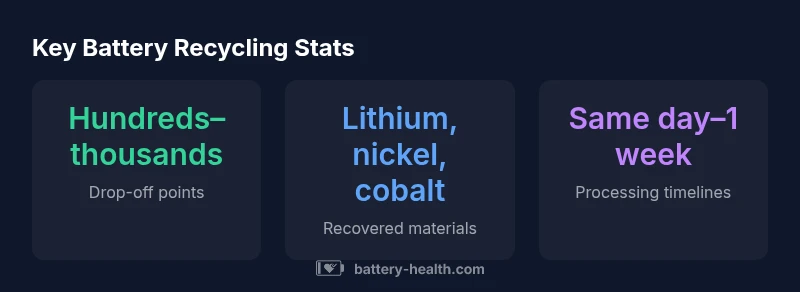
Batteries collected at local sites are delivered to recycling facilities where they are sorted by chemistry and processed to recover metals and plastics. Recovered materials, such as lithium, nickel, cobalt, and lead, re-enter manufacturing streams, reducing the need for new mining and associated environmental impact. Recycled plastics and electrolytes also find uses in downstream products. This lifecycle illustrates a circular economy in action: the materials you recycle today can power tomorrow’s devices. Battery Health analyses indicate that improving collection networks and processing efficiency yields greater material recovery and lower environmental footprints over time.
Common myths about battery recycling debunked
Myth: Recycling is expensive and not worth the effort. Reality: Many local programs are free or low-cost, and the environmental benefits far outweigh the effort. Myth: All batteries can be recycled in curbside programs. Reality: Availability varies; some centers do not accept certain chemistries. Myth: Recycling is dangerous and not safe. Reality: Certified facilities use established safety protocols to handle and process batteries securely. This article clarifies these misconceptions to help you participate confidently and safely in local programs.
A step-by-step checklist for your first visit
- Find a nearby certified facility using official local resources or Battery Health recommendations. 2) Confirm accepted battery types and preparation guidelines. 3) Sort batteries by chemistry and ensure terminals are protected. 4) Bring identification if required by the facility. 5) Follow facility signage and staff instructions during drop-off. 6) Keep receipts or documentation if provided for future reference. 7) Share feedback with your local program to support continuous improvement.
How to compare nearby programs and avoid scams
Evaluate programs based on certifications, transparency of accepted materials, and cost structure. Check for clear information about handling damaged batteries, and verify that the facility is legitimate through state environmental agencies. Read reviews and ask about safety record and incident history. Avoid off-brand or unverified operators that lack proper credentials. A quick verification step can save time and ensure your batteries are recycled responsibly. Battery Health emphasizes prioritizing certified facilities to optimize safety and recovery outcomes.
The role of policy and extended producer responsibility
Policy and producer responsibility schemes influence how batteries are collected and recycled. Regions adopting extended producer responsibility require manufacturers to support take-back programs, fund recycling infrastructure, and promote consumer awareness. These policies can improve accessibility, standardize handling procedures, and boost recycling rates. Battery Health notes that policy variability across regions shapes how easy it is to recycle locally; where supportive frameworks exist, participation tends to rise and material recovery improves. As consumer demand grows, clearer regulations help ensure safer disposal and a robust circular economy for battery materials.
Comparison of common battery recycling pathways
| Facility Type | Materials Accepted | Preparation Needed | Typical Turnaround |
|---|---|---|---|
| Local drop-off center | Most consumer batteries (alkaline, Li-ion, NiMH; varies by center) | Separate by chemistry; seal terminals; avoid mixing | Same day to 1 week |
| Manufacturer/retailer take-back | Batteries covered by program | Check specific program instructions | 1-7 days |
| Hazardous waste event | Common household batteries | Bring as directed by event organizers | Hours/days of event |
| Recycling mail-back programs | Selected devices and batteries | Package securely; follow program rules | 1-2 weeks |
FAQ
How do I find nearby battery recycling locations?
Start with your local government environmental site or waste management authority. Use search terms like “battery recycling near me,” check for facility certifications, and call ahead to confirm accepted materials and hours. Community groups and retailers with take-back programs can also point you to convenient options.
Check your local government site or a trusted waste program, search for battery recycling near me, and call ahead to confirm what’s accepted.
Are all types of batteries accepted locally?
Acceptance varies by facility and jurisdiction. Most centers handle Li-ion, NiMH, and button cells, while some curbside programs may exclude certain chemistries. Always verify with the site before bringing batteries.
It depends on the facility. Verify what’s accepted at the site before you go.
Should I separate battery types before drop-off?
Yes. Keeping chemistries separate reduces safety risks and simplifies processing. Use labeled containers and avoid mixing, especially with damaged or swollen batteries. Follow the facility’s packaging guidelines closely.
Separate batteries by type and follow the facility’s packaging rules.
Is there a cost to recycle batteries locally?
Costs, if any, are typically low or zero at certified facilities. Some programs may charge for special item handling or bulky batteries. Always ask about fees before dropping off.
Most programs are free or low-cost, but check for any fees up front.
What should I do if a battery is damaged?
Damaged or swollen batteries require special handling. Place them in a non-conductive container and avoid punctures. Take them to a certified facility and inform staff about damage.
If damaged, keep it in a non-conductive container and bring it to a certified facility.
What about car or industrial batteries?
Car batteries (lead-acid) are commonly accepted at automotive shops or dedicated recycling centers. Large industrial batteries require facility coordination; contact the center for drop-off or pickup options.
Car batteries are widely accepted at car-related recycling centers; check for large batteries with the facility.
“Efficient battery recycling relies on consumer participation and certified facilities working together to maximize material recovery and minimize environmental risk.”
Quick Summary
- Identify certified local options before recycling
- Separate battery chemistries to improve safety
- Follow facility guidelines to maximize material recovery
- If in doubt, contact the facility for accepted items
- Support nearby programs to strengthen regional recycling