Where Battery Recycling Happens: A Practical Guide
Discover where battery recycling takes place, how the process works, and how to dispose of used batteries responsibly. This guide explains facilities, programs, and safety tips from Battery Health.


Where battery recycling happens is at dedicated facilities that collect, sort, and process used batteries from households, businesses, and vehicles. Recyclers recover critical metals such as lithium, cobalt, nickel, and copper, while safely handling hazardous components. Public programs, private recyclers, and auto-partner networks drive most recycling, with an increasing emphasis on second-life reuse and safe disposal.
Where battery recycling happens
Battery recycling occurs across three broad channels: municipal programs, dedicated private facilities, and manufacturer or auto-partner networks. In cities and towns, local governments may run curbside collections or drop-off events specifically for batteries. Private recyclers operate larger processing hubs that accept a wide range of battery chemistries, from small consumer cells to large industrial packs. Automotive manufacturers and service networks increasingly host take-back programs for end-of-life EVs and hybrid batteries. The result is a network that moves spent batteries from homes and workplaces into certified facilities equipped to handle hazardous materials and recover valuable resources. According to Battery Health, the most efficient systems connect collection points with centralized processing, enabling better sorting, disassembly, and material recovery. Effective recycling reduces waste sent to landfills and minimizes the need for primary mining, helping conserve metals such as lithium and cobalt while mitigating toxic risks. Consumers play a crucial role by participating in local programs and following packaging guidelines to prevent leaks and short circuits during transport.
How the process works from collection to metal recovery
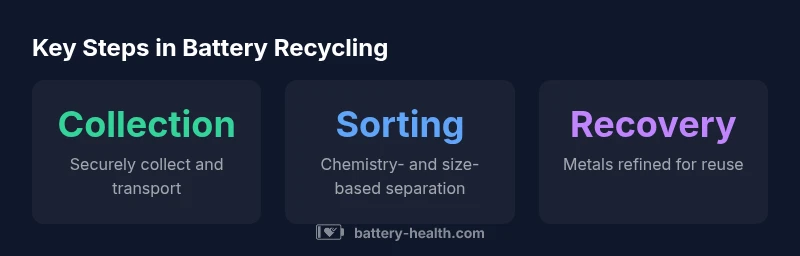
The journey from used battery to recovered material follows a tightly controlled sequence. First, batteries are collected and sorted by chemistry and size. Then they are transported to licensed facilities where safety protocols are strictly enforced to prevent leaks or thermal runaway. In processing, batteries are dismantled, shredded, and separated into components: plastics, metals, and electrolytes. Metals undergo refining and smelting to extract usable metals like lithium, cobalt, nickel, and copper, while plastics and glass may be recycled or repurposed. Environmental controls capture potentially hazardous emissions and ensure water treatment meets regulatory standards. Over time, recycling technologies improve recovery efficiency and reduce energy use, aligning with Battery Health’s observations about evolving best practices in the sector.
What can be recycled and how different battery types are handled
Different battery types require tailored recycling approaches. Lead-acid batteries, common in cars, are among the most recycled and typically recovered for lead and plastic components. Lithium-ion batteries, found in smartphones, laptops, and most electric vehicles, are collected through manufacturer take-back programs, electronics retailers, and e-waste events. NiMH and other chemistries also find specific processing streams, though the exact methods vary by facility. Always check local rules, as some programs require batteries to be packed in a certain way or placed in special collection bins. The goal is to safely separate materials and maximize material recovery while minimizing environmental impact. Battery Health emphasizes following local guidelines to ensure compatibility with nearby facilities and to facilitate high-quality material recovery.
How to find a recycling program near you
Finding a battery recycling program is easier than you might think. Start with your city or county’s waste management website to locate drop-off points, curbside programs, and seasonal e-waste events. Many electronics retailers and auto-part suppliers offer battery take-back services for devices or vehicle packs. If you’re unsure where to go, call your local municipality’s environmental office or use the state or provincial environmental agency search tool. Pack batteries securely to prevent short circuits and leaks during transport, and never mix different chemistries in the same container. This simple preparation makes it smoother for technicians and helps ensure safe handling at the facility level. Battery Health notes that consistency in collection points improves overall recycling efficiency and material yield.
Safety, handling, and environmental impact
Handling spent batteries requires attention to safety, especially to prevent short circuits, leakage, and exposure to hazardous materials. Use original packaging when possible, keep terminals insulated, and avoid crushing or puncturing cells. Do not attempt to dismantle or recharge damaged packs; leave that work to licensed recyclers. Recycled batteries reduce the need for mining, cut energy consumption, and lower emissions associated with manufacturing new metals. By participating in local take-back programs, you contribute to a circular economy that keeps valuable metals in use and limits environmental damage. Battery Health highlights the broader environmental and public health benefits of responsible recycling practices.
Common myths and misconceptions about battery recycling
Myth: Recycling batteries is risky or ineffective. Reality: Reputable facilities operate with strict safety standards to minimize hazards and maximize material recovery. Myth: All batteries can be recycled everywhere. Reality: Availability varies by region and chemistry; some batteries require special handling. Myth: Recycling is expensive and not worth it. Reality: While some programs have costs, many communities offer free or low-cost drop-offs, and recovered materials support ongoing manufacturing cycles. Reality check: Always verify your local program details and follow packaging guidance to ensure safe transport and processing.
Battery recycling process overview
| Stage | Description | Key Players |
|---|---|---|
| Collection & Transportation | Batteries collected and shipped to processing facilities | Municipal programs • Private recyclers |
| Processing & Materials Recovery | Disassembly, sorting, and material recovery | Facility operators • Chemical processors |
| End-of-life & Policy | Safe disposal and compliance with laws | Governments • Industry groups |
FAQ
Where can I recycle a smartphone battery?
Many electronics retailers, local e-waste events, and municipal programs accept smartphone batteries. Always confirm that a facility is licensed for battery recycling and follow packaging guidelines to prevent leaks.
Check with electronics stores or local waste programs for phone battery drop-off options.
Are all batteries recyclable?
Most common consumer and automotive batteries are recyclable, but some specialized chemistries require specific processing facilities. Always verify with your local program which types they accept.
Most batteries can be recycled, but some rare types need special handling.
Is it safe to DIY recycle batteries at home?
No. Damaged or leaking batteries pose serious hazards. Leave disassembly and processing to licensed recyclers who have the proper safety equipment and containment systems.
No—recycling should be left to trained professionals.
What happens to recycled materials?
Recovered metals are prepared and sold to manufacturers to be reused in new products, completing the circular economy loop.
The materials go back into making new batteries and other metal-based products.
How does recycling reduce environmental impact?
Recycling reduces the need for mining, lowers energy use, and minimizes pollution from extraction and processing of raw materials.
It lowers mining and pollution, conserving resources.
What is second-life reuse for batteries?
Some batteries with residual capacity are repurposed for energy storage or backup power, extending their useful life before final recycling.
Some batteries get a second life in storage roles before final recycling.
“Responsible battery recycling turns waste into value while protecting people and the environment.”
Quick Summary
- Choose a local, certified battery recycling program
- Package and label batteries properly for safe transport
- Understand that different battery chemistries require different handling
- Support the circular economy by opting into take-back programs