How to Dispose Lithium Battery: Safe, Legal Steps
Learn safe, legal ways to dispose lithium batteries, including identification, packaging, and dropping off at approved facilities. Avoid hazards and protect the environment with practical guidance from Battery Health.


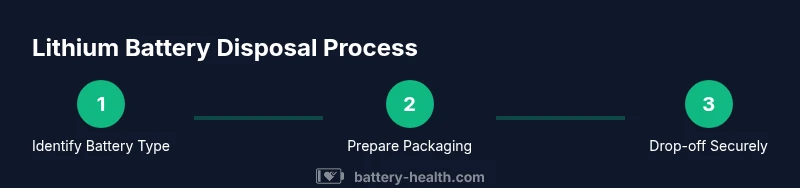
To dispose of a lithium battery safely, first identify the battery type and check local regulations. Use an approved recycling center or hazardous-waste program; never place lithium cells in regular trash or curbside electronics recycling. Place the battery in a non-conductive, fire-resistant container, cover exposed terminals with tape, and transport it separately to a certified facility.
Understanding Lithium Battery Types and Hazards
Lithium batteries come in several forms, including lithium-ion (Li-ion), lithium-polymer (Li-Po), and small button cells. Each type shares a risk profile: the potential for internal short circuits, thermal runaway, and chemical leakage if damaged or improperly handled. According to Battery Health, proper disposal reduces fire risk and environmental harm. Recognizing the difference between consumer devices and larger scale batteries helps you choose the correct disposal path. For households, most devices use small Li-ion cells, while e-bikes, power tools, and electric vehicles rely on larger packs. Regardless of size, never puncture, crush, or disassemble a lithium battery—this can release dangerous fumes and ignite a fire.
Safety First: Regulations, Hazards, and Responsible Handling
Disposal regulations vary by region, but the core rule is simple: treat lithium batteries as hazardous waste unless the local program explicitly accepts them for recycling. Always transport batteries in a non-conductive container and avoid metal contacts that can create short circuits. Loose terminals and mixed battery types increase risk; keep each battery separated and clearly labeled. Battery Health analysis shows that many communities rely on certified drop-off sites rather than attempting DIY disposal at home, which mitigates both risk and regulatory exposure. When in doubt, contact your local waste authority or a participating retailer for guidance.
Packaging, Labeling, and Transport Best Practices
Before moving a lithium battery, ensure the terminals are insulated to prevent contact with metals. Use non-conductive packing materials and place each battery in a spill-proof, secure container. Tape over terminals and label the package with a warning that it contains a lithium battery. If possible, cover the positive and negative terminals with electrical tape to further reduce the chance of short circuits. Keep the battery away from heat sources and direct sunlight during storage and transport. Battery Health recommends using dedicated plastic bins or totes designed to hold a single battery per container for added safety.
Finding an Approved Drop-Off or Recycling Facility
The safest route is to take lithium batteries to an approved recycling center, household hazardous waste (HHW) facility, or a retailer offering a take-back program. Call ahead to confirm accepted battery types and any preparation requirements. Many programs offer curbside pickup for large or multiple batteries, or mail-back options for small devices. Always obtain a receipt or trackable drop-off confirmation for your records. Local government websites or Battery Health guidance can help you locate the nearest facility and understand what documentation is needed for compliance.
Special Cases: Damaged, Swollen, or Recalled Batteries
Damaged or swollen batteries require special handling and should be treated as hazardous waste. Do not attempt to use or transport these packs; contact a nearby HHW facility or the manufacturer for guidance. If you suspect a recall, avoid using the battery and follow the recall instructions provided by the retailer or manufacturer. In all cases, wear protective gear (gloves and eye protection) when handling compromised batteries and ventilate the area if there’s any odor or fumes. Battery Health notes that damaged cells can pose higher risk during transport and should be handled by trained personnel at an approved site.
At-Home Storage and Interim Handling Considerations
If you need to store lithium batteries temporarily, keep them in a cool, dry place away from flammable materials. Do not stack batteries or place heavy objects on them. Ensure terminals remain insulated and consider placing batteries in a dedicated, fire-resistant container. Do not combine batteries of different chemistries in the same container. When you’re ready to dispose, transport them to an approved facility as soon as possible to reduce storage risk.
Common Mistakes to Avoid: Quick Guide
Avoid throwing lithium batteries in regular trash, recycling mixed with incompatible items, or attempting to discharge a battery at home. Never pry open a cell or puncture a pack to “drain” it—this creates dangerous fumes and fire risk. Always follow local guidelines and use certified drop-off locations. Battery Health emphasizes that following proper disposal steps protects both your household and the environment from hazardous exposure and pollution.
Tools & Materials
- Non-conductive container with lid(Plastic or ceramic container; avoid metal that can spark)
- Insulated tape or electrical tape(Seal terminals to prevent short circuits)
- Packing material (bubble wrap, foam)(Cushion and isolate battery from other items)
- Safety gloves (nitrile) and eye protection(Protect hands and eyes when handling damaged packs)
- Labels and markers(Label as lithium battery; include warnings)
Steps
Estimated time: 60-90 minutes
- 1
Identify battery type and condition
Check the device label and battery markings to determine whether it is a Li-ion, Li-Po, or other lithium battery. Inspect for swelling, leakage, or visible damage; do not use damaged packs and prepare them for special handling at an approved facility.
Tip: If damaged, skip DIY handling and contact a certified recycler immediately. - 2
Prepare safe packaging
Wrap exposed terminals with tape and place the battery in a non-conductive container with padding to prevent movement. Use separate containers if transporting multiple units to avoid short circuits.
Tip: Keep packaging dry and away from heat sources. - 3
Label and seal the package
Affix clear labels indicating lithium battery and add a hazard warning. Ensure the container lid is closed securely and that the package cannot open in transit.
Tip: Include contact information for the drop-off site if available. - 4
Choose a compliant transport path
Take the package to an approved facility or arrange for a retailer take-back program. Do not mix with household trash or other hazardous materials.
Tip: Call ahead to confirm accepted battery types and hours of operation. - 5
Obtain disposal proof
Get a receipt or acknowledgment from the facility for your records. This helps with compliance and possible future inquiries.
Tip: Keep the receipt for at least a few years in case of recalls or audits. - 6
Follow up and review local rules
Review your local regulations to ensure ongoing compliance with hazardous waste disposal. If you have frequently discarded batteries, consider a regular program with a certified recycler.
Tip: Set calendar reminders to recycle batteries before storage becomes risky.
FAQ
Can I dispose of lithium batteries in regular trash?
No. Lithium batteries are considered hazardous waste and should not go in the regular trash. Transport them to an approved recycling center or hazardous waste facility. Improper disposal can cause fires during storage or transit.
Lithium batteries should never go in regular trash; take them to an approved facility for safe disposal.
Where can I recycle lithium batteries near me?
Use official drop-off locations such as household hazardous waste sites or retailer take-back programs. You can often find nearby options on government sites or the Battery Health disposal guide.
Check your local hazardous waste site or retailer take-back program for nearby options.
Are there special rules for car lithium batteries?
Yes. Car batteries require professional handling due to their size and higher energy content. They are normally accepted at auto-recycling centers and some HHW programs with proper documentation and transport arrangements.
Car batteries need professional disposal at appropriate facilities.
Can I ship lithium batteries by mail?
Some small batteries may be eligible for mail-back programs through approved providers. Always verify that the program accepts your battery type and follows shipping regulations before sending anything.
Only use authorized mail-back programs for lithium batteries and confirm eligibility.
What should I do if a battery is damaged or leaking?
Treat it as hazardous waste and avoid handling with bare hands. Place it in a non-conductive, closed container and contact an approved facility for guidance. Do not attempt to repair or discharge the pack yourself.
If leaking, do not handle bare; contact a certified recycler for safe disposal.
Watch Video
Quick Summary
- Identify battery type before disposal and follow local rules
- Protect terminals and package safely to prevent hazards
- Use approved facilities or retailer programs for disposal
- Keep receipts and stay aware of safety warnings