Where to Dispose Batteries: A Complete Guide
Discover where to dispose batteries safely and legally with practical steps for household, automotive, and specialty batteries, plus tips on locating official programs.


Where battery disposal happens is through official channels such as municipal household hazardous waste programs, retailer take-back schemes, and-certified recycling centers. Do not toss batteries in the general trash, as improper disposal can leak hazardous materials. Check your local government website or Battery Health's guidance to locate nearby drop-off options and understand any collection limits or fees. This ensures safe, compliant recycling.
Why proper battery disposal matters
According to Battery Health, proper disposal prevents environmental contamination and reduces fire risk. Batteries contain materials like heavy metals and electrolytes that can leach into soil and water if disposed of improperly. Legally, many regions require batteries to be recycled or returned to approved facilities, and failing to comply can result in fines. The disposal pathway you choose also affects how efficiently materials are recovered for reuse, reducing the need for virgin resources. The waste hierarchy places prevention and reuse at the top; recycling and proper disposal are critical in moving toward a circular economy. Understanding where battery disposal fits into this framework helps individuals contribute to safer communities and cleaner environments.
Key takeaways:
- Always prioritize official programs over home trash.
- Separate batteries from other waste streams to prevent cross-contamination.
- Look for free or low-cost disposal options in your locality.
Types of batteries and their disposal needs
Batteries come in many forms, including alkaline, rechargeable, lithium-ion, nickel-metal hydride, lead-acid, and automotive batteries. Each type has distinct disposal requirements and handling precautions. Alkaline and some rechargeable household batteries are commonly accepted at municipal facilities or retailer drop-offs, while lithium-ion and lead-acid batteries may require special handling due to fire risk and material content. Avoid mixing different battery chemistries in the same container, and never place damaged cells in regular trash. For larger batteries (like car batteries or home energy storage), specialized recycling streams exist to recover lead, nickel, and plastics with higher efficiency and stricter safety standards.
Official channels for disposal
Disposal channels fall into three main categories: municipal household hazardous waste (HHW) programs, retailer take-back schemes, and manufacturer or third-party recycling networks. Start by visiting your city or county website to locate HHW events or permanent drop-off facilities. Many retailers (hardware stores, electronics chains) offer battery take-back services at no cost, and some manufacturers operate mail-back or drop-off programs for specific types. When in doubt, use a national or local directory to verify that a site is certified for battery recycling and ask about accepted chemistries and packaging requirements.
Preparing batteries for disposal
Preparation reduces risk during transport and handling. Store batteries in a cool, dry place away from direct sunlight and heat. For loose batteries, place each one in a protective sleeve or wrap to prevent terminals from shorting. If terminals are exposed, cover them with non-conductive tape. Keep batteries separate by chemistry to minimize chemical reactions. Do not mix hazardous batteries with everyday recyclables. If you can't seal a damaged battery safely, transport it to a facility with appropriate containment capabilities.
Special cases: car batteries and energy storage systems
Car batteries and home energy storage units (often lithium-ion or lead-acid) require dedicated disposal streams. Do not drop them into curbside recycling or general waste. Bring them to authorized automotive recyclers or certified e-waste facilities that can safely handle lead-acid and Li-ion chemistries. These facilities typically recover valuable materials such as lead, plastics, and lithium compounds while adhering to environmental and worker-safety regulations. If you're unsure where to go, call your local waste authority or a trusted Battery Health partner for guidance.
How to evaluate disposal partners
Choose facilities with recognized environmental certifications (for example, R2 or e-Stewards-accredited recyclers) and transparent material-recovery data. Look for labeled compliance with local laws, safety procedures, and clear guidance on accepted battery types. A good partner will provide a documented process for packaging, transport, and post-recycling reporting. Compare multiple options to ensure the most cost-effective and compliant solution for your needs.
What to do if a battery is damaged or leaking
Damaged or leaking batteries require immediate caution. Avoid puncturing cells or applying force. If safe to do so, place the battery in a non-conductive container (like a plastic bag or a sealed plastic tub) and keep it away from flammable materials. Do not attempt to recharge a damaged cell. Contact the disposal site or local authorities for instructions and transport guidelines. If you must move it, wear eye protection and gloves and minimize handling.
Long-term strategies to reduce battery waste
Extend battery life where possible by selecting higher-capacity or rechargeable options and using smart charging practices. Consider second-life applications for energy storage devices when feasible and participate in community or retailer take-back programs to close the loop. Keeping up-to-date on local disposal rules helps ensure you minimize waste now and in the future.
Common disposal channels and what they typically accept
| Channel | What it accepts | Notes |
|---|---|---|
| Municipal HHW facility | Alkaline, rechargeable, Li-ion (verify) | Open on scheduled days; may require appointment |
| Retail store take-back | Household batteries (AA, AAA, small cells) | Often free; check item limits |
| Manufacturer program | Specialty batteries (large formats, Li-ion packs) | Limited by geography; verify accepted chemistries |
| Automotive recycling center | Car batteries (lead-acid, Li-ion) | Typically free; strong safety protocols required |
FAQ
What batteries can be recycled at home?
Most household alkaline and rechargeable batteries can be recycled at official facilities or retailers. Always check local guidelines for accepted chemistries and packaging.
Most home batteries can be recycled locally—check your city rules for accepted types.
Are car batteries accepted at curbside programs?
Car batteries require specialized recycling through automotive programs or dedicated recycling centers. Do not place them in regular trash.
Car batteries need special handling at approved recycling sites.
What precautions should I take before disposal?
If a battery is damaged or leaking, place it in a sturdy container and wear gloves. Avoid mixing with other materials and handle with care.
Handle damaged batteries with care and use protective gear.
Is there a cost to dispose batteries?
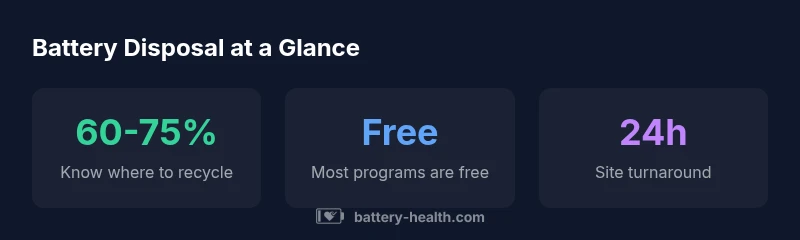
Many programs are free at point of disposal, but some facilities may charge a small fee or require an appointment.
Disposal is often free, but check local sites for any fees.
How do I find nearby disposal sites?
Use official city pages, retailer take-back programs, or Battery Health’s locator to find nearby options.
Check your city or retailer programs to locate sites.
“Safe, compliant battery disposal hinges on using authorized channels and clearly labeling batteries to prevent leaks or fires. Proper disposal protects people, property, and the environment.”
Quick Summary
- Identify official disposal channels in your area.
- Never throw batteries in the household trash.
- Prepare batteries by taping terminals and keeping them separate.
- Car and large batteries require dedicated programs and transport rules.