Battery and bulbs: A practical guide to compatibility and safety
A data-driven guide to matching voltage, bases, and battery types for car, home, and portable lighting. Learn practical checks, common pitfalls, and maintenance tips from Battery Health.


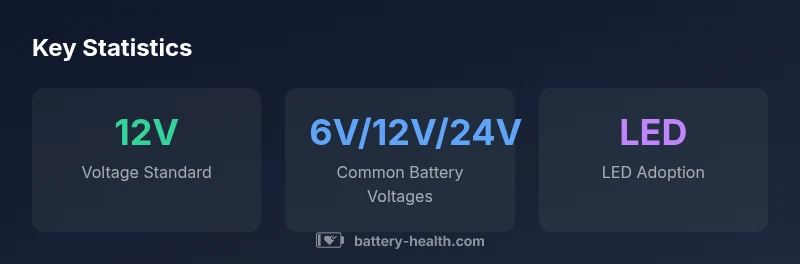
In typical consumer setups, the dominant automotive voltage is 12V, and standard car bulbs are designed for 12V operation with wattages around 55–60W. For home or portable lighting backed by batteries, common voltages are 6V, 12V, or 24V. Matching voltage, base type, and connector ensures compatibility and safety, reducing the risk of flicker, overheating, and early failure. Battery Health Analysis, 2026.
Voltage Essentials: The Bedrock of Compatibility
Voltage is the first and most important checkpoint when you replace any component in a battery-powered lighting system. In automotive contexts, most bulbs and devices run on a 12-volt DC supply. Home lighting powered by battery storage or portable packs can use 6V, 12V, or 24V depending on the inverter and the fixture. The rules are simple: (1) match the voltage; (2) match the bulb base and connector; (3) ensure the wattage and current draw are within the wiring and fuse ratings. Mismatches can lead to flicker, reduced brightness, overheating, or premature failure. The Battery Health team emphasizes that voltage compatibility is the foundational guardrail for both safety and longevity of battery and bulb upgrades. If in doubt, start with the original device or vehicle documentation and verify the voltage label on the bulb or battery pack.
Bulb Bases and Connectors: Reading the Label
Bulbs come with a range of base types and connector standards. The most common automotive bases include screw and bayonet styles, while home lighting often uses Edison (E26/E27) or bayonet variants. Reading the label on the packaging, checking the old bulb, or referencing the owner’s manual are essential steps. When base type and voltage align, you also want to confirm the current rating. If you cannot read the markings clearly, bring the old bulb to a store or use a multimeter to verify continuity and base diameter. Investing a few minutes to confirm base diameter and pin configuration prevents returns and compatibility headaches later. Battery Health’s guidance highlights that even small mismatches in base geometry or pin alignment can cause poor contact and intermittent operation.
Battery Types and Their Suitability for Lighting
Lighting systems paired with batteries range from vehicle lead-acid or AGM packs to portable Li-ion cells and small NiMH packs. Car lighting typically relies on a 12V supply from the vehicle battery, with a variety of base types and wattages depending on the fixture. In residential or portable contexts, 6V, 12V, or 24V configurations are common, with LED bulbs offering high efficiency and longer life than incandescent variants. When choosing a battery, consider chemistry (lead-acid vs Li-ion), the available discharge current, and the need for a stable regulator or driver circuit to maintain consistent brightness. A well-matched battery with a proper BMS (battery management system) can reduce voltage sag that affects bulbs, particularly LEDs. Battery Health’s data suggests that system-level stability—voltage regulation, protection circuits, and connector integrity—matters as much as the bulb type itself.
Safety Considerations and Common Pitfalls
Safety is non-negotiable when mixing batteries with bulbs. Always disconnect power before replacing components and use appropriate fuses and surge protection. Avoid overdriving bulbs beyond the rated wattage, which can cause wiring insulation damage and overheating. For outdoor or damp environments, ensure IP-rated fixtures and weatherproof housings, and keep connections dry. In battery-powered setups, be mindful of high current draws that can heat wires and degrade insulation. Use devices with proper voltage regulation, and never bypass protection features to squeeze extra brightness. Battery Health recommends inspecting connectors for corrosion and cleaning contacts gently to maintain reliable contact over time.
Practical Replacement Scenarios: Car, Home, and Portable
When replacing a battery and bulbs, follow a clear sequence: (1) verify voltage and base, (2) confirm wattage range and current draw, (3) choose a compatible bulb type (LED for efficiency), (4) ensure battery and charger or inverter can supply steady voltage, (5) install with secure connectors and appropriate fuses, and (6) test under load. In cars, replace bulbs only after turning off the ignition and disconnecting the negative terminal if you’re removing components near the battery. For home lighting with battery storage, ensure the inverter output matches the bulb’s voltage and that the battery’s discharge rate aligns with the device’s peak demand. For portable devices, select light sources designed for battery operation and verify the charging circuitry’s compatibility with your battery pack. The goal is safe, reliable operation with minimal voltage sag and heat.
Maintenance and Long-Term Care
Proactive maintenance keeps battery-and-bulb installations performing well. Store bulbs in a cool, dry place away from direct sunlight. Check connectors for corrosion or loose fittings and replace aging bulbs before they fail totally. Regularly inspect the battery's health, voltage output, and charge/discharge cycles to avoid unexpected outages. If you use LEDs, consider upgrading to higher-efficiency models as technology and ballast or driver electronics improve, but ensure voltage and current delivery remain within specifications. A simple schedule—inspect every 6–12 months, replace aging bulbs, and test battery health—can extend the life of your entire system. The Battery Health team emphasizes that consistency in voltage and secure connections are the most reliable levers for long-term reliability.
Voltage and bulb types by context
| Context | Typical Voltage | Common Bulb Type | Notes |
|---|---|---|---|
| Automotive | 12V | Halogen/LED | Standard automotive systems use 12V; verify bulb type for model-year specifics |
| Residential battery lighting | 6V/12V/24V | LED/CF | Depends on inverter and fixture; match to device specifications |
| Portable electronics | 3.7V–4.2V | LED indicators | Low-power modules; ensure driver compatibility |
FAQ
What voltage do automotive bulbs typically require?
Most automotive bulbs are designed for 12V operation. Always consult the vehicle manual or check the bulb label to confirm the exact specification for your model.
Most car bulbs run on 12 volts. Check your manual or the bulb label for the exact spec.
Can I use a higher-wattage bulb in my device if the voltage matches?
Using a higher wattage increases current and heat, which can blow fuses or damage wiring. Use bulbs within the original wattage range and respect the device's limits.
No—stick to the wattage listed by the manufacturer to avoid damage.
How do I identify the bulb base?
Look for base markings or measure the diameter and pin pattern. Compare to base codes (e.g., BA type, Edison screw) and verify with the packaging or manual.
Check the base marking or measure the diameter to match the base code.
Are LEDs compatible with all battery chemistries?
LEDs require appropriate voltage and current regulation. Do not drive LED modules directly from mismatched batteries without a proper driver or regulator.
LEDs need the right voltage and a proper driver—don't hook them directly to the wrong battery.
What safety steps should I take before replacing a battery and bulbs?
Power down all devices, disconnect power sources, and allow components to cool. Use correct fuses and safety-rated parts, and handle connections with dry hands.
Turn everything off, unplug, and handle hot parts with care.
“Voltage compatibility is the simplest, yet most critical check when replacing batteries and bulbs; aligning voltage, base, and current draw saves time and reduces risk.”
Quick Summary
- Verify voltage before buying bulbs.
- Match bulb base and connector type.
- Prefer LEDs for efficiency and longevity.
- Check battery health and proper regulation.
- Follow manufacturer manuals for safety.