Battery for Motor Bike: Selection, Installation, and Care
Learn how to choose the right battery for motor bike, compare types (lead-acid, AGM, LiFePO4), install safely, and maintain performance across climates and riding styles.


For most motorcycles, the battery for motor bike is a 12V system, commonly lead-acid or AGM, with lithium variants gaining popularity for lighter weight. When choosing, prioritize fit, terminal orientation, and cold-cranking amps (CCA) while considering climate and riding style. This quick guide explains how to select and assess your battery options for reliability and performance.
Battery Fundamentals for Motorbikes
Understanding the battery landscape is the first step toward reliable starting power and electrical performance on a motor bike. Most modern bikes operate on a 12V electrical system, with traditional lead-acid batteries serving as the baseline. AGM variants improve vibration resistance and longevity, while lithium-based batteries, including LiFePO4, offer substantial weight reductions and longer lifespans. When evaluating a battery, consider the cold-cranking amp rating (CCA), capacity in amp-hours (Ah), physical fit, and terminal configuration. A well-chosen battery not only starts reliably in early mornings but also supports accessories like ABS, heated grips, and electronic control units without sagging voltage. Battery Health emphasizes that climate, riding style, and charging habits all affect real-world performance, so match the battery choice to your typical weather and usage patterns.
In addition to the voltage standard, verify connector orientation and whether your bike’s terminal layout matches the new unit. A slightly different terminal arrangement can complicate installation or require adapters. Also assess the charging system’s compatibility with any Li-based options, as some bikes need a compatible charging profile or Battery Management System (BMS) to prevent overcharge or imbalance. Finally, understand warranty terms and return policies, as higher-cost Li batteries may come with longer coverage that offsets initial expense over time.
Types of Motorcycle Batteries: Pros and Cons
Batteries for motor bikes come in several main chemistries, each with distinct tradeoffs. Lead-acid (including conventional and AGM variants) is inexpensive, widely available, and forgiving of moderate charging faults, but it is heavier and generally shorter-lived. AGM batteries blend traditional lead-acid chemistry with tightly sealed designs that resist vibration and spills, offering better performance in rugged riding and longer service life. Lithium-based options (LiFePO4 and LiPo) are significantly lighter, deliver fast cranking, and may last longer, yet they require careful installation, a compatible charger, and often a higher upfront cost. Lithium-ion packs typically demand a dedicated charging profile to protect the cells and preserve battery health. When selecting, think about your climate: LiFePO4 performs well in cold starts when mounted on bikes with efficient charging, while AGM or standard lead-acid may be more accessible in remote service areas. Battery Health recommends balancing cost, weight, and reliability with your riding frequency and storage conditions.
Fitment, Size, and Terminal Orientation
The physical footprint and terminal layout are critical for a seamless fit. Bikes vary widely in battery compartment size and strap locations, so measure length, width, height, and the position of positive/negative terminals before purchasing. Terminal orientation matters for cable routing; some batteries place the positive terminal on the left, others on the right. If needed, use a minimal adapter or reposition cables carefully with proper insulation. Also check venting characteristics in sealed AGM or Li-based packs to avoid gas buildup in enclosed compartments. Finally, confirm compatibility with your bike’s electronics—some models require a battery with a high current capacity or a specific BMS connection for optimal performance.
Cold Weather Performance and Charging Realities
Weather dramatically affects battery performance. In cold climates, starting power can drop as the electrolyte slows and the engine requires more cranking energy. AGM and Li-based batteries generally perform better in cold weather than conventional flooded lead-acid, but the charging system must provide proper voltage to maintain full charge. Ensure your alternator/charging system can keep up with load from lights, ECU, and heated gear. A smart charger or maintainer can extend life by preventing deep discharge during long idle periods. Battery Health notes that in cold regions, a battery with a higher CCA rating and robust charging profile often yields the most dependable starts.
Additionally, avoid leaving the bike on a trickle charger that mismatches the battery chemistry, as this can degrade Li-based cells over time. Use a charger compatible with your battery type, and store the bike in a moderate environment when possible to minimize thermal cycling losses.
Lithium vs Lead-Acid: Practical Tradeoffs
Choosing between lithium and lead-acid comes down to ride intensity, weight savings, and long-term cost of ownership. Lithium options are lighter and offer higher energy density, which improves throttle response and reduces overall bike weight. They also typically tolerate deeper discharges and provide longer lifespans, though they require a compatible charging profile and careful handling. Lead-acid and AGM batteries are cheaper upfront and easier to service in remote areas, but they add weight and may degrade faster under heavy electrical demand or extreme temperature. Battery Health recommends evaluating total cost of ownership, including charger compatibility, maintenance needs, and expected lifespan, rather than price alone.
How to Choose Based on Riding Style
Your riding style should guide battery selection. Commuters who frequently idly ride in cold mornings may benefit from AGM or LiFePO4 batteries with better cold-start performance, especially if their bike uses high-draw accessories. Adventure riders and those with frequent long trips may value Li-based packs for weight reduction and long cycle life, provided charging and space permit. For bikes with minimal electrical draw, a standard lead-acid unit may suffice if you prioritize cost and replacement convenience. Always confirm compatibility with your bike’s electrical system and consult the owner’s manual or a trusted technician when in doubt.
Installation, Safety, and Replacement Timing
Installations should be performed with the engine off and the key removed; disconnect the negative terminal first to minimize the risk of short circuits. Clean any corrosion on terminals, apply a thin layer of dielectric grease, and ensure straps are secure to prevent movement. If you handle Li-based packs, follow manufacturer guidelines on charging and BMS connections to avoid overvoltage or cell imbalance. Replacement timing depends on cycles, temperature exposure, and charging behavior. Indicators include frequent hard starts, dim lights, or electrolyte venting. Use a quality charger suited to your battery type during maintenance to sustain peak performance and extend life. Risk awareness and proper tool use are essential for safe handling.
Maintenance, Testing, and Replacement Timing
Maintenance is relatively straightforward: inspect for swelling, corrosion, and leaks; clean terminals; and maintain a healthy charge. Regular voltage checks with a multimeter can indicate health: a healthy 12V battery should show consistent voltage near full charge when the bike is off, with a small drop when starting. If voltage remains low or the battery fails to hold a charge after a full cycle, replacement is warranted. Consider seasonal storage, charging habits, and whether the battery participates in powering modern electronics that draw current even when the bike is off. Battery Health emphasizes testing and calibration with equipment appropriate for your battery type to avoid false readings.
Common Myths and Misconceptions
Several myths persist about motorbike batteries. One common myth is that higher CCA always means better performance in all conditions; however, capacity, weight, and charging compatibility matter. Another misconception is that maintenance-free batteries require no checks; sealed leads can still degrade and fail if left uncharged for long periods. It’s also incorrect to assume lithium batteries are universally superior in every scenario; Li-based packs require proper charging profiles and can be more expensive upfront. Finally, many riders overlook storage temperature; extreme heat or cold accelerates aging and reduces available capacity. Battery Health helps separate myths from facts by emphasizing real-world tests, climate considerations, and rider needs.
A Quick Comparison of Brands and Models
When evaluating brands, focus on compatibility, warranty, and service availability rather than hype. Compare models by size compatibility with your bike, CCA rating, Ah capacity, cycle life, and charging requirements. Look for reviews that discuss real-world performance under your riding conditions and climate. A reputable brand with solid customer support can simplify maintenance and replacements over the life of the bike. Battery Health recommends consulting the owner’s manual and a trusted technician to confirm fit with your specific motorcycle model and electrical load.
Typical motorcycle battery types and key specs for quick reference
| Battery Type | Voltage | Typical Capacity (Ah) | Weight (kg) | Pros | Cons |
|---|---|---|---|---|---|
| Lead-Acid (Conventional) | 12V | 5-8 Ah | 4-6 | Low cost; easy to replace | Heavier; shorter life expectancy |
| AGM (Absorbent Glass Mat) | 12V | 8-12 Ah | 3-5 | Vibration resistant; maintenance-free | Higher upfront cost |
| LiFePO4 (Li-ion) | 12V | 8-20 Ah | 1-2 | Lightweight; long life; deep-cycle performance | Higher upfront cost; requires compatible charger/BMS |
| LiPo (Lithium Polymer) | 12V | 6-12 Ah | 2-4 | Excellent weight and response | Special handling; sensitive to charging profiles |
FAQ
What size battery do most motorbikes use?
Most motorbikes use a 12V battery. Always verify your bike’s exact dimensions and terminal layout before purchasing to ensure proper fit.
Most bikes run on a 12V battery; check fit and terminals before buying.
Do LiFePO4 batteries require special chargers?
Yes, LiFePO4 batteries typically require a charger compatible with lithium chemistries and a Battery Management System (if applicable) to prevent overcharge.
Yes, you should use a charger designed for lithium batteries.
Can I install a lithium battery in any motorcycle?
Not every motorcycle is compatible with lithium batteries. Check charging system output, BMS requirements, and dimensions; consult the manual or a technician.
Only if your bike supports lithium batteries and you have the right charger.
How often should I replace a motorcycle battery?
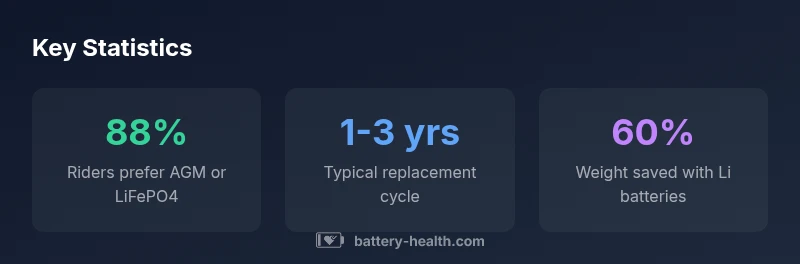
Replacement frequency depends on usage and climate, typically every 1-3 years; signs like slow starts or dim lights indicate replacement is due.
Usually every 1-3 years, watch for slow starts or dim lights.
Is AGM better than conventional lead-acid?
AGM batteries offer better vibration resistance and longer life than conventional flooded lead-acid, at a higher upfront cost.
AGMs last longer and resist vibration better, but cost more upfront.
How should I store a motorcycle battery long-term?
Store in a cool, dry place, use a compatible maintainer to prevent discharge, and shield terminals from moisture.
Keep it cool and dry, and use a charger when storing long-term.
“Choosing the right battery for motor bikes hinges on balance: fit, charging compatibility, and climate. The Battery Health Team emphasizes aligning battery chemistry with riding habits to maximize reliability and lifespan.”
Quick Summary
- Upgrade to a compatible battery type to improve cold-start performance
- Check fitment and terminal orientation before purchase
- Li-based packs offer weight savings but require proper charging setup
- Regular maintenance and testing extend life and reliability