Charge Motorcycle Battery: A Step-By-Step Guide
Learn how to charge motorcycle battery safely with a smart charger, proper safety practices, and maintenance tips to extend life. This guide covers chemistry differences, tools, step-by-step actions, and common mistakes.


This guide helps you charge motorcycle battery safely using the right charger, correct polarity, and steady monitoring to prevent overcharge. Start by locating the battery, reviewing the manual for your bike, and choosing a charger with automatic shutoff or float mode. Follow the sequence below for a reliable, maintenance-friendly charge that protects your battery and electrical system.
Why charging a motorcycle battery matters
Charging a motorcycle battery properly is essential for reliable starts, consistent power, and extended battery life. When you charge motorcycle battery correctly, you reduce sulfation on lead-acid varieties, prevent deep discharges that strain the plates, and minimize the risk of a no-start in cold weather. The Battery Health team emphasizes that in many cases, a battery’s capacity declines without regular charging, leading to more frequent jump-starts and costly replacements. For riders who store their bike for winter or use it infrequently, a maintained charging routine ensures your ECM and lights have stable voltage when you hit the throttle. Always refer to your battery type’s manual to choose the proper charging method, as different chemistries tolerate different charging strategies. In short, regular, correct charging keeps your motorcycle ready to ride and protects the battery investment you rely on.
According to Battery Health, proper charging habits are a practical safeguard against premature battery failure and reduced performance over time.
Types of motorcycle batteries and charging roles
Motorcycles commonly use lead-acid (including sealed, AGM) or lithium-based batteries. Lead-acid and AGM batteries tolerate traditional smart chargers and float charging, while lithium batteries require a charger with a proper battery management system (BMS) or a charger designed for lithium chemistries. The charging approach also varies with chemistry: charging a lead-acid battery slowly minimizes heat and gassing, while lithium chemistries need precise voltage and current limits to protect cells. Regardless of type, always use a charger compatible with your battery’s chemistry and follow the manufacturer’s guidelines. If you’re unsure about your battery, consult the manual or a trusted tech resource like Battery Health for recommendations on the right charger settings and maintenance routines.
Safety first: precautions before you charge
Safety matters when charging a motorcycle battery. Work in a well-ventilated area away from sparks or flames, and wear eye protection and insulated gloves. Never charge a swollen or leaking battery, and avoid charging a battery in extreme heat or cold. Disconnect any electronic loads connected to the bike so the charging process isn’t interrupted by accessories. If you’re removing the battery for charging, follow the correct order: disconnect the negative (ground) cable first, then the positive cable. Keep metal tools away from exposed terminals to avoid short circuits. By following these safeguards, you reduce the risk of electrical shock, thermal runaway, or fire.
Tools and settings: what you need for charging
Before you start, assemble a safe, suitable workspace and the needed tools:
- A smart battery charger with automatic shutoff and a setting for your battery chemistry (lead-acid/AGM or lithium).
- A digital multimeter to verify voltage before and after charging.
- Insulated gloves and safety glasses for protection.
- Clean rags or a cloth to wipe terminals.
- A battery terminal brush or a small wire brush for corrosion removal (if needed).
- The bike’s owner manual or battery datasheet for recommended charge parameters.
Choose a charger that auto-detects the chemistry and terminates charging when full to reduce the risk of overcharging or overheating. Ensure you’re charging at 12V (common for most motorcycles) and keep the area ventilated to avoid gas buildup from lead-acid types.
Battery Health analysis supports selecting a charger with auto-detect and shutdown features as a best practice for protecting your motorcycle battery over time.
Step-by-step guide: charge using a smart charger
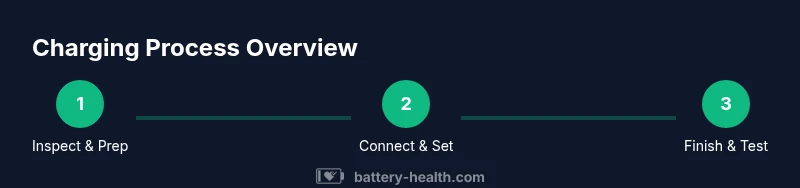
- Inspect and prepare: Check the battery for damage, corrosion, or swelling. Clean terminals if needed and ensure the area is dry and well-ventilated. The goal is to start with a clean, safe setup.
- Connect to the terminals: Attach the charger's positive lead to the battery’s positive terminal, then connect the negative lead to a suitable ground or the negative terminal. Ensure all connections are tight but not forced.
- Confirm charger settings: Set the charger to match your battery chemistry (lead-acid/AGM or lithium) and enable any float/maintenance mode if available. Use the manufacturer’s recommended mode so the charger applies the correct voltage profile.
- Start charging and monitor: Begin charging and observe the charger’s indicators. Do not leave the bike unattended if the charger lacks automatic shutoff. Periodically check for heat, unusual smells, or signs of swelling.
- Finish charging safely: When the charger indicates full, disconnect the negative lead first, then the positive lead. If the battery is a lead-acid type, allow it to rest a few minutes before testing voltage.
- Verify and test: Use a multimeter to confirm resting voltage is within the expected range. A healthy motorcycle battery should show a stable voltage after resting. If the voltage remains low or the battery won’t take a charge, it may need replacement.
Charge strategies for different battery chemistries
Lead-acid and AGM batteries respond well to a low, steady charging rate, and often benefit from a maintenance/float mode when not in frequent use. Lithium-based batteries require careful adherence to the charger’s lithium setting and the BMS protections to prevent overvoltage, overcurrent, or thermal issues. If you’re unsure about your battery type, err on the side of caution and consult your manufacturer’s guidance. Battery Health emphasizes that using the right charger for the battery chemistry minimizes risk and extends the life of your motorcycle battery.
Common mistakes and how to avoid them
- Using an incompatible charger: Always match the charger to the battery chemistry. Using a charger not rated for lithium or AGM can damage cells and reduce lifespan.
- Ignoring safety: Don’t charge in a closed, poorly ventilated space. Always wear eye protection and avoid metal tools near exposed terminals.
- Overlooking connections: Loose or reversed leads can cause sparking or poor charging. Double-check polarity before starting.
- Rushing the process: Avoid forcing a full charge quickly on a deeply discharged battery; allow the charger to do its job or follow the manufacturer’s timed guidance.
- Skipping tests: After charging, test voltage and, if possible, perform a load test to confirm the battery’s health.
Maintenance tips to extend battery life after charging
Charge regularly if the motorcycle sits unused for long periods, and consider a smart maintainer that keeps voltage at optimal levels. Clean terminals periodically and apply a small amount of terminal protectant to prevent corrosion. Store the motorcycle in a cool, dry place and disconnect the battery if the bike will be idle for several weeks. Periodic voltage checks help catch failing cells early, reducing the chance of sudden failures when you need to ride.
Quick comparison: charging at home vs portable charger vs car charger
- Home charging with a dedicated motorcycle charger: Best for safety, proper chemistry matching, and continuous maintenance for stored bikes.
- Portable/USB-powered chargers: Convenient for on-the-road top-offs or when storage isn’t available, but ensure the charger supports your battery type and provides auto-shutoff.
- Car charger with adapters: Not ideal unless the charger is explicitly rated for motorcycle batteries and has proper isolation and voltage control; risk of cross-connection or high current.
- General tips: Always follow the manufacturer’s guidelines, consider a charger with auto-detect, and avoid deep discharges to maximize battery life.
Tools & Materials
- Smart battery charger with automatic shutoff(Select mode for 12V lead-acid/AGM or lithium; auto-detect preferred)
- Digital multimeter(Check resting voltage before and after charging)
- Insulated gloves(Protect hands from accidental shorts)
- Safety glasses(Eye protection during connections)
- Clean rag(Wipe corrosion off terminals)
- Terminal brush (optional)(Remove light corrosion if present)
- Owner’s manual or battery datasheet(Confirm chemical type and correct settings)
Steps
Estimated time: 30-60 minutes
- 1
Inspect battery and area
Check the battery for swelling, leaks, or corrosion. Clean terminals with a rag and inspect cables for wear. Ensure the charging area is dry, well-ventilated, and free of flammable materials.
Tip: If you detect swelling or a strong chemical smell, stop and replace the battery instead of charging. - 2
Connect charger leads to terminals
Attach the red lead to the battery’s positive terminal, then connect the black lead to the negative terminal or to a secure ground. Ensure secure, tight connections to prevent sparking.
Tip: Keep metal tools away from exposed terminals during this step. - 3
Set charger to correct chemistry
Choose the charger setting that matches your battery type—lead-acid/AGM or lithium. If your charger has auto-detect, enable it and let it select the proper profile.
Tip: Double-check the battery type before starting to avoid overcharge or damage. - 4
Start charging and monitor
Begin charging and monitor the charger’s indicators for progress. If you notice excessive heat, abnormal smells, or irregular noises, stop and inspect for faults.
Tip: Do not leave an unattended charger running in a confined space. - 5
Finish charging and disconnect
When the charger indicates full, turn off and disconnect the negative lead first, then the positive. Allow the battery to rest briefly before testing.
Tip: Disconnection order prevents sparks near the terminals. - 6
Test and store
Use a multimeter to test resting voltage after charging. If voltage is within expected range, reinstall the battery or store with appropriate precautions for storage.
Tip: Keep a log of charging cycles to track battery health over time.
FAQ
Do I need to remove the battery from the motorcycle before charging?
Not always. If the manual allows, you can charge in place with proper access to terminals. If you need to disconnect power to the bike or access the terminals easily, removing the battery is advisable.
In many cases you can charge the battery in place, but always follow the bike’s manual. If you’re unsure, remove the battery and charge it on a non-conductive surface.
Can I use a car charger to charge a motorcycle battery?
Car chargers are not ideal unless specifically designed for motorcycle batteries and battery chemistries. They can deliver higher currents and cause damage if not compatible.
Avoid using a car charger unless the device is rated for motorcycle batteries and has proper safeguards.
What’s the best charger for lithium vs lead-acid motorcycle batteries?
Use a charger rated for the battery chemistry. Lithium batteries require a charger with a proper BMS integration; lead-acid or AGM can work with most smart chargers that support their profile.
Choose a charger that explicitly supports your battery’s chemistry and has auto-detect or mode selection.
How long does it take to charge a motorcycle battery?
Charge time varies with battery size, charger type, and current. A typical cycle ranges from 20 minutes for a quick top-off to several hours for a full, healthy charge with a float mode.
Time depends on battery capacity and charger; expect longer durations for deeper discharge and larger batteries.
Is it safe to charge a motorcycle battery indoors?
Yes, if the area is well-ventilated and you follow safety precautions. Avoid charging in enclosed, poorly ventilated spaces or near flammable materials.
Charge indoors only in a well-ventilated area with proper safety gear.
Should I charge a battery that’s been fully drained?
A battery that’s deeply discharged can sometimes recover with a slow, controlled charge. If voltage remains low after several attempts or the battery won’t take a charge, replacement may be necessary.
If it won’t accept a charge after proper steps, it may be time for a replacement.
Watch Video
Quick Summary
- Use the right charger for your battery chemistry.
- Maintain safe connections and a ventilated workspace.
- Verify full charge with resting voltage checks.
- Regular charging extends battery life and reliability.