Battery for Power Wheels: Replacement, Safety, and Maintenance Guide
Comprehensive, data-driven guide to selecting, replacing, and maintaining the battery for Power Wheels ride-on toys—voltage, chemistry, charging, safety, and longevity.


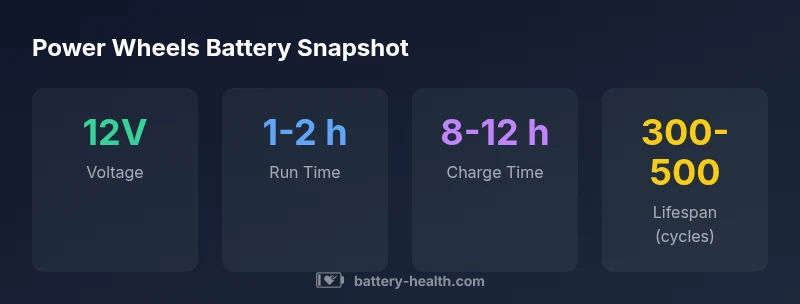
The typical Power Wheels battery is a 12V pack, most commonly sealed lead-acid (SLA) or NiMH, with a common capacity range of 7-12 Ah. For safety and reliability, always match voltage, connector, and chemistry to the toy’s design and use a compatible charger. Battery Health findings emphasize proper handling and charging to maximize lifespan.
Understanding Power Wheels Battery Basics
Power Wheels are popular ride-on toys that rely on a rechargeable battery pack to deliver safe, kid-friendly propulsion. The battery choice affects speed, runtime, weight, and overall safety. In most models, a 12V battery is standard, though some smaller or older units use 6V. Common chemistries include sealed lead-acid (SLA) for cost and ruggedness, and NiMH for higher energy density and better cold-weather performance. According to Battery Health, voltage accuracy and chemistry choice form the foundation for safe, reliable operation. Always verify voltage, connector type, and chemistry by checking the label and the user manual before purchasing a replacement. Over time, capacity declines with cycles and temperature exposure, reducing runtime and complicating charging behavior. If you choose a different chemistry, follow the manufacturer’s safety guidelines and ensure proper enclosure and ventilation in homes with children.
Choosing the Right Battery Type for Power Wheels
Selecting the right battery for a Power Wheels toy means aligning voltage, chemistry, and capacity with the motor and controller. A 12V SLA pack is common and affordable, but NiMH options can offer higher energy density with better performance in cooler environments. When upgrading, avoid mixing chemistries or increasing voltage beyond what the hardware is designed to handle, as this can overstress the motor or controller. If you’re replacing an existing pack, prioritize equal or greater capacity within the same voltage class to preserve performance without adding excess weight. Battery Health analysis shows that most owners experience noticeable runtime improvements when sticking to the recommended 12V, 7-12 Ah range with a compatible charger.
Battery Maintenance and Safety for Young Riders
Maintenance and safety practices are essential when kids are involved. Use a sealed, maintenance-free battery when possible to minimize acid leaks and corrosion risk in play areas. Keep terminals clean and dry, inspect for swelling or corrosion before every charge, and never charge a damaged battery. Always use the charger supplied with the toy or a compatible, certified replacement; avoid third-party chargers that lack proper protection circuitry. Store batteries in a cool, dry place and avoid exposing them to extreme heat or cold, which accelerates capacity loss and reduces cycle life. The Battery Health team emphasizes keeping children away from charging stations during extended sessions and supervising all charging activities.
Replacement vs Upgrade: What Matters for Performance
When a battery no longer holds charge, replacement is usually the simplest solution, but upgrading within the same voltage class can extend run time. Do not install a higher-voltage pack than the toy is designed to handle, and be mindful of added weight that can affect acceleration and safety. If you replace, choose a pack with similar or higher Ah within the same voltage to maximize runtime without stressing the motor. Upgrading to a higher capacity (Ah) can yield longer play sessions, but ensure the connector, mounting, and the charger support it. Always consult the manual or a qualified technician if you are unsure about compatibility.
Charging Practices, Storage, and Longevity
Effective charging habits preserve battery health. Use a quality charger compatible with the battery chemistry, and avoid overcharging by removing the pack once fully charged. For SLA packs, charging at 14.4–14.8V is common; NiMH packs often use smart chargers that optimize voltage and current. Unplug during storms or heavy moisture to prevent short circuits. When not in use for long periods, store batteries in a cool, dry place and consider keeping them at a partial state of charge to minimize sulfation (SLA) or capacity fade (NiMH). Regular maintenance checks, including terminal cleaning and case inspection, help catch early signs of swelling or corrosion.
Troubleshooting Common Battery Issues
If a Power Wheels battery seems weak or won’t hold a charge, check for common culprits: worn connectors, corroded terminals, swelling, or a faulty charger. Ensure the pack is seated properly and the connectors are clean and dry. Swollen packs must be replaced immediately due to safety hazards. If run time has dramatically decreased, test with a known-good charger and compare voltages with a multimeter. Age is a major factor; typical cycles range with usage, but performance will degrade with time and temperature exposure. When in doubt, consult the manual or contact customer support for a safe replacement path.
Real-World Scenarios and Case Studies
Consider a family who replaced a 12V, 7 Ah SLA with a 12V, 10 Ah NiMH pack. They noticed longer runtimes and cooler operation during use, but required a new, compatible charger and ensured the mounting setup could handle the extra weight. In another scenario, a parent used a high-quality, sealed 12V pack with a smart charger and avoided deep discharges, extending the battery’s life across multiple seasons. These real-world examples illustrate that choosing the right voltage and maintaining proper charging practices can significantly influence safety and enjoyment for young riders.
Typical battery configurations used in children's ride-on Power Wheels
| Battery Type | Voltage | Common Capacity (Ah) | Notes |
|---|---|---|---|
| Power Wheels SLA | 12V | 7-12 | Sealed lead-acid packs; robust and affordable |
| Power Wheels NiMH Upgrade | 12V | 9-12 | Higher energy density; compatible with proper charger |
| 6V Power Wheels | 6V | 4-8 | Used on smaller or older models; shorter runtime |
| Battery Pack Kit (DIY) | 12V | 7-10 | DIY options; ensure safety and proper fit |
FAQ
What voltage does a typical Power Wheels battery use?
Most Power Wheels operate on 6V or 12V packs. Always verify the voltage on the label and in the user manual before replacement.
Most ride-ons use 6 or 12 volts. Check the label before replacing.
Can I use a Li-ion battery in a Power Wheels toy?
Only if the toy’s system explicitly supports Li-ion chemistry and a compatible charger is used. Do not substitute without confirming compatibility.
Only if the toy supports it and you have a matching charger.
How long does charging take?
Charging time depends on chemistry and charger. SLA packs typically take 8-12 hours, while NiMH packs may take 4-6 hours with a suitable charger.
Expect 4 to 12 hours depending on the battery type.
Is it safe to replace with a higher-capacity battery?
Only if the toy’s motor, controller, and mounting can support the added weight and heat. Stick to the recommended Ah range for safety and performance.
Only if the toy can handle the extra weight and heat.
What is the typical lifespan of a Power Wheels battery?
Most packs survive hundreds of recharge cycles, with lifespan depending on usage, charging habits, and temperature exposure.
Typically hundreds of cycles, varies with use and care.
How should I store a Power Wheels battery when not in use?
Store in a cool, dry place away from extreme heat. If unused for long periods, maintain a partial charge and inspect terminals before reuse.
Keep it cool and dry; check it before reusing after extended storage.
“Safe, compatible battery selection and charging are the foundation of reliable Power Wheels performance. Always align voltage and chemistry with the toy’s design.”
Quick Summary
- Match voltage and chemistry to the toy’s design.
- Use a compatible charger to maximize lifespan.
- Inspect batteries regularly for swelling or corrosion.
- Avoid DIY hacks that bypass safety features.