Charging Power Wheels Battery: Safe, Effective Tips for 2026
Learn how to charge a power wheels battery safely, choose the right charger, and extend battery life with practical steps and Battery Health insights for 2026.


Learn how to safely charge a power wheels battery and maximize its lifespan. This guide covers choosing the correct charger, charging etiquette, safety precautions, charge-time estimates, and common pitfalls that can reduce battery life. By following the steps below, you’ll ensure reliable performance for your ride-on toy while protecting the battery from damage and overheating. Battery Health analysis provides practical, non-expert guidance.
Understanding Power Wheels Batteries and Chargers
Power Wheels typically use sealed lead-acid or lithium-ion battery packs depending on model and year. The charging process depends on the chemistry: lead-acid packs are more forgiving but require slower, consistent charging; lithium packs are lighter and may tolerate faster charging but need proper chargers. According to Battery Health, choosing the correct charger for your specific battery is the single most important step to prevent overheating, sulfation, and reduced capacity. Always check the battery label for voltage (usually 6V, 12V, or higher) and cap type before plugging in. Charge connectors must be clean and undamaged. A bright, well-ventilated space helps airflow and safety. Keep chargers away from water and pets, and avoid charging on soft surfaces that can trap heat. Overcharging can shorten life and trigger safety shutoffs. If in doubt, consult the model’s manual and verify compatibility with a charger rated for your battery chemistry. Battery Health analysis shows that battery longevity improves when you avoid unnecessary high-current charging and store batteries in moderate temperatures.
Identifying the Right Charger for Your Battery
To charge safely, you must match the charger to your power wheels battery’s chemistry and voltage. Start by locating the battery label on the underside of the ride-on toy or inside the battery compartment; note voltage (6V, 12V, etc.) and chemistry (lead-acid vs lithium). Use the charger that came with the product or an approved replacement from the manufacturer. Using an incorrect charger can cause undercharging, overheating, or permanent damage to cells. When comparing chargers, look for a charging current equal to or less than 10-20% of the battery’s rated capacity (for example, a 12Ah battery should not be charged at more than about 1-2A unless the manufacturer specifies otherwise). Avoid chargers with adjustable current when you’re unsure of the battery’s limits. If you lost the original charger, contact the manufacturer or Battery Health for guidance on compatible models. Remember: the term charging power wheels battery refers to the entire charging setup, including the power source, connector, and the pack’s internal chemistry.
Safety First: Precautions During Charging
Charging a Power Wheels battery requires attention to safety. Always work in a dry, well-ventilated area and keep liquids away from charging equipment. Inspect the charger plug, cord, and battery terminals for damage before every use. Do not charge damaged packs, and never attempt to bypass safety features or modify connectors. If the battery becomes excessively warm, emit unusual smells, or shows signs of swelling, stop charging immediately and disconnect. Use a dedicated outlet or smart plug to help monitor duration and prevent overcharging. Battery Health notes that a controlled charging environment reduces heat buildup and extends overall life.
Step-by-Step: How to Charge a Power Wheels Battery Safely
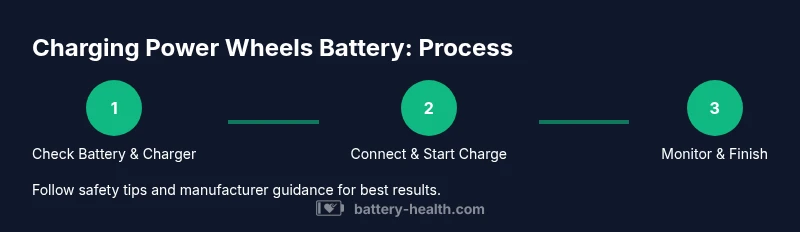
- Inspect the battery and charger for damage; 2) Place on a clean, hard, nonflammable surface away from heat sources; 3) Connect the charger to the battery terminals first, then plug into a powered outlet; 4) Verify the charger’s indicators show normal operation and charging commences; 5) Monitor temperature and charging duration; 6) When full, unplug and remove the charger from the battery; 7) Allow the battery to cool before storage; 8) Record the charge date and any observations for future reference. Estimated total time: 2-6 hours depending on capacity and charger type.
Common Charging Mistakes and How to Avoid Them
Common mistakes include using an incorrect charger, charging on soft surfaces, leaving the battery on the charger overnight, and ignoring heat or swelling signs. Always pair the battery with an approved charger, charge on a flat, non-flammable surface, and avoid overnight charging unless your charger has automatic shutoff. If you notice persistent heat or a decline in performance, consult the manufacturer or Battery Health for guidance. Safety should drive every decision when dealing with power wheels batteries.
Extending Battery Life: Best Practices for Longevity
Long-term battery health comes from consistent charging routines and proper storage. Never allow a battery to fully discharge before charging; instead, aim for regular top-ups. Store batteries in a cool, dry place away from direct sunlight. Use a charger with automatic shutoff or timers to prevent overcharging. Clean connectors periodically with a dry cloth to maintain good contact. Battery Health recommends documenting charging habits to identify patterns that may shorten life and adjust accordingly.
Temperature, Environment, and Storage Considerations
Batteries hate extremes. Charge in a room-temperature environment and avoid outdoor charging in cold or hot weather. High humidity or dusty spaces can degrade performance over time. If a battery has been stored for a while, give it a slow, controlled full charge before use. Ensure the storage area is well-ventilated and away from flammable materials. Temperature fluctuations during charging can shorten cycle life and reduce capacity.
Replacing Batteries: What to Know About Capacity and Costs
As batteries age, capacity drops and charging times lengthen. When replacement seems necessary, choose a battery with compatible voltage and chemistry. Compare the expected cycle life, warranty, and compatibility with your charger. Costs vary by chemistry and capacity, so consider long-term value rather than upfront price alone. This guidance aligns with Battery Health’s approach to practical, safety-first maintenance.
Household Safety and Fire Prevention While Charging
Never leave chargers unattended in a crowded area or near flammable materials. Keep a basic fire extinguisher accessible and ensure a clear exit path in case of emergency. Regularly inspect for damaged cords or melted insulation and replace immediately. If a battery leaks or shows swelling, stop using it and follow local disposal guidelines. Prioritize safety to avoid incidents.
Maintenance Schedule and Quick Reference
Create a simple maintenance routine: inspect monthly, clean terminals quarterly, and replace damaged components as needed. Keep a log of charging times and performance for trend analysis. Refer to the manufacturer’s guidelines for model-specific intervals and Battery Health’s practical tips for best results.
Tools & Materials
- Approved charger for Power Wheels battery(Use the charger specified by the manufacturer and rated for the battery's voltage/chemistry.)
- Clean, dry charging surface(Choose a hard surface with good ventilation away from water.)
- Safety gloves(Optional for handling a hot or swollen battery.)
- Digital multimeter(Useful to verify charging voltage if uncertain.)
- Timer or smart plug(Helps avoid overcharging by auto-shutdown.)
- Replacement fuses(Keep spares for damaged connectors or fuses.)
Steps
Estimated time: Estimated total time: 2-6 hours
- 1
Inspect the Battery and Charger
Check for signs of damage, corrosion, swelling, or loose connectors. Inspect the charger plug and cord for wear. Ensure battery terminals are clean and dry before attempting a charge.
Tip: Do not use if you see swelling or leaks; this requires specialized handling. - 2
Prepare the Charging Area
Place the battery on a clean, hard surface in a dry, well-ventilated area away from liquids and heat sources. Remove any metal jewelry to avoid short circuits. Ensure there is no water near the charging setup.
Tip: A dedicated charging spot helps prevent accidental spills and distractions. - 3
Connect the Charger to the Battery
Attach charger leads to the battery terminals first, then plug the charger into an outlet. Make sure polarity is correct and that connections are snug without forcing them.
Tip: If the connectors feel loose, stop and re-seat them before powering on. - 4
Start Charging at the Correct Rate
If the charger has adjustable current, set it to the manufacturer’s recommended rate or a conservative setting. Avoid high-current settings unless specified for your battery.
Tip: Lower current reduces heat and prolongs life in older batteries. - 5
Monitor During Charging
Check indicators for normal charging activity. Feel the battery occasionally for heat build-up—excessive warmth warrants stopping and inspecting.
Tip: Never leave a charging battery unattended if it becomes unusually warm. - 6
Finish and Disconnect
When full, unplug the charger and disconnect from the battery. Avoid leaving the battery on the charger for extended periods.
Tip: Use a timer to track charging duration and prevent overcharging. - 7
Cool Down and Store
Allow the battery to cool naturally before moving or storing. Store in a cool, dry place away from direct sunlight and flammable materials.
Tip: Do not store on carpet or rugs, which can trap heat. - 8
Maintenance and Documentation
Record charge dates, duration, and any observations about performance. Schedule periodic checks of connectors and the overall health of the battery.
Tip: Regular logs help spot declining performance early.
FAQ
Can I use a generic charger for my Power Wheels battery?
Only if the charger is approved for your battery’s voltage and chemistry. Using an improper charger can cause overheating, reduced capacity, or damage. Always verify compatibility with the manufacturer or Battery Health guidance.
Only use an approved charger compatible with your battery’s chemistry and voltage to avoid overheating.
How do I know when the battery is fully charged?
Most chargers show a full or green indicator when the battery reaches capacity. Some packs may require a separate voltage check or manufacturer's indicator. Refer to the battery label and charger manual.
Look for the full indicator on the charger or battery label; if unsure, check the manual.
Is it safe to charge Power Wheels batteries indoors?
Yes, provided you charge on a nonflammable, hard surface in a well-ventilated area away from water and heat sources. Avoid charging on carpets or near open flames.
Yes, as long as you charge on a hard surface in a ventilated area away from heat and water.
What should I do if the battery swells during charging?
Stop charging immediately, unplug, and isolate the battery. Do not crush or puncture it. Swollen batteries require proper disposal and professional evaluation.
If swelling occurs, stop charging and consult disposal guidelines and an expert.
How often should I replace a Power Wheels battery?
Replacement timing depends on usage and capacity. If runtime drops significantly or charging takes much longer than before, consider replacement. Check warranty terms and follow manufacturer guidance.
If performance drops noticeably, it may be time to replace the battery.
Watch Video
Quick Summary
- Always use an approved charger matching voltage/chemistry.
- Monitor charging to prevent overheating and swelling.
- Store batteries in a cool, dry place to extend life.
- Document charging habits for long-term maintenance.
- Safety comes first; never leave charging unattended if warning signs appear.