Battery vs Gas Snow Blower: A Comprehensive Comparison
Compare battery-powered vs gas snow blowers across power, runtime, maintenance, noise, and cost. Battery Health analyzes practical factors to help you choose the right snow blower for winter needs.


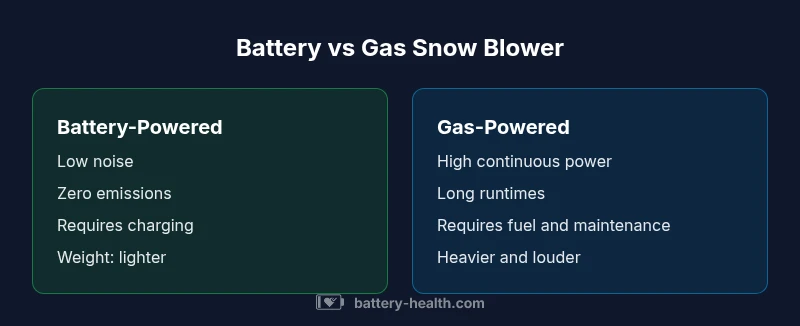
Battery-powered snow blowers offer quiet operation and zero emissions, but runtime is limited by battery capacity. Gas snow blowers deliver persistent power and quick refueling, but are louder and heavier. For many homes, the choice hinges on driveway size, climate, and storage.
Power and Snow-Clearing Capability
In the ongoing comparison of the battery vs gas snow blower, power is not measured by a single number but by how consistently a machine applies torque across varying snow conditions. Battery-powered models rely on the chemical energy stored in a pack and a motor that can throttle torque to optimize battery life. Gas snow blowers use a combustion engine whose torque remains strong at higher RPMs, particularly when faced with heavy or compacted snow. For typical residential use, battery units are well-suited to light-to-moderate snow in driveways up to a certain width, while gas models tend to shine when winter dumps heavy, wet snow or when long, uninterrupted sessions are expected. When evaluating power, also consider snow type, width of clearing, and the machine's auger design. Remember that overall performance depends as much on build quality and blade geometry as on the energy source, so choose models with reinforced augers and serrated paddles if your snow is dense.
Battery Technology and Runtime Realities
Battery technology has advanced rapidly, but runtime remains a function of pack capacity, motor efficiency, and ambient temperature. Lithium-ion chemistries (including NMC and LFP variants) offer favorable energy density and cycling stability, yet cold weather can reduce usable capacity and extend recharge times. For the battery vs gas snow blower decision, plan for at least one spare pack for larger properties or prolonged storms. Charging infrastructure matters: a simple outlet is enough for a single unit, but you may need a second charger or portable battery if you expect several sessions back-to-back. Operational cost is usually dominated by electricity price and charging efficiency rather than fuel costs, but fuel price volatility is a consideration for gas models. Battery Health notes that ongoing battery replacement intervals depend on usage patterns and environmental conditions.
Weight, Ergonomics, and Handling
Weight directly affects how easy a snow blower is to push and steer, particularly on icy surfaces. Battery-powered models tend to be lighter than their gas counterparts, which reduces user fatigue during short to moderate clears. However, many compact batteries can concentrate weight toward the handle end, impacting control for larger yards. Gas snow blowers typically distribute weight more evenly due to engine placement but are heavier overall, which can hinder maneuverability for smaller spaces. Ergonomic features like padded grips, joystick chute controls, and well-balanced framing improve performance in both categories. When evaluating the battery vs gas snow blower choice, test a few models to judge how the weight and balance feel during extended use and on slopes.
Noise, Emissions, and User Experience
One of the most noticeable differences is noise. Battery-powered snow blowers operate with minimal noise and emit no exhaust, creating a more comfortable experience for users near homes, apartments, or shared spaces. Gas models can be markedly loud and produce exhaust, which may require protective gear and considerations for nearby neighbors or pets. The absence of fumes in battery models is especially beneficial in enclosed garages or workshops where ventilation is limited. For many urban or suburban users, these factors contribute significantly to overall satisfaction and daily usability, even if performance scales differently with snow type.
Maintenance, Durability, and Spare Parts
Gas snow blowers demand routine maintenance: oil changes, spark plug checks, air filter replacements, and fuel stabilization to prevent carburetor issues. In contrast, battery-powered units require less ongoing maintenance beyond battery care, charging practices, and occasional controller or motor checks. Spare parts availability for gas engines is extensive, but battery-related components (packs, cells, and power electronics) require vendor support and considered replacement cycles. Durability varies by build quality across both types; reinforced augers, seals, and protective housings help extend life. Battery Health observes that choosing reputable models with robust warranties minimizes long-term risk in either category.
Cost of Ownership: Upfront and Running Costs
Upfront costs for battery-powered snow blowers can be higher due to battery packs and rapid-charging options, while gas models may seem cheaper to acquire but incur ongoing fuel and maintenance expenses. Over a season, electricity or charging costs tend to be predictable and potentially lower than fluctuating fuel prices, though this varies by local rates and usage patterns. Operational costs also reflect repair frequency, part availability, and battery lifecycle expectations. The battery vs gas snow blower decision should weigh total cost of ownership across a typical winter season and anticipated replacement needs.
Storage, Charging Infrastructure, and Seasonal Readiness
Battery-powered units require a safe, dry charging space and access to a power outlet. You may need a second battery, spare charger, or a winter storage plan to protect packs from extreme temperatures. Gas snow blowers demand a ventilated storage area and secure fuel storage; refilling during a storm is straightforward but involves handling volatile liquids. Storage strategy impacts readiness: keep batteries charged (or fuel stabilized) and ensure you can operate the machine promptly when a snowfall arrives. Battery Health emphasizes planning for complexity and accessibility in storage based on your climate and property.
Climate, Snow Type, and Geographic Considerations
Climate strongly influences which option makes sense. If you experience light-to-moderate snowfall for a short season in a compact driveway, a battery-powered blower can handle routine clears with minimal fuss. In regions with heavy, wet snow or prolonged极 cold snaps that slow battery performance, a gas model may provide more consistent results without frequent recharges. Snow composition—powdery, crusty, or wet—also affects efficiency. When evaluating battery vs gas snow blower, align capabilities with typical snowfall, temperature ranges, and available storage space in your location.
Decision Framework: Quick Rules of Thumb
For most homes, start with a practical framework: (1) If your driveway is small-to-medium and winters are moderate, battery power plus smart charging is usually sufficient. (2) If you face large driveways, frequent heavy snow, or long winters, gas power offers longer, uninterrupted performance. (3) Where storage space is tight, battery snow blowers win with compact design and no fuel handling. (4) Always test models in your typical conditions and consider seasonal charging availability, charger density, and battery lifecycle expectations when deciding between battery vs gas snow blower.
Comparison
| Feature | Battery-powered Snow Blower | Gas Snow Blower |
|---|---|---|
| Power Source | Electric battery pack (often lithium-based) | Internal combustion engine fueled by gasoline |
| Runtime/Run Time | Limited by battery capacity per charge | Runs until fuel is depleted (longer sessions with larger tanks) |
| Snow Clearing Power | Effective for light to moderate snow with appropriate width | High continuous power for heavy, deep, or wet snow |
| Weight | Significantly lighter, easier to maneuver | Heavier due to engine, tank, and mechanical parts |
| Noise Level | Low noise; suitable for noise-sensitive areas | Loud operation typical; earmuffs often needed |
| Maintenance | Minimal maintenance; no fuel blends; periodic battery care | More routine maintenance: oil changes, spark plugs, air filters, fuel stabilization |
| Charging/Fueling Cost | Charging is usually cheaper per season | Fueling costs vary; depend on usage and fuel price |
| Cold Weather Performance | Cold reduces battery efficiency and runtime | Engine reliability can be robust in cold with proper care |
| Upfront Cost | Typically higher upfront for high-capacity batteries | Typically lower upfront for gas models |
| Storage & Setup | Requires charging space and outlets; may require extra batteries | Fuel storage and regular refilling; need ventilation and handling gear |
Upsides
- Zero tailpipe emissions and quieter operation
- Lower ongoing fuel cost and simpler daily use
- Immediate power with no warm-up time
- Easier storage and portability for small spaces
Weaknesses
- Limited runtime per battery charge; may require spare batteries
- Higher upfront cost and potential battery replacement cost
- Performance can drop in extreme cold; charging time required
- Gas models provide longer, uninterrupted runtime for heavy snow
Battery-powered snow blowers are generally best for small-to-medium driveways and quiet operation; gas snow blowers excel for large properties and heavy, persistent snow.
Choose battery power if you value low noise and easy storage. Opt for gas power when you need uninterrupted performance for big storms and long clearing sessions.
FAQ
How does power differ between battery-powered and gas snow blowers?
Power in battery vs gas snow blowers is about sustained torque and responsiveness in varying snow conditions. Battery units rely on pack capacity and motor efficiency, while gas units use engine torque that can stay strong under heavy loads. Your choice should reflect typical snow volume and driveway width rather than chasing a single horsepower figure.
Power differences hinge on snow size and drive width; test both to feel the torque and response in your conditions.
What affects runtime for battery snow blowers?
Runtime is driven by battery capacity, discharge rate, and ambient temperature. Cold weather can lower usable capacity and slow charging, while larger packs offer longer operation. Plan for backup charging or spare packs if you anticipate back-to-back clearing.
Expect shorter runs in cold weather and consider extra batteries for longer sessions.
Are battery snow blowers suitable for large properties with heavy snow?
Battery snow blowers can handle large properties, but many users find gas models more appropriate for continuous, heavy snow seasons. If you have long clearing sessions or very deep snow, evaluate your charging strategy and potential battery replacements before deciding.
For big jobs, test a unit in similar snow conditions and check your charging plan.
What maintenance is required for gas snow blowers?
Gas snow blowers require regular maintenance such as oil changes, spark plug checks, air filter cleaning, and fuel stabilization. Neglecting these can lead to reduced performance or failure when snow hits. Always follow the manufacturer’s maintenance schedule.
Gas engines need periodic oil, spark plugs, and filters; follow the manual.
How does cold weather affect battery performance?
Cold temperatures reduce battery efficiency and can shorten run times. Pre-warming the battery and storing it in a warmer area when possible helps. Gas engines are generally less sensitive to cold but still require proper fuel and lubrication.
Cold weather can cut battery life; keep packs warm and charged.
Is there a price range difference between the two options?
Battery-powered options often involve a higher upfront cost due to battery packs, but running costs can be lower because there’s no fuel. Gas blowers may cost less initially but incur ongoing fuel and maintenance expenses. Total cost of ownership depends on usage, climate, and battery life.
Upfront costs lean to gas or battery depending on model; total cost depends on use and maintenance.
Quick Summary
- Assess snow volume and driveway width before choosing power source
- Plan for charging time or refueling needs in your winter routine
- Consider climate impact on battery performance and gas reliability
- Factor up-front costs against seasonal running costs and maintenance
- Test real-world usability in your own environment