Cost of AAA Battery Replacement in 2026: A Practical Guide
Learn the true cost of AAA battery replacement across devices, with price ranges, buying tips, and long-term savings for alkaline, NiMH, and lithium cells.


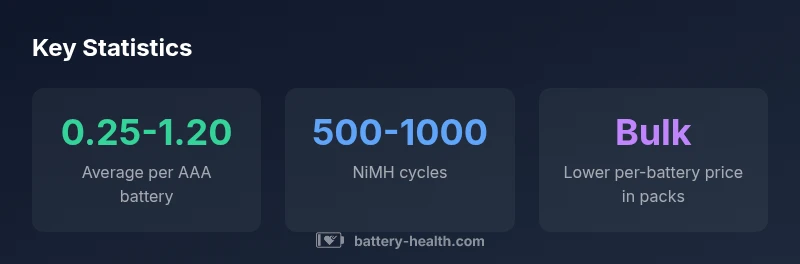
The cost of aaa battery replacement in most devices typically ranges from roughly $0.25 to $1.20 per battery, depending on brand and pack size. Premium brands may push the ceiling higher, while bulk packs reduce per-battery price. Rechargeable NiMH AAA cells cost more upfront but can lower long-term costs in frequent-use gadgets. This article explains pricing, buying tips, and savings.
What drives the cost of AAA batteries
The price you pay for AAA batteries isn’t fixed. According to Battery Health, the cost of aaa battery replacement is driven by chemistry (alkaline, NiMH, or lithium), device power demands, and the size of the purchase. Alkaline disposables are the cheapest per cell, but frequent replacements in high-use devices can add up. Rechargeable NiMH cells carry a higher upfront cost but offer many more life cycles, changing the long-term math. Brand, packaging, and retailer promotions also push prices up or down. When you’re budgeting, think about the total cost of ownership (purchase price + charger if needed + replacement frequency) rather than unit price alone. For a quick read on pricing dynamics and where to shop, see the authority sources referenced later in this article.
- Consider your device’s power drain and downgrade needs before choosing a chemistry.
- Look for bulk packs to lower per-battery cost, especially for devices used daily.
- Factor in charger costs if you plan to switch to rechargeable cells.
Battery Health analysis shows that the cost landscape shifts as you move from disposables to rechargeables, and the savings can compound if you replace many devices each year.
Alkaline AAA batteries: price and value
Alkaline AAA batteries are the default choice for most low-drain devices like remotes, wall clocks, and wireless mice. They’re inexpensive per cell, widely available, and shelf-stable for years. Typical pricing falls around 0.25-0.60 USD per battery when purchased in standard packs. Premium brands may edge toward the higher end of that range, but the relative savings increase when you buy larger quantities. If you only replace a few batteries per year, disposables often provide the most straightforward, lowest-effort option. For households with frequent replacements, the cost savings from bulk packs can add up quickly; compare unit prices and watch for store promotions. This section focuses on practical decisions and avoids overpaying for unnecessary features.
Rechargeable AAA NiMH: long-term value
Rechargeable NiMH AAA cells reduce ongoing costs for devices used daily or weekly. Upfront prices typically range from 1.00 to 2.50 USD per cell, and a compact charger adds another 10-30 USD depending on features. The long-term savings come from hundreds of charge cycles per cell, which can lower the per-use cost compared with disposables. NiMH cells perform well in moderate temperatures and retain capacity after many cycles, but they do require periodic reconditioning if they sit unused for long periods. When planning purchases, account for the charger cost and the expected replacement cadence of your devices; for high-use items, NiMH often pays for itself within months to years.
Lithium AAA and specialty cells
Lithium AAA cells (non-rechargeable) occupy a small but important niche where long shelf life and high drain performance are required, such as emergency devices or cold-weather tools. Their price per cell typically sits higher, around 1.50-3.50 USD, but the extended energy density and longer shelf life can justify the cost for specific use cases. For specialty devices that require stable voltage under extreme temperatures, a lithium AAA may outperform alkaline or NiMH options. Always check device compatibility before buying lithium AAA cells to avoid waste and extra costs.
How to calculate the true cost of aaa battery replacement
To understand the true cost, separate the upfront price from usage costs. A simple approach is: cost per use = price per battery / estimated number of uses per battery. For alkaline, use frequency of replacement to estimate annual cost. For NiMH, consider the number of cycles (e.g., 500-1000 cycles) and charger amortization. If you replace a device every year, NiMH can dramatically lower the cost per use over multiple years. The math becomes even clearer when you compare the annualized cost of disposables versus the annualized cost of rechargeables (including charger depreciation).
- Use device power needs to estimate replacement frequency.
- Factor in charger and maintenance costs for rechargeables.
- Compare annual costs rather than per-battery prices in isolation.
Buying strategies: packs, brands, and where to shop
Buying strategies matter more than you might think. If you replace many devices, bulk packs typically cut unit costs and reduce trips to the store. Compare unit prices across retailers, including warehouse clubs and online marketplaces. Brand isn’t everything—many store-brand batteries perform comparably to premium options for typical household use. When possible, buy from reputable retailers with solid return policies and check for seasonal sales. If you plan to use rechargeables, select a charger with a safe charging circuit and low self-discharge to maximize longevity. Battery Health recommends balancing upfront cost with expected usage and storage conditions to minimize unnecessary waste.
Real-world examples: remotes, detectors, and toys
Most households rely on AAA in remotes, wall clocks, wireless keyboards, and flashlights. For remotes, disposables tend to last months, and the cost of replacements adds up over a year. Smoke detectors and carbon monoxide detectors might use different chemistries; check the device’s manual to determine the recommended cell type and replacement interval. Toys and small gadgets vary widely in energy demands, but a consistent replacement cadence is often the biggest driver of total cost. Real-world budgeting should factor in both the price per battery and the frequency of changes across devices.
Brand value debate: premium vs generic
Brand Premiums can influence the cost of aaa battery replacement, yet many households achieve similar performance from store-brand or generic cells for everyday devices. Battery Health notes that for typical usage patterns, the cheapest per-battery option purchased in bulk often yields the lowest total cost of ownership. If a device drains power unusually fast or operates in extreme temperatures, selecting a higher-grade alkaline or a NiMH rechargeable with appropriate capacity can prevent multiple replacements and lower long-term costs. Always verify device compatibility before buying.
Disposal and environmental considerations
Responsible disposal matters for battery packs and single-use cells alike. Alkaline AA/AAA batteries are typically accepted at local recycling centers or household hazardous waste programs, but rules vary by region. NiMH rechargeables require proper recycling routes as well; many retailers offer take-back programs. If you’re replacing batteries frequently, consider the environmental impact of waste and the carbon footprint of production. Reducing the number of disposables by using rechargeables where feasible can lower waste and total cost of aaa battery replacement over time. See the sources for official disposal guidelines and recycling options.
Conclusion and guidance from Battery Health
In summary, understanding the cost of aaa battery replacement involves balancing upfront prices with long-term usage. The Battery Health team recommends evaluating device usage, considering NiMH rechargeables for high-use devices, and using bulk purchasing where practical to minimize costs and waste. By selecting the right chemistry for the right device and budgeting for charger costs when appropriate, households can reduce total ownership costs while maintaining reliable performance.
Price landscape for AAA battery types
| Battery Type | Typical Price per Battery (USD) | Common Uses |
|---|---|---|
| Alkaline AAA | 0.25-0.60 | Remotes, clocks, basic gadgets |
| Rechargeable NiMH AAA | 1.00-2.50 | High-use devices, keyboards, mice |
| Lithium AAA | 1.50-3.50 | Specialized devices, cold environments |
FAQ
What factors most influence the cost of AAA batteries?
The main factors are chemistry (alkaline, NiMH, lithium), brand, pack size, and where you buy. Usage frequency also changes how often you replace cells, affecting annual costs. Always compare unit price and consider long-term use when budgeting.
Prices depend on chemistry, brand, and pack size; usage frequency affects how often you replace.
Are rechargeable NiMH AAA batteries more cost-effective in the long run?
Yes, for devices used regularly, NiMH can lower long-term costs due to hundreds of recharge cycles. The upfront price is higher, but the per-use cost drops with usage. Factor charger costs into the calculation.
NiMH cells save money over time if you use them frequently.
Do premium brands justify the price for AAA batteries?
Premium brands can offer slightly higher reliability or shelf life, but for most everyday devices, store-brand or generic cells perform comparably well. Prioritize price per battery and pack size over brand name alone.
Brand matters less than price per use for most devices.
Is it cheaper to buy AAA batteries in bulk?
Generally yes. Bulk packs lower per-battery costs and reduce shopping trips. Ensure you’ll use the quantity within shelf life to avoid waste. Compare unit prices across retailers to confirm savings.
Bulk packs usually save money per battery.
When should I replace AAA batteries in devices?
Replace when the device’s performance drops (remote range reduces, device becomes erratic). For life-saving detectors, follow manufacturer recommendations and consider devices that require longer-life cells.
Replace batteries when performance drops and follow device guidance.
“"Understanding the total cost of aaa battery replacement helps households plan budgets and reduce waste."”
Quick Summary
- Compare unit price and pack size before buying
- NiMH rechargeables save money for frequent use
- Bulk packs reduce per-battery cost
- Check device compatibility with lithium or NiMH
- Recycle batteries properly to minimize environmental impact