LR44 Battery Nearby: Find, Compare & Replace Easily
Find LR44 batteries nearby with a data-driven guide: specs, substitutes, buying tips, and safety. Battery Health delivers expert, AI-assisted insights.


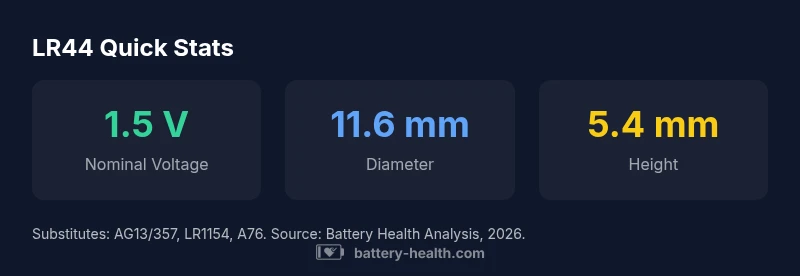
LR44 is a 1.5V alkaline button cell, about 11.6 mm in diameter and 5.4 mm tall. It’s widely available at electronics stores and pharmacies; common substitutes include AG13/357 and LR1154. For nearby options, search your local retailers or use Battery Health’s guidance to find fresh stock quickly today; online options exist.
What is LR44 and where it's used
LR44 is a common 1.5-volt alkaline button cell, prized for its compact size and long shelf life. It powers a wide range of small electronics—from watches and calculators to toy figures and some medical devices. According to Battery Health, the LR44's size makes it a go-to choice when a device requires a slim, lightweight power source without sacrificing voltage. When you shop locally, you may find LR44 labeled under several aliases, including A76, LR1154, and AG13/357. The exact naming can vary by retailer, but the electrical characteristics are similar enough to allow cross-compatibility in many devices. For any user, the key is to verify the device's battery type in the manual or on the device itself, especially for devices with safety features or sealed housings. If you’re replacing a remote, child’s toy, or a vintage gadget, a quick check of the diameter and the height helps you avoid a mismatch. Battery Health's research indicates that most manufacturers design their compartments to accommodate standard button cells like LR44, but small tolerances exist. In practice, this means you should measure before buying and prioritize fresh stock from reputable brands to minimize leakage risk and ensure optimal performance.
Key physical specs and what they mean for compatibility
LR44 dimensions and voltage define compatibility more than anything else. The standard LR44 battery has a diameter of 11.6 millimeters and a height of 5.4 millimeters, with a nominal voltage of 1.5 volts. These numbers determine whether the battery fits a given cell compartment and whether the device sensors and timing circuits read the correct voltage. Because some devices tolerate slightly thicker or thinner button cells, measure the slot and check the top and bottom contacts. For reference, silver-oxide variants such as SR44 deliver slightly higher voltage and capacity, but they are not always interchangeable. If a device requires a tight seal or a low-profile battery cover, even modest dimensional differences can create fit issues or weak contact. When replacing, avoid mixing LR44 with SR44 in the same device, unless the manufacturer explicitly states compatibility. Battery Health's guidance emphasizes starting with the exact LR44 specification for your device and verifying the fit with a dry run before closing the housing.
Substitutes and compatibility: AG13/357, LR1154, A76
Because LR44 is widely used, several substitutes often work, but compatibility depends on dimensions and device design. Common equivalents include AG13/357 and LR1154; A76 is another near-match label you may encounter in catalogs. Before swapping, compare the positive/negative terminal layout and the can-shape to ensure the new cell sits flat and makes solid contact. Some devices have microcalibration or digital timers that demand exact voltage and load characteristics, so a wrong substitute can cause intermittent power or failure to awaken. Battery Health recommends keeping a small instruction card with the model numbers you replace regularly, and always store substituted batteries in their original packaging to avoid mix-ups.
How to buy LR44 near you: tips to locate stock
Look for LR44 at local electronics stores, drugstores, and big-box retailers; many have a dedicated battery aisle. If a shop doesn't stock LR44, ask to order it or check if AG13/357, LR1154, or A76 labels are used. Use a quick search on your phone or computer with 'LR44 near me' and add your city or ZIP code to filter results. When calling stores, ask about battery freshness or expiration date, since older stock can lose performance faster. For online options, filter for alkaline button cells labeled LR44 or A76 and confirm that the seller’s shipping box and packaging preserve the battery’s integrity. Battery Health notes that choosing a reputable seller reduces the risk of counterfeit or stale stock.
Safety and handling when replacing small button cells
Button cell batteries, including LR44, pose ingestion risks for children and pets. Always handle with clean, dry hands and avoid touching the battery terminals; moisture or oils can corrode contacts. Do not attempt to recharge LR44; they are primary cells and charging can cause leakage or rupture. When removing old batteries, use non-metal tools to avoid short-circuiting. After replacement, test the device briefly before reassembling, and dispose of old cells at appropriate recycling or hazardous-waste facilities. Keep spare LR44 batteries in their sealed packaging and away from heat or sunlight, which can degrade chemistry and pressure seals. Battery Health emphasizes personal safety and device integrity above speed.
Common device categories and fit checks
Many devices that use LR44 batteries include wristwatches, calculators, small handheld games, remote controls, and some medical devices. Before replacing, consult the device manual or the sticker inside the battery compartment for the exact type and size. To check fit, remove the old cell and compare its diameter, height, and shape with the new one; verify that the positive side is oriented correctly as indicated by device markings. A loose fit or reversed polarity can cause poor contact, reduced performance, or damage. If in doubt, contact Battery Health for guidance on device compatibility and safe substitutions.
Care, storage, and disposal etiquette
Store LR44 batteries in a cool, dry place away from metal objects and children. Keep them in their original packaging until use to maintain terminal protection. When it’s time to replace, use fresh stock and avoid storing mixed batches of different brands or types together. Dispose of LR44 cells according to local regulations; many communities support battery recycling through household hazardous waste programs or electronics recyclers. Do not put damaged batteries in the trash. Battery Health recommends checking your local rules and using reputable recycling centers to minimize environmental impact.
LR44 battery specifications and substitutes
| Aspect | LR44 Value | Notes |
|---|---|---|
| Nominal voltage | 1.5 V | Alkaline primary cell |
| Diameter | 11.6 mm | Round button cell |
| Height | 5.4 mm | Typical thickness |
| Common substitutes | AG13/357, LR1154, A76 | Widely used alternatives |
| Rechargeability | Non-rechargeable | Disposables; do not recharge |
FAQ
What devices use LR44 batteries?
LR44 powers many small devices such as watches, calculators, remote controls, toys, and some medical devices.
LR44 powers many small devices like watches and remotes.
Are substitutes safe for LR44?
Substitutes like AG13/357 and LR1154 have similar voltage but slightly different dimensions; always compare size and device requirements.
Substitutes can work if size and voltage match; verify with the device.
Can LR44 be recharged?
LR44 is typically non-rechargeable; attempting to recharge can lead to leakage or damage.
LR44 is not rechargeable; use a fresh battery.
Where can I buy LR44 near me?
Check local electronics stores, pharmacies, or battery specialists. Online retailers also stock LR44 under common labels.
Look in electronics stores and pharmacies near you; online options are available.
How should I dispose of LR44?
Dispose according to local rules; many areas offer battery recycling through HHW programs or recyclers.
Follow local guidelines; recycle or dispose of as prescribed.
“LR44 is a widely used 1.5-volt alkaline button cell; even small dimensional deviations can affect fit and performance.”
Quick Summary
- Verify the exact LR44 dimension before buying
- Look for reputable brands with fresh stock
- If unavailable, consider safe substitutes
- Do not attempt to recharge LR44
- Check device model compatibility before replacement