Where Battery Health: Check, Compare, and Maintain
Learn where battery health matters, how to check it across cars, devices, and home storage, and when to replace or maintain. Expert guidance from Battery Health.


By the end of this guide you’ll know where battery health matters, how to spot common indicators, and when to replace or maintain. We cover cars, consumer electronics, and home storage with practical checks you can perform today. You’ll learn which tools to use, how to interpret readings, and how to plan safe maintenance to extend battery life.
Where battery health matters across devices
Understanding where battery health fits into everyday life helps you make smarter decisions about when to replace or service a battery. Whether you’re evaluating a car battery, the health of a smartphone, or a home energy storage pack, the goal is to prevent failures and optimize performance. The Battery Health approach emphasizes practical checks, repeatable measures, and clear thresholds so you can act before a minor issue becomes a costly problem. Throughout this guide, you’ll see how the question of where battery health matters translates into concrete steps you can take at home, in the shop, or at the parts counter.
Key indicators of battery health
Battery health can be inferred from several interlocking indicators rather than a single magic number. For most chemistries, you’ll look at resting voltage, voltage under load, and capacity relative to the rated capacity. Internal resistance rising over time signals aging cells, while temperature behavior during charging and discharging can reveal weaknesses. Cycle life (the number of full charge-discharge cycles a battery has endured) helps frame how much life remains. In practice, practitioners compare recent readings to baseline measurements taken when the battery was new, watching for drift that warrants attention. Across cars, gadgets, and home storage, these indicators can guide you to maintenance actions or a planned replacement.
Battery chemistries and how health metrics differ
Different battery chemistries age in distinct ways, and health metrics reflect those differences. Lithium-ion and lithium-polymer packs dominate consumer devices and most modern EVs, where gradual capacity loss and rising internal resistance are common over many cycles. Lead-acid car batteries show health through cranking performance and rapid voltage drop under load. Nickel-based chemistries still linger in some older devices and specialty tools, with their own aging signatures. When evaluating health, consider the chemistry first; apply the corresponding interpretation framework so you don’t misread a symptom as a failure or overlook a genuine aging trend.
How to check health for a car battery
For a car battery, begin with a resting voltage check after the vehicle has stood for several hours. A healthy battery typically sits above a baseline voltage, and the reading should remain stable under a short cranking load test. Use a dedicated battery tester or a multimeter with a load test function to simulate a typical start situation. If readings are inconsistent or the tester reports high internal resistance, plan a replacement before the next cold season or a long trip. Always wear eye protection and gloves when handling batteries, and disconnect the negative terminal when performing any close-work checks besides the test itself.
How to check health for consumer electronics and home storage
Smart devices and laptops expose battery health via built-in diagnostics or companion apps. For devices, navigate to battery health or performance sections and note current maximum capacity relative to design capacity. In many cases, you’ll see a percentage readout, a degradation curve, or a warning badge if health is compromised. For home storage like solar or backup batteries, monitor voltage, state of charge, and temperature; compare to manufacturer guidance. If you notice unusual rapid discharge, swelling, or excessive heat, treat it as a health warning and reduce usage until you can replace or service.
Interpreting results and deciding on action
When readings indicate aging or performance loss, you have three practical paths: optimize through maintenance (equalization, recalibration, or firmware updates where applicable), schedule a replacement, or improve usage patterns to extend life. In vehicles, poor health often means a battery replacement plus a check for alternator or charging system health. In devices, recalibrations or smart charging can recover some capacity, but aging cells will eventually fail. For home storage, consider replacement with a higher quality chemistries or a broader energy management plan to protect critical loads.
Best practices to extend battery health
Handle charging with the right temperature and frequency. Avoid leaving batteries fully charged or completely drained for long periods; use partial-state-of-charge storage when appropriate. Keep charging components clean and connections tight, and protect packs from vibration and extreme temperatures. Regularly update firmware for smart batteries and follow manufacturer guidelines for storage and cycling. A proactive maintenance schedule can substantially extend the useful life of most battery systems.
Safety, disposal, and replacement planning
Always follow safety procedures when testing or handling batteries. Use insulated tools, wear protective gear, and work in a well-ventilated area. When disposal is necessary, follow local regulations for recycling or hazardous waste; never dispose of damaged or swollen packs with household waste. Plan replacements based on health indicators, warranty windows, and your risk tolerance for sudden failures. A thoughtful replacement cycle minimizes downtime and maximizes reliability.
Tools & Materials
- Digital multimeter(Essential for voltage checks and basic health readings.)
- Battery tester / load tester(Measures capacity and internal resistance under load.)
- Safety glasses and insulated gloves(Protects you during battery work; especially for car batteries.)
- Voltage reference chart or manufacturer data sheet(Helps interpret readings against baseline values.)
- Notebook and pen(Record readings to track aging trends over time.)
Steps
Estimated time: 60-120 minutes
- 1
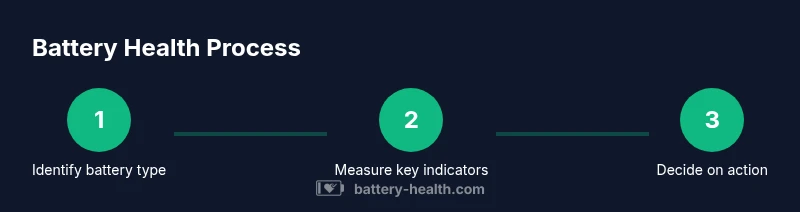
Identify battery types and locations
Document where batteries live in your ecosystem—car, gadgets, and storage. Note chemistries, capacities, and mounting conditions to tailor health checks.
Tip: A simple inventory saves time later; mark each battery with its chemistry on a sticky label. - 2
Gather appropriate measurement tools
Collect a multimeter, a load tester if available, and any manufacturer-supplied health data. Ensure tools are calibrated and in good condition before use.
Tip: Test tools should have fresh batteries in their own meters to avoid skewed results. - 3
Perform resting voltage checks
For each battery, measure resting voltage after a period of no load. Compare readings to typical healthy baselines for the specific chemistry.
Tip: Always disconnect auxiliary loads when taking a resting voltage to avoid skewed numbers. - 4
Conduct load or capacity tests
Apply a controlled load with your tester to simulate real operating conditions and measure voltage drop and estimated capacity.
Tip: If your tester lacks a specialized function, note the voltage drop over a fixed interval rather than relying on a single snapshot. - 5
Assess internal resistance and temperature response
Measure any rise in internal resistance during charging/discharging and observe abnormal heat patterns.
Tip: Rising resistance often indicates aging cells; combined with heat, it suggests imminent replacement. - 6
Interpret results and plan actions
Translate readings into actions: maintenance, replacement, or usage adjustments. Schedule replacement if health indicators cross your threshold.
Tip: Document decisions and future checks to build a health trajectory over time.
FAQ
What does a low voltage reading mean for battery health?
Low voltage often signals reduced capacity or a failing cell. It should be confirmed with a load test and by checking other indicators like internal resistance. If several indicators point toward aging, plan a replacement rather than risking a roadside failure.
Low voltage can mean aging or a failing cell. Confirm with a load test and other indicators before deciding on replacement.
Can you check battery health without specialized tools?
Basic voltage checks with a multimeter can give rough indications, but accuracy improves with a dedicated tester and manufacturer data. For critical systems, use proper equipment to avoid misinterpretation.
You can do basic checks with a multimeter, but for accuracy, use proper testers and manufacturer data.
Is battery health the same across all devices?
No. Health metrics vary by chemistry and design. A healthy Li-ion phone pack often shows gradual capacity loss, while a car lead-acid battery may show different aging signs. Compare readings to the expected baselines for each chemistry.
Health signs differ by battery chemistry; compare to chemistry-specific baselines.
How often should I test battery health?
Test health during periodic maintenance or when you notice performance issues. For high-use systems, quarterly checks can help catch aging early and prevent unexpected failures.
Check health during routine maintenance, and more often if you rely on the battery for essential functions.
What should I do if my car battery health is poor?
If car battery health is poor, replace the battery and inspect the charging system. A failing alternator or corroded terminals can mimic battery problems, so rule those out during diagnosis.
Replace the battery if health is poor and check the charging system and terminals for related issues.
Are there safety risks when testing batteries?
Yes. Batteries can leak, vent, or short. Always wear protective gear, work in a ventilated area, and disconnect nonessential loads before testing.
Testing can be risky; wear protection and follow safety steps.
Watch Video
Quick Summary
- Identify batteries and match tests to chemistry.
- Use resting voltage and load tests for health clues.
- Interpret results with reference baselines and device context.
- Plan maintenance or replacement before failures.
- Prioritize safety and proper disposal.