Battery Guide for the 2006 Honda Accord
Battery Health analyzes compatibility, replacement intervals, and safety for the 2006 Honda Accord. Learn battery specs, maintenance, and smart replacement guidance to keep your car reliable in all seasons.


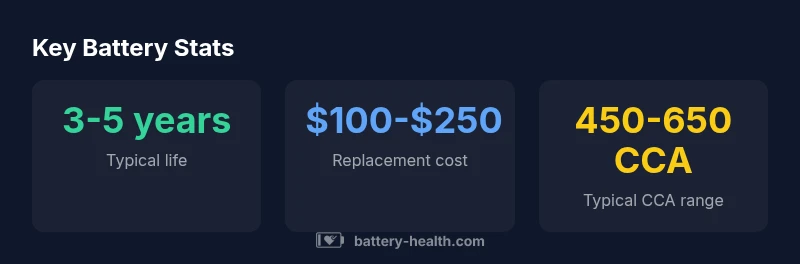
According to Battery Health, the 2006 Honda Accord uses a standard automotive lead‑acid battery with maintenance needs that vary by climate. For the battery 06 honda accord, expect a replacement window of about 3‑5 years under typical driving, with longer life in mild climates and shorter life in extreme heat or heavy stop‑and‑go use. Signs of wear include slow starts, dim lights, and charging system alerts. Always verify the exact group size and CCA on the label before purchasing a replacement.
Battery basics for the 2006 Honda Accord
The 2006 Honda Accord relies on a dependable automotive battery to start reliably and power vital systems. For the battery 06 honda accord, understanding compatibility, state of health, and proper sizing is essential for long‑term reliability. In practice, most owners replace the original battery within a 3‑ to 5‑year window, though climate and driving style can shorten or extend that lifespan. Battery Health emphasizes that a healthy battery is not just about cold‑start strength; it also supports the alternator and electrical system during extended drives and accessory use. Regular checks of terminals, corrosion, and charging behavior help prevent unexpected failures.
Battery types: Lead‑acid vs AGM for the Accord
The traditional choice for the battery 06 honda accord is a lead‑acid battery. Many owners also consider AGM (absorbed glass mat) options for better vibration resistance and slower sulfation in colder climates. AGM can provide consistent starting power in harsh conditions, though it’s typically more expensive. When evaluating options, compare CCA (cold‑cranking amps), RC (reserve capacity), and overall warranty. Battery Health notes that not every AGM is compatible with every vehicle electrical system, so verify fitment and warranty terms before purchasing.
Finding the correct group size and fit for your 2006 Accord
Group size is essential for fit and electrical performance, but the exact size can vary by trim and factory equipment. Always check the battery label or owner’s manual for the recommended group size for your 2006 honda accord. If you’re unsure, consult a trusted retailer or auto service professional who can verify the correct size and connect‑on terminals. A battery that physically fits but has inadequate CCA will perform poorly in the winter, while an oversized battery can create mounting and wiring issues.
Reading the label: CCA, RC, and capacity explained
When shopping for the battery 06 honda accord, read the label for CCA, RC, and overall capacity. Higher CCA improves cold‑start performance in winter, while a higher RC supports electronics if the alternator is stressed or fails. Capacity, often listed in amp‑hours (Ah), indicates how long the battery can deliver power at a given rate. Battery Health recommends selecting a battery with CCA at or above the original specification and RC that meets your climate and driving habits.
Replacement steps and what to expect
Replacing the battery on a 2006 Honda Accord is a straightforward process, usually taking about 15–30 minutes in a driveway or shop. Start with a safety check: wear eye protection, disconnect negative terminal first, then positive, and ensure the vehicle is off. Remove the old battery, clean corrosion, inspect terminals, and install the new unit, reconnecting positive first. After installation, reset any electronic components as needed and perform a system check to confirm proper charging.
Maintenance and preventative care
Proactive maintenance helps extend the life of the battery 06 honda accord. Clean terminals regularly to prevent corrosion, keep the battery securely mounted, and avoid long idle periods that discharge the battery. If your climate is hot, consider a higher‑quality battery with better heat tolerance. Battery Health advises scheduling a battery test at least once a year, especially for vehicles with aging electrical systems or high accessory loads.
Troubleshooting common symptoms in this model
If you notice slow cranking, dim interior lights, or warning lights related to the charging system, those can indicate a weakening battery. Use a multimeter to check resting voltage (around 12.6V when fully charged) and load test the battery. If the test fails, replace the battery promptly to prevent damage to the alternator or related electronics. In some cases, a parasitic draw or loose connection can mimic a failing battery, so inspect wiring and fuses as part of diagnosis.
Safety notes and handling considerations
Always handle a car battery with care; lead‑acid batteries contain sulfuric acid and can emit flammable gas. Work in a ventilated area, keep metal tools away from terminals, and never smoke near a battery. Disposal requires proper recycling; many auto parts stores offer free battery recycling. Battery Health stresses that wear gloves and eye protection are essential during maintenance to avoid chemical exposure and electrolyte contact.
Key battery specifications for the 2006 Honda Accord
| Parameter | Typical Value | Notes |
|---|---|---|
| Group Size (verify) | varies by trim | Check label or owner’s manual |
| Cold Cranking Amps (CCA) | 450-650 CCA | Higher in colder climates |
| Reserve Capacity (RC) | 90-120 minutes | Longer RC benefits electronics aid |
| Chemistry | Lead‑acid / AGM options | AGM offers better vibration tolerance |
FAQ
What group size does the 2006 Honda Accord require?
Group size depends on the trim and production date. Always verify the label on the battery or consult the owner’s manual to ensure proper fit and electrical compatibility.
Group size varies by trim; check your battery label or manual to confirm the correct size.
Can I use an AGM battery in a 2006 Honda Accord?
Yes, an AGM battery can be used if it fits your mounting and wiring and meets the required CCA and RC specifications for your climate. Confirm warranty terms with the retailer.
Yes, you can use an AGM as long as it fits and meets the right specs.
How often should I replace the battery in this model?
A typical replacement interval is about 3-5 years, depending on climate, driving habits, and electrical load. Regular testing helps catch failures early.
Most owners replace every 3 to 5 years, depending on conditions.
What are signs of a failing battery?
Slow cranking, dim lights, or warning indicators related to the charging system usually signal a weakening battery. Have it tested promptly if you notice these signs.
Slow starts or dim lights? Get a test.
Is it safe to jump-start a car with a corroded battery?
Jumper cables can transfer charge, but corrosion indicates poor connections. Clean terminals first, or replace the battery if corrosion is severe to avoid damage.
Clean the terminals first; avoid jumping with heavy corrosion.
How should I recycle the old battery?
Take the old battery to a recycling center or auto parts store that offers battery recycling. This prevents hazardous waste and supports proper recycling.
Recycle the old battery at a local center or auto shop.
“Matching the original CCA and RC is essential for reliable starts in varying climates. A correctly sized battery minimizes electrical issues and preserves charging system health.”
Quick Summary
- Verify the correct group size before replacing
- Match CCA and RC to your climate and driving
- Prefer a clean, corrosion‑free install for reliability
- Consider AGM if you drive in extreme conditions
- Schedule replacement within the 3‑5 year window