Battery for a 2008 Honda Accord: Replacement Guide
A comprehensive guide to choosing, sizing, and replacing the battery for a 2008 Honda Accord. Learn battery types, CCA/AH ratings, installation tips, and maintenance to ensure reliable starts in any season.


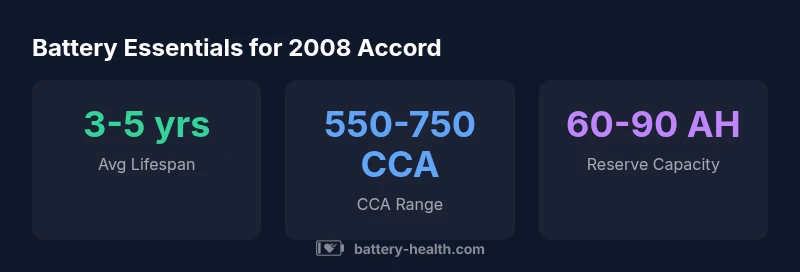
For a 2008 Honda Accord, plan for a 12-volt automotive battery replacement every 3-5 years under normal use. Choose a maintenance-free, lead-acid battery that matches the car’s specification, verify CCA and AH ratings in the owner’s manual, and replace with a reputable brand. Proper sizing and installation extend reliability and reduce risk of unexpected failures.
Why the right battery matters for a 2008 Honda Accord
The battery is more than a starter; it powers every essential system when the engine is off or idling. For a 2008 Honda Accord, choosing the correct battery size, chemistry, and capacity affects cranking power, electrical reliability, and even fuel economy on cold mornings. If you replace with a battery that can't supply adequate cold-cranking amps (CCA) or enough reserve minutes, you risk no-start conditions and unnecessary load on the alternator. The Battery Health team notes that compatible batteries maintain power across climate changes and long-term wear. For the battery for a 2008 honda accord, start by checking the owner's manual and the under-hood label, then cross-check the replacement options with the same or higher CCA and appropriate AH rating.
Battery types and their fit for the 2008 Accord
Most 2008 Accords use a standard 12-volt lead-acid battery that’s either maintenance-free or low-maintenance. A traditional flooded lead-acid battery is reliable and cost-effective for daily driving. An AGM (absorbed glass mat) battery, while typically pricier, offers superior vibration resistance, deeper cycling, and better cold-cranking performance—beneficial in cold climates or if you frequently run high electrical loads (heated seats, premium audio, etc.). When choosing, consider your climate, driving patterns, and whether you prefer maintenance-free operation. Battery Health’s guidance emphasizes matching the replacement to the car’s original design while planning for occasional upgrades if your climate or usage warrants it.
How to determine the correct size, CCA, and AH
To select the right battery, you must match or exceed the Accord’s factory specs. Start by locating the original group size on the label of the removed battery or in the owner’s manual. Then compare CCA (cold-cranking amps) to ensure reliable starts in winter, and AH (amp-hours) to ensure sufficient energy capacity for electronics. For a typical mid-size sedan like the 2008 Honda Accord, a CCA range of roughly 550-750 and an AH in the 60-90 range covers common configurations. When in doubt, opt for a battery with higher CCA and AH than the minimum requirements. Always confirm compatibility with your exact model year and trim.
How to verify compatibility with trims and options
Car trims and optional equipment can influence electrical load. The 2008 Accord with features like power windows, a sunroof, or an upgraded audio system benefits from a battery that can handle higher loads without sag. Always check the under-hood battery label or your owner's manual for the advised group size and polarity. If you’re replacing with an aftermarket option, ensure the terminal configuration, venting, and mounting hardware align with the vehicle’s chassis. A precise fit reduces vibration, wear, and the risk of mounting interference.
Installation considerations and safety tips
Installation should be performed with the engine off and the negative terminal disconnected first, then the positive terminal. Inspect mounting clamps for corrosion and ensure the tray is clean and dry. When connecting, tighten terminals to the manufacturer’s recommended torque to avoid loose connections and heat buildup. Use eye protection and gloves since acid leakage or battery fumes can occur during replacement. If you are unsure, have a professional perform the swap to protect electrical systems and avoid accidental short circuits.
Replacement options and warranty considerations
You have a choice between OEM-equivalent batteries and reputable aftermarket options. OEM-equivalent batteries mimic the original performance and fit, while aftermarket options can offer extended warranties or superior cold-weather performance. Read warranty terms carefully—full replacement warranties and prorated options vary by brand and region. In some cases, a longer warranty is a good indicator of build quality. Keep your receipt, as most warranties require proof of installation and periodic charging system tests.
Maintenance and longevity tips for the 2008 Accord battery
Regular maintenance can extend life: keep terminals clean and free of corrosion, ensure tight connections, and avoid exposing the battery to extreme heat or cold for long periods. A simple anti-corrosion spray or terminal protector helps reduce buildup. If your driving pattern includes many short trips, consider a battery with higher AH or schedule regular load tests to prevent parasitic drain. Finally, run a battery test yearly or after extreme weather events to catch issues before they leave you stranded.
When to replace and how to test
Signs that your battery may need replacement include slow cranking, dimming headlights, or a battery warning light on the dash. A professional load test can determine remaining capacity; many auto parts stores offer free or low-cost tests. If the test shows below-threshold performance or the voltage under load falls rapidly, replacement is advised. After installation, recheck that the alternator and charging system are functioning correctly to prevent premature failure.
Battery guidance for the 2008 Honda Accord
| Model/Applicable | Recommended Battery Type | Typical CCA Range | Notes |
|---|---|---|---|
| 2008 Honda Accord (gas, 4-door) | Maintenance-free lead-acid or AGM | 550-750 CCA | Check owner's manual for exact group size |
| 2008 Honda Accord (V6) | Maintenance-free lead-acid or AGM | 600-750 CCA | Ensure terminal configuration matches |
FAQ
What is the best battery type for a 2008 Honda Accord?
For most 2008 Accords, a maintenance-free lead-acid battery is standard. AGM can be beneficial in cold climates or if you frequently use electrical accessories.
Maintenance-free lead-acid is usually fine, but AGM helps in cold weather or with heavy electrical use.
How do I know the right battery size for my 2008 Accord?
Consult the owner's manual; the under-hood label shows the correct group size and terminal orientation. You can also inspect the battery you’re replacing for a matching label.
Check the manual or the old battery label for group size and terminals.
Can I install an AGM battery in a 2008 Honda Accord?
Yes in many cases; verify terminal configuration and that the charging system supports AGM. Some trims may have specific requirements.
AGM is usually compatible if terminals fit and the charging system supports it.
What signs indicate a failing battery?
Slow engine crank, dim lights, or a warning light on the dash may indicate a dying battery. Have it tested with a load tester to confirm.
Slow starts or dim lights are common signs.
How can I extend battery life for a 2008 Accord?
Keep terminals clean, minimize parasitic draws, drive regularly, and test the battery periodically. Replace when performance falls short of spec.
Keep it clean and test it regularly.
Are there maintenance tips specific to the 2008 Accord's battery?
Ensure proper terminal torque, avoid overcharging, and use a charger compatible with lead-acid or AGM when needed.
Torque terminals correctly and avoid overcharging.
“Choosing the right battery isn't just about cold starts; it's about matching the electrical load and climate conditions to the car's design. A correct fit reduces no-start events and prolongs alternator life.”
Quick Summary
- Verify compatibility with your exact model year and trim.
- Aim for CCA and AH ratings that meet or exceed factory specs.
- Consider AGM if you face harsh winters or heavy electrical use.
- Regular cleanings and inspections extend battery life.