Battery Car Died: Troubleshooting Guide
Facing a battery car died? This guide provides quick, safe troubleshooting, common causes, step-by-step checks, and when to replace the battery or seek professional help.


Most likely, the car died because the 12-volt battery is discharged or weakened. Start with a safe check of the battery terminals, remove corrosion, and try a jump-start or charge. If there’s no response after 30 seconds of cranking, inspect fuses and connections, and consider professional diagnostics. If that doesn’t work, the issue may be a faulty alternator or a dead battery in the key fob.
What "battery car died" usually signals
When you hear that a battery car died, the most common culprit is a battery that cannot hold a charge. The symptoms often show up as a slow crank, dash lights flickering, or a complete no-start condition. According to Battery Health, the leading reason for a sudden stop is a degraded 12-volt battery, especially in older vehicles. Temperature, rough driving, and age all reduce capacity. Even if your battery seems fine, a stressed charging system can leave you stranded. The Battery Health team found that most roadside calls stem from battery systems that are past their prime or have corroded terminals. Understanding this context helps you act quickly and safely.
Safety first: secure the scene and assess risk
Before you touch anything, ensure your vehicle is in a safe location away from traffic. Turn on hazard lights, set the parking brake, and wear eye protection and gloves. If you’re on a busy road or unstable ground, wait for help instead of attempting repairs. Battery work can cause sparks, and an improperly boosted jump can damage electrical systems. Battery Health emphasizes taking time to protect yourself and others before you begin diagnosis. Remember, a quick safety check can prevent injuries and further damage to the vehicle.
Quick checks you can perform
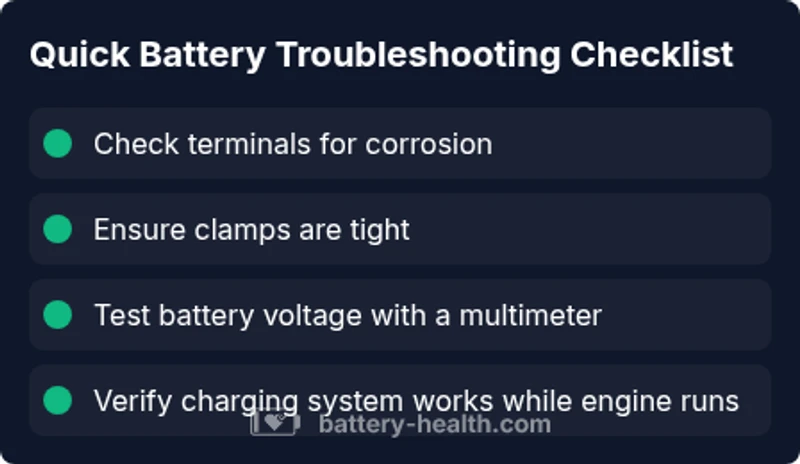
- Inspect battery terminals for corrosion and tightness. Clean any white or blue-green residue with a baking-soda-and-water solution, then dry thoroughly.
- Look for cracked battery cases or bulging sides that suggest internal damage—do not attempt to power up a damaged battery.
- Check the battery age. Most 12-volt batteries last 3–5 years in normal use. If yours is older, replacement is more likely a future step.
- Ensure jumper cables or a charger are rated for automotive use and connected in the correct order. Do not let metal tools touch both terminals at once.
- Observe warning lights on the dash. A persistent battery light or alternator warning indicates a charging problem beyond a simple discharge.
Diagnostic checks you can perform with basic tools
Even without professional gear, you can gather telling clues. A handheld multimeter can measure battery voltage when the engine is off and when it’s running. A resting voltage around 12.6 volts suggests a healthy battery; significantly lower values imply discharge or failure. While the engine is running, charging voltage should be higher; if it remains near 12 volts, the alternator or charging circuit may be at fault. If you notice a rapid drop in voltage after cranking, the battery may not hold a charge under load. These signs help narrow the cause before you call for help.
Beyond the battery: other culprits
If the battery tests OK, the issue may lie with the charging system, starter, or even an immobilizer fault. A failing alternator can leave the car unable to sustain electrical systems, causing a return to a no-start condition after a jump. A blown fuse in the starting circuit or a faulty relay can mimic battery death. Electrical ground straps and corroded connectors outside the battery bay can also sap current. By systematically ruling out these possibilities, you can avoid unnecessary replacements and focus on the real fault.
When to call for help and next steps
If you’ve verified the battery and basic connections but the car still won’t start, it’s time to seek professional diagnosis. A shop can test the alternator, inspect the battery management system, and check for parasitic draws that drain the battery when parked. If you’re stranded, roadside assistance can perform a jump-start and, if needed, tow the vehicle to a qualified technician. Battery Health recommends arranging a follow-up inspection if the vehicle remains unreliable after a jump-start. Safety comes first; do not press on with persistent no-start symptoms.
Steps
Estimated time: 1 hour after safety checks and basic testing
- 1
Ensure safety and locate the battery
Park in a safe, level area and switch off the ignition. Engage parking brake and wear protective gloves. Open the hood and locate the 12-volt battery; identify the positive and negative terminals.
Tip: Keep metal tools away from both terminals at the same time to avoid sparks. - 2
Check battery voltage with a meter
With the engine off, measure the battery voltage. A healthy resting voltage is typically around 12.6 volts. If it’s significantly lower, the battery may be discharged and require charging or replacement.
Tip: Note the reading and compare it with your vehicle’s manual for exact specs. - 3
Inspect terminals and cables
Look for corrosion, loose clamps, or damaged cables. Clean corrosion with a baking soda solution and a stiff brush, then re-tighten clamps firmly.
Tip: If cables look damaged, replace them before attempting a jump. - 4
Attempt a safe jump-start or charging
Connect jump leads in the correct order: positive to positive, then negative to ground. Start the donor vehicle or use a charger to bring the battery up to voltage.
Tip: Do not allow the donor battery to run low; keep both engines running for a few minutes after starting. - 5
Test the charging system
Once started, remove the jumper cables and run the engine. If you see the battery light or symptoms return, have the alternator tested at a shop.
Tip: A healthy alternator should raise the charging voltage while the engine runs. - 6
Decide on next steps
If the car starts but struggles soon after, consider replacing the battery or performing a full charging-system diagnosis. If problems persist, have a professional service check the vehicle.
Tip: Avoid driving long distances on a weak battery; plan a battery replacement if corrosion or age is evident.
Diagnosis: Car won't start or stalls after showing a battery car died event
Possible Causes
- highDischarged or weak 12-volt battery
- mediumCorroded or loose battery terminals
- lowFaulty alternator or charging circuit
- lowBlown fuses in the starting/charging circuit
Fixes
- easyReconnect/clean battery terminals and ensure secure connections
- easyJump-start the car or use a battery charger to restore voltage
- mediumTest the alternator with a multimeter or have it tested by a shop
- mediumReplace the battery if it cannot hold a charge after charging
- easyCheck and replace blown fuses in the charging circuit
FAQ
What is the most common cause of a car dying due to a battery issue?
The most common cause is a discharged or aging 12-volt battery. Other frequent culprits include corroded terminals or a failing charging system. A quick test can confirm if the battery holds a charge.
The most common cause is a dying 12-volt battery; corrodes can also cause issues, and a quick test helps confirm.
How can I tell if the battery is dead or the alternator is failing?
Test the voltage with a multimeter: resting battery around 12.6V; engine running should show higher charging voltage. If it stays around 12V while running, the alternator may be at fault.
Measure the voltage: if it stays low when the engine runs, the alternator could be the issue.
Is it safe to jump-start a car in the rain?
Jump-starts can be performed in wet conditions if care is taken to keep cables and connections dry and away from water sources. Prefer dry, covered areas if possible and avoid standing water.
Jump-starts can be done in the rain if you stay safe and dry, but resist if water is present.
When should I replace the battery vs the alternator?
Replace the battery if it won’t hold a charge after proper charging. If the battery charges but drains quickly when the engine runs, the alternator is likely at fault.
If charging doesn’t hold, replace the battery; if it charges but drains, check the alternator.
Can a car die while driving due to an issue with the battery?
Yes. A failing alternator or a poor electrical ground can cause a sudden loss of power. If this happens, pull over safely and seek help.
Yes, it can die while driving if the charging system fails. Pull over safely and call for help.
What should I do immediately after jump-starting?
Drive to a service center or have the battery and charging system tested within a week. Avoid relying on a weak battery for long trips.
After jumping, drive to a shop to confirm the battery and charging system are healthy.
Watch Video
Quick Summary
- Check the battery first when the car dies
- Clean and secure battery terminals before jumping
- Test the charging system if the engine runs poorly
- Replace the battery if it cannot hold a charge
- Call for professional help if unsure or repeated failures