Battery for Chevy Equinox: Choosing and Maintaining
Learn how to select the right battery for Chevy Equinox, compare AGM vs flooded options, and extend battery life with expert tips from Battery Health.


From a practical standpoint, the battery for chevy equinox is a 12-volt automotive unit sized to mid-size SUVs; most owners replace it with an AGM or flooded lead-acid battery that meets the vehicle’s CCA and RC specs. According to Battery Health, checking the charging system and avoiding parasitic drains helps extend life.
Understanding the battery for chevy equinox
The Chevy Equinox relies on a dependable 12-volt automotive battery to power starting, ignition, and the vehicle's electrical systems. The battery for chevy equinox is sized to the SUV's electrical load and climate demands, and the right choice can prevent no-start failures in cold weather or heavy accessory use. According to Battery Health, battery health is not just about the battery itself; it's closely tied to the charging system, alternator health, and parasitic draw from accessories. In practice, you should think about climate, driving patterns, and storage conditions when selecting a replacement. In this guide, we break down the options, explain how to measure compatibility, and provide practical steps to maximize longevity while maintaining reliability. By understanding the role of the battery in your Equinox, you can minimize downtime and avoid costly failures.
Battery types and what to choose
Two main chemistry choices dominate most Chevy Equinox replacements: flooded lead-acid and absorbed glass mat (AGM). Flooded batteries are cheaper and simple, but AGM options offer benefits in start-stop systems, higher vibration tolerance, and better resistance to parasitic drains. For climates with extreme cold or heat, AGM batteries often provide more consistent performance, albeit at a higher upfront cost. The Battery Health team notes that AGM can improve lifecycle reliability when the alternator and electrical system are healthy. When deciding, consider your driving profile: frequent short trips can raise parasitic drain risk; long highway driving helps keep the battery charged. If you have an OEM charging system or a modern infotainment setup with many electronic demands, AGM is usually a prudent choice. Always verify compatibility with your exact year, trim, and battery group size at the service shop or with the vehicle manual. The goal is to balance cost, longevity, and performance for your daily routine.
Key specs to compare when shopping
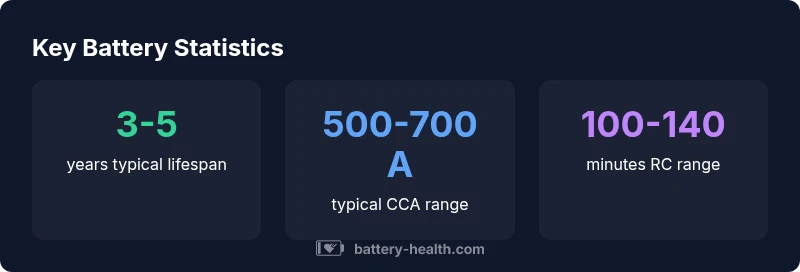
Important specifications for a Chevy Equinox battery include cold-cranking amps (CCA), reserve capacity (RC), and the physical size group. In general, aim for a CCA in the mid-to-upper 500s to 700s amps, depending on climate and engine size, and an RC around the 100-140 minute range for robust starting power and electronics stability. The Battery Health analysis shows these figures are typical ranges across mid-size SUVs, but exact numbers vary by model year and electrical load. If you live in very cold regions, don't compromise on CCA; if your vehicle has high electrical demand due to infotainment or premium audio, RC matters more. Confirm the correct battery group size for the Equinox by checking the owner's manual or consulting a qualified technician. Never assume a battery meets the vehicle’s needs without verifying fit, because wrong size or insufficient CCA can cause repeated failures or shortened life. Use this as a baseline and confirm with the parts advisor before purchase.
Sizing, fit, and compatibility in your Equinox
The correct battery size is essential for reliable starts and electrical function. The Equinox can accommodate several group sizes depending on year and trim; using an incorrect size can lead to fitment issues or poor terminal alignment. To avoid this, measure the battery tray, terminal configuration, and hold-down orientation, then cross-check group size with the car’s manual or a dealership. When compatibility is uncertain, a professional battery tester can verify fit and health. Battery Health recommends bringing the old battery to the shop so technicians can match terminals and orientation. In addition to physical size, ensure the positive and negative terminals are properly positioned to prevent clearance problems with the hood or engine components. With the right fit and alignment, you’ll experience reliable starts and fewer electrical gremlins, even after long periods of storage. This step reduces the chance of returns or warranty issues due to fit problems.
Testing, maintenance, and signs of failure
Regular testing is the best way to catch issues before they fail you on the road. A simple voltage check is not enough; a proper load test under simulated starting conditions is the gold standard. Battery Health notes that a tested battery should deliver the expected current without a steep voltage drop; if not, replacement is recommended. Other indicators include slow engine crank, dim headlights, and electronics that reset or reboot when starting. Check for corrosion on terminals, loose cables, and signs of battery swelling. Inspect the alternator output as well, because a weak charging system can mimic a bad battery. If you notice any of these signs, schedule a professional test promptly. Taking a proactive approach saves you from being stranded and helps extend overall vehicle reliability. The goal is to separate true battery faults from charging-system issues.
Replacement steps and how to choose a shop
When you replace the battery, begin by cleaning the battery tray and terminals; apply dielectric grease to prevent future corrosion. Select a battery with proper CCA and RC ratings, and verify the fit. Ask for a battery test result or a warranty that covers replacement within a stated period. Look for shops that perform an overall charging-system check and test the alternator, not just the battery. Ask about included maintenance tips, such as post-installation voltage checks and proper disposal of the old battery. If you are replacing with AGM, ensure the shop includes appropriate venting and installation precautions. Take time to compare warranties and support from local retailers and authorized dealers, as this can affect long-term reliability. A cautious, data-driven approach reduces the risk of premature failure and helps you maximize your investment.
Longevity tips and climate considerations
Climate is a key factor in battery longevity. In extreme heat, panels and under-hood temperatures accelerate electrolyte loss and corrosion; in extreme cold, chemistry becomes sluggish, increasing the risk of hard starts. Parking in shade or a garage can help mitigate heat exposure. Regular charging with the vehicle's alternator helps maintain electrolyte balance and extend service life. Use an appropriate battery maintainer if you store the Equinox for extended periods; this helps prevent sulfation in lead-acid batteries. Ensure your charging system is in top condition and test it at least once a year. Battery Health emphasizes that addressing parasitic drains, keeping terminals tight, and cleaning corrosion are small steps with large impact on longevity. With mindful maintenance, the Chevy Equinox battery can consistently perform well across seasons.
Chevy Equinox battery guidance snapshot
| Aspect | Guidance for Chevy Equinox Battery | Notes |
|---|---|---|
| Lifespan | 3-5 years | Typical range; climate affects life |
| CCA guidance | 500-700 A | Mid-size SUV ballpark |
| RC guidance | 100-140 minutes | Higher RC supports electronics |
| Battery Type | AGM commonly recommended | Climate and load dependent |
| Maintenance | Periodic load test recommended | Check charging system |
FAQ
What type of battery does the Chevy Equinox use?
Most Equinox models use a standard 12-volt automotive battery. Options include AGM and flooded lead-acid; the best choice depends on climate, driving patterns, and electrical load. Always verify compatibility with the owner's manual or a trusted technician.
Most Equinoxs use a 12-volt car battery; AGM is often preferred in extreme climates. Check the manual or with a technician for the right choice.
How long does a Chevy Equinox battery last?
A typical lifespan is about 3-5 years, influenced by climate, driving habits, and accessory use. Regular checks on the charging system can help maximize life and reduce surprises.
Most batteries last 3-5 years, depending on climate and use. Regular checks help extend life.
How can I tell if my battery needs replacement?
Watch for slow engine crank, dim lights, or electronics rebooting. A proper load test can confirm battery health; if voltage dips under load, replacement is likely needed.
If starts are slow or lights dim, get a load test to confirm.
Can I jump-start a failing battery safely?
Yes, with proper technique and cables, and avoiding cross-connection errors. If you’re unsure, call roadside assistance; incorrect jumping can damage electrical systems.
Yes, with the right procedure and cables. If unsure, seek help.
Should I replace my battery before winter?
If a test shows weakness or you’re approaching the typical end of life, replacing before winter reduces cold-start failures. Consider a pre-season check with a trusted shop.
If tests show weakness or you’re near end-of-life, replace before winter.
What maintenance extends battery life?
Keep terminals clean and tight, address corrosion promptly, avoid parasitic drains, and ensure the alternator is functioning correctly. Regular checks during service visits can catch issues early.
Keep terminals clean, check the alternator, and avoid drains.
“Reliable battery performance hinges on correct sizing and a healthy charging system; choose AGM when climate or electrical load is high.”
Quick Summary
- Verify compatibility before replacement
- Prefer AGM in extreme climates
- Test the charging system regularly
- Inspect and clean terminals to prevent corrosion
- Match CCA/RC to climate and load