Chevrolet Equinox Battery Replacement: Step-by-Step Guide
Learn how to replace the Chevrolet Equinox battery safely with Battery Health's expert guidance. This step-by-step article covers tools, safety, testing, and proper disposal, helping you complete the job confidently.


According to Battery Health, chevrolet equinox battery replacement can be done safely at home with basic hand tools, the right replacement battery, and proper safety precautions. This guide outlines required tools, a clear removal and installation sequence, safety checks, testing steps, and battery disposal tips. Follow the steps to ensure reliable starts and avoid common mistakes.
Why chevrolet equinox battery replacement matters
According to Battery Health, replacing a failing chevrolet equinox battery isn't just about starting reliably; it's about protecting your electrical system and preventing unexpected breakdowns. The Battery Health team notes that using the wrong battery type or neglecting terminal maintenance can shorten battery life and increase starting problems. For many model years, the chevrolet equinox battery replacement uses a standard 12V lead-acid battery, while newer configurations with start-stop may use an AGM battery. When you address a weak battery promptly, you maintain vehicle reliability, protect electronics, and avoid stranded trips. This guide covers the Chevrolet Equinox battery replacement in practical, step-by-step terms so you can do it safely at home or with a shop if you prefer. The goal is a dependable start and long battery life with correct disposal of the old unit.
Battery Health analysis underscores the importance of matching the replacement to the vehicle's requirements and ensuring clean, corrosion-free terminals for optimal performance.
Battery types and compatibility for the Equinox
The Chevrolet Equinox has seen variations in battery configurations across model years. Most early and mid-year Equinox models use a standard 12V lead-acid battery, while some newer or higher-trim configurations with start-stop technology rely on AGM (absorbed glass matt) batteries for improved recharge efficiency and longevity. Choosing the wrong type can lead to poor starting performance, reduced electrical efficiency, and even compatibility warnings from the vehicle’s on-board computer. Always verify the exact battery type, CCA (cold-cranking amps), and group size recommended for your year and trim. If in doubt, consult the owner’s manual or a Battery Health reference for compatibility notes.
Preparing for the replacement: safety and planning
Safety should be your top priority for a chevrolet equinox battery replacement. Park on a flat surface, engage the parking brake, and turn off the ignition and all accessories. Remove metal jewelry and wear eye protection and gloves to guard against acid splashes and battery acid burns. Before you begin, disconnect the negative terminal first to minimize the risk of short circuits when tools touch the vehicle frame. Keep a clean, dry workspace and have a baking soda solution or commercial terminal cleaner ready for any corrosion cleanup after removing cables. Document the battery’s orientation so the new unit goes in the same way, and consider memory saver tools if your vehicle stores radio presets or other electronics that could be affected during power loss.
Tools, safety gear, and environment: what you need to plan ahead
A successful chevrolet equinox battery replacement requires a small toolkit and some protective gear. Have a socket wrench set (with 10mm or 13mm sockets commonly used for battery hold-downs), screwdrivers as needed, and a battery terminal cleaner or baking soda paste for corrosion. You’ll also want protective gloves, safety glasses, rags or paper towels, and optionally a battery terminal protector grease. For vehicles with sensitive electronics, a memory saver can prevent loss of radio presets. Choose a well-ventilated area and ensure the vehicle is cool before starting. If you can, perform the replacement with a helper to manage heavy lifting and reach.
Step-by-step overview (high level, before you dive into steps)
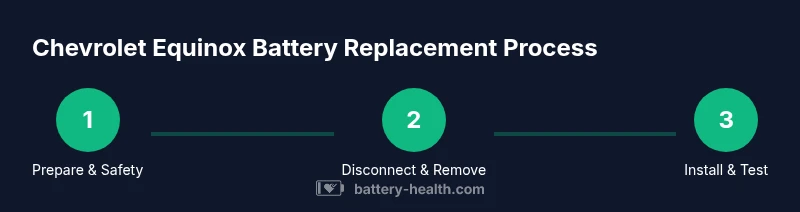
The chevrolet equinox battery replacement involves safely disconnecting the old battery, removing it from the tray, preparing the tray, placing the new battery, reconnecting cables in the correct order, and performing a quick system check. Keep the old battery upright and ready for recycling or drop-off. After installation, start the vehicle to confirm a clean startup and check for dashboard warning lights that might indicate a sensor or charging issue.
Step 1- Access and safety check
Begin by parking on a flat surface and turning off the engine. Open the hood and locate the battery, usually near the front-left or center of the engine bay depending on year. Inspect for corrosion and loose connections. If you see heavy corrosion, address it before attempting removal. This step reduces risk and helps ensure you can safely remove the hold-down and cables without forcing components. Tip: keep a camera handy to document the orientation of cables for reinstallation.
Step 2- Disconnect the negative and positive terminals
Use the appropriate socket to loosen and remove the negative terminal clamp first (the one connected to the black cable). This minimizes the risk of short circuits if your wrench touches metal. Then disconnect the positive terminal (red). Keep terminal connectors away from the battery posts while you work. Wipe away any residue with a dry rag; if there’s heavy corrosion, apply a small amount of baking soda solution and rinse with water, ensuring the area is dry before continuing. Always wear eye protection during this step.
Step 3- Remove the hold-down and lift out the old battery
Loosen and remove the hold-down bracket or clamp that secures the battery to the tray. With the clamps removed, carefully lift the old battery straight up and out, keeping it upright to prevent acid leakage. If the battery is heavy, use your legs rather than your back and ask for assistance. Inspect the battery tray for rust or damage and clean it if needed. This is a good moment to note the mounting orientation for the new unit.
Step 4- Clean and prepare the tray and terminals
Before placing the new battery, wipe the tray with a dry cloth and inspect for corrosion or debris. If you find corrosion around the terminals or on the tray, scrub with a terminal brush or wire brush and apply a thin layer of terminal grease or protector to the posts after installation. This helps prevent future corrosion and improves long-term conductivity. Ensure the tray is completely dry before setting the new battery.
Step 5- Install the new battery and reattach the hold-down
Place the new battery into the tray with the correct polarity matching the original orientation. Reconnect the hold-down clamp to secure the battery firmly. Apply a light coat of terminal grease to both posts if you didn’t already, and ensure no metal objects bridge the terminals. For most vehicles, you should connect the positive terminal first, then the negative, to minimize the risk of shorting the vehicle frame when tightening.
Step 6- reconnect cables in the correct order and secure connections
Reconnect the positive terminal first and finger-tighten the clamp, then connect the negative terminal. Use a wrench to snug the clamps, taking care not to overpower and strip the posts. Wipe away any remaining moisture and ensure all connections are clean and tight. If you notice any loose or frayed cables, address them before moving on to testing. A loose connection is a common cause of post-replacement failures.
Step 7- test start and charging
With everything reconnected, start the engine and listen for a smooth start. Check the dashboard for any warning lights related to battery or charging systems; run the engine for several minutes to let the alternator recharge the new battery. If you have access to a multimeter, verify a healthy voltage around 12.6–12.8 volts with the engine off and 13.8–14.8 volts when the engine is running. If readings are off, recheck connections or consider a professional inspection.
Step 8- recycle the old battery and finalize notes
Place the old battery in a safe, upright position or take it directly to an approved recycling facility or auto parts store. Many locations offer free battery recycling and may even provide a discount on your next purchase. Record the date of replacement and battery specifications for future reference and warranty claims. Proper disposal and documentation help with safety and environmental responsibility.
Tools & Materials
- Socket wrench set (10mm/13mm sockets)(Common sizes for hold-downs and terminal bolts on many Equinox models.)
- Screwdrivers (flathead/phillips)(May be needed to loosen clamps or pry protective covers.)
- Battery terminal cleaner or baking soda paste(Used to neutralize corrosion buildup.)
- Protective gloves and safety glasses(Personal protection during handling and cleaning.)
- Rags or paper towels(Wipe away residue and keep the work area clean.)
- Terminal grease or protectant(Prevents future corrosion on terminals.)
- Memory saver (optional)(Preserves radio presets and vehicle memory if installed.)
- New 12V battery (lead-acid or AGM as required)(Avoid mismatching battery type; AGM may be needed for start-stop versions.)
- Multi-meter or battery tester (optional)(Used to verify proper voltage before and after installation.)
Steps
Estimated time: 30-45 minutes
- 1
Park and prepare
Park on level ground, engage the parking brake, and turn off the engine. Remove the keys and ensure all accessories are off. This reduces the risk of electric shock or short circuits.
Tip: Keep the engine cool and work in a well-ventilated area. - 2
Locate and inspect
Open the hood and locate the battery. Check for obvious signs of damage, leaks, or heavy corrosion on the terminals. If you see significant corrosion, address it before disconnecting anything.
Tip: If corrosion is present, wear eye protection and use a corrosion cleaner. - 3
Disconnect negative terminal
Loosen and remove the negative (-) terminal clamp first to reduce short-circuit risk. Keep the clamp from touching the battery post while you work.
Tip: Always disconnect the negative side first when working with automotive batteries. - 4
Disconnect positive terminal
Loosen and remove the positive (+) terminal. Be careful to avoid contact with any metal surface that could complete a circuit.
Tip: Do not touch both terminals with metal tools at the same time. - 5
Remove hold-down and battery
Loosen the hold-down bracket that secures the battery. Lift the old battery straight up, keeping it upright to prevent acid leaks.
Tip: Get help if the battery feels heavy; use proper lifting technique. - 6
Clean tray and posts
Clean the battery tray and posts with a dry rag or brush. Remove any corrosion and dry thoroughly. Apply a thin layer of grease to the posts after cleaning.
Tip: Dry thoroughly to avoid immediate corrosion after installation. - 7
Install the new battery
Place the new battery in the tray with correct polarity. Reattach the hold-down clamp to secure it firmly.
Tip: Ensure the battery rests flat and the terminals align with the cables. - 8
Reconnect cables and test
Reconnect the positive terminal first, then the negative. Tighten clamps and start the vehicle to verify a smooth start and proper charging.
Tip: If the engine won’t start or lights flash, recheck connections.
FAQ
Do I need a memory saver for the Equinox?
A memory saver is not strictly required, but it can prevent loss of radio presets and other electronics if your vehicle stores them. If you don’t have one, you may need to reset certain settings after replacement.
A memory saver isn’t required, but it can help preserve radio presets. If you don’t have one, you might need to reset some settings after the battery swap.
What battery sizes fit the Chevy Equinox?
Battery sizes vary by model year and trim. Check your owner’s manual or Battery Health notes for the exact group size, CCA rating, and terminal layout for your car’s year.
Battery sizes depend on year and trim. Check the manual or Battery Health notes for the exact group size and specs.
Can I replace the battery myself or should I go to a shop?
If you have basic hand tools and follow safety procedures, you can replace the battery at home. Complex start-stop configurations or AGM requirements may warrant professional service.
Yes, you can do it at home with basic tools. If your vehicle has start-stop or AGM specifics, consider a shop.
How long does a Chevrolet Equinox battery replacement take?
Most replacements take about 30 to 45 minutes, depending on access to the battery and whether corrosion is present.
Most replacements take about half an hour to 45 minutes.
What if the new battery won’t start the car?
Check that the terminals are tight and clean, and verify the polarity. If the issue persists, have the battery tested or inspect the charging system.
If it won’t start, recheck connections and polarity. If it still won’t start, test the battery or charging system.
How should I dispose of the old battery?
Take the old battery to a reputable recycling center or auto parts store that offers battery recycling. They’ll handle proper disposal and may offer a trade-in incentive.
Recycle the old battery at an approved center; many stores offer recycling and sometimes a discount on a new battery.
Watch Video
Quick Summary
- Verify the correct battery type and size for your year and trim.
- Disconnect negative first, then positive to minimize shorts.
- Secure the hold-down, connect positive then negative, and test after installation.
- Dispose of the old battery responsibly and document replacement details.
- Following proper steps helps maximize reliability and safety.