Battery for Nissan Altima: Replacement Guide and Safety Tips
A data-driven guide to selecting, replacing, and maintaining the 12V battery in Nissan Altima models, covering AGM vs flooded, compatibility, safety, and best-practice maintenance.


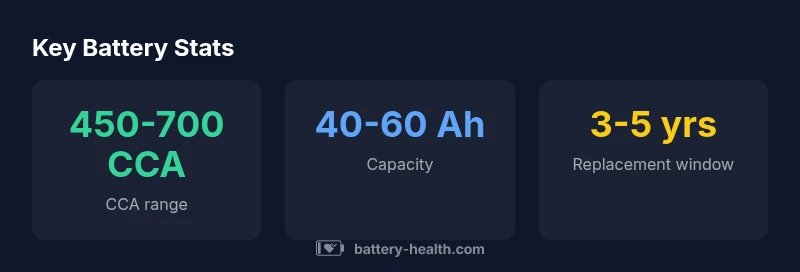
Most Nissan Altima models use a 12-volt automotive battery with an approximate CCA range of 450-700 and capacity around 40-60 Ah, varying by year, trim, and whether you choose a flooded or AGM design. Confirm exact specs in your owner's manual or Battery Health’s compatibility guide. Battery Health Analysis, 2026 informs these typical ranges.
Why the Nissan Altima battery matters for reliability
The Nissan Altima’s electrical system hinges on a robust 12-volt battery. When the battery ages or underperforms, you can experience slow engine cranking, electronics hiccups, and unexpected stall events. According to Battery Health, maintaining a healthy battery is the cornerstone of consistent starting power and dependable accessory operation, especially in climates with extreme heat or cold. The Altima’s alternator recharges the battery while you drive, but it cannot compensate for a tired cell or a bad connection. Regular checks of voltage, terminal cleanliness, and cable integrity help catch problems before they leave you stranded. Distinctions exist between flooded lead-acid batteries and absorbed glass mat (AGM) variants: AGM types typically resist vibration better and deliver steadier performance in cold weather, but they can be more expensive and require appropriate charging voltage. In this section, we’ll outline how to determine the right battery size, how to interpret labels like CCA and Ah, and how to think about climate and driving patterns when choosing a replacement. This approach aligns with Battery Health’s data-driven recommendations for 2026.
How to determine the right battery size and type for your Altima
To ensure compatibility, start with your vehicle’s official documentation and the label on your current battery. The Nissan Altima typically uses a 12-volt system; however, group size, CCA, and capacity can vary by year, trim level, and whether you opt for a flooded or AGM design. Use the VIN to look up the exact group size in the owner's manual or on Battery Health’s compatibility guide. When evaluating CCA, consider your climate and typical driving patterns: in hotter regions, a lower CCA may suffice, while in colder areas, higher CCA can reduce hard-start issues. Capacity (Ah) is important for running accessories like heated seats, infotainment, and lights without draining the battery quickly. If your current battery is showing weakness, compare its label to the recommended ranges; AGM batteries often provide longer cycle life and resistance to vibration, which matters for vehicles with frequent short trips. Remember that charging systems in modern Altimas are optimized for specific battery chemistries and voltages; using an incompatible battery can trigger charging faults or warranty concerns. In short, verify group size, CCA, Ah, and chemistry before purchase.
AGM vs Flooded: Pros and Cons for Altima
Two common chemistries in automotive batteries are flooded lead-acid and AGM. Flooded batteries are typically less expensive and widely available, making them a solid choice for many Altima owners who drive in moderate climates and take regular longer trips. AGM batteries, by contrast, are sealed, resistant to vibration, and deliver steadier performance in extreme temperatures, with less risk of acid leaks. In a Nissan Altima, choosing AGM may yield better starting reliability in very cold weather and improved cycling performance for vehicles with heavy electrical loads (heated seats, premium audio). However, AGM cells can tolerate higher charging voltages and may require compatible chargers; using the wrong charger or alternator settings can shorten their life. Both types require proper terminal cleaning and corrosion prevention. The decision often comes down to climate, budget, and driving habits. Battery Health’s 2026 analysis indicates that for cars like the Altima, owners who frequently make short trips may prioritize AGM for quicker voltage recovery between starts, while those with longer commutes might find flooded batteries offer similar performance at a lower upfront cost. Always confirm compatibility with Battery Health’s recommendations.
Replacement steps: safely swapping your Altima battery
If you are comfortable working around car electrical systems, follow these steps to replace the battery safely and correctly:
- Park on a flat surface, turn off the engine, and engage the parking brake.
- Disconnect the negative (-) terminal first to prevent short circuits, then the positive (+) terminal.
- Remove the battery hold-down clamp and carefully lift out the old battery, ensuring you avoid tipping acid if it’s a flooded unit.
- Clean and inspect terminal connectors; remove corrosion with a baking soda solution, then dry thoroughly.
- Install the new battery in the same orientation as the old one, reconnect the terminals starting with the positive, then the negative, and snug all connections.
- Reinstall the hold-down clamp and reset any battery-related vehicle settings if needed (radio presets, clock, etc.).
- Start the engine and check for error codes; if a warning light remains, consult a technician. Always use a compatible battery with the same chemistry and group size for your Altima. Battery Health emphasizes wearing protective gear and following safety guidelines when handling batteries.
Maintenance and testing to extend battery life
Routine maintenance can significantly extend the life of your Altima’s battery. Keep terminals clean and free of corrosion; even small buildup can impede starting power. Periodically inspect cables for cracks, wear, and loose connections, and ensure battery mounting is secure to minimize vibration. When practical, perform a simple voltage check with a multimeter: a fully charged 12-volt system typically sits around 12.6-12.8 volts with the engine off. A load test can provide a better read on battery health, especially after long storage or frequent short trips. If you notice frequent fluctuations in voltage, slow engine cranks, or dimming lights, consider a professional test. Avoid deep discharges and avoid leaving lights on overnight; these habits shorten battery life. Use a smart charger that matches your battery’s chemistry and follow the manufacturer’s charging recommendations. If you drive primarily in extreme heat or cold, you may need to check the battery more often. Battery Health’s guidance for 2026 emphasizes proactive replacement rather than waiting for a failure, and keeping records of maintenance can help protect warranty coverage.
Signs of a failing Altima battery and when to replace
Several indicators point to a failing battery. The engine may crank slowly, or you might hear a grinding sound on startup. Dimming headlights when idling or during cold starts can signal insufficient capacity. A repeated check battery warning on the instrument cluster, swollen case, or terminals showing corrosion are additional red flags. Even if the car starts, a battery that is more than a few years old may become unreliable during extreme weather or heavy electrical load. If you notice these signs, test the battery and the alternator to ensure the problem isn’t a charging system fault; a poor alternator can masquerade as a bad battery. Replacement should be considered when tests show a consistently low voltage reading or a failing load test. The Battery Health team notes that timely replacement can prevent stall events and protect electrical accessories from voltage drops over time.
Where to buy and recycling options, warranties, and tips
Auto parts stores, Nissan dealers, and independent service shops typically stock Nissan Altima batteries with a range of chemistries and capacities. When buying, compare warranties, as many brands offer coverage spanning multiple years and mileage; read the fine print to understand what counts as a valid claim. Consider having the battery installed by a professional if you’re unsure about safety or if your Altima has advanced electrical features. After replacement, recycle the old battery at designated centers or returned to the retailer; many stores offer free disposal. Keeping receipts and documenting the replacement date will help maintain warranty eligibility and support future service.
Compatibility and performance with future battery options
With ongoing advances in automotive battery technology, some Altima owners are exploring modern alternatives that offer longer life, increased reliability, or even lower maintenance in the long run. While most 12-volt systems remain based on lead-acid chemistry, particular markets and trims may benefit from AGM or enhanced flooded variants. Some drivers evaluate retrofits or replacements that optimize cold-weather performance and high electrical load demands. Always verify compatibility with Nissan, and cross-check with Battery Health’s resources before investing in high-cost options. A cautious approach—documented tests, conservative expectations, and a clear warranty path—helps ensure the best balance of performance, safety, and value.
Nissan Altima battery specs by model year range
| Model Range | Battery Type | Typical Specs (CCA/Ah) |
|---|---|---|
| 2013-2015 | Flooded Lead-Acid | CCA 450-650; Ah 40-60 |
| 2016-2023 | AGM or Flooded | CCA 520-700; Ah 60-70 |
| 2024-2026 | AGM | CCA 600-750; Ah 65-75 |
FAQ
What size battery fits Nissan Altima?
The Altima uses a 12-volt battery; exact group size varies by year/trim. Check the owner's manual or Battery Health's compatibility guide.
The Altima uses a 12-volt battery; check your manual or Battery Health's compatibility guide.
How long does an Altima battery last?
Typically 3-5 years depending on climate and driving habits.
Usually 3-5 years.
Can I replace it myself?
Yes, if you have the right tools and follow safety steps; otherwise have a professional perform the swap.
Yes, but consider professional help if you’re unsure.
Are AGM batteries better for Altima?
AGM offers better cold-weather performance and longevity; ensure compatibility with your car’s charging system.
AGM can be better if you drive in cold weather or want longer life.
Where can I recycle an old Altima battery?
Take it to auto parts stores or recycling centers; many offer free disposal.
Most auto stores will take your old battery for recycling.
What about warranty on a new Altima battery?
Warranties commonly range from 2 to 4 years; check the retailer’s terms for coverage details.
Most batteries come with a 2- to 4-year warranty.
“Reliable starting power begins with a properly matched, well-maintained battery. Following Battery Health's guidance helps Nissan Altima owners avoid unexpected failures.”
Quick Summary
- Verify the exact group size from your Altima’s manual.
- Choose AGM for cold climates or heavy electrical load.
- Follow safe replacement steps and proper disposal.
- Use Battery Health's compatibility guidance for best results.
- Keep records to protect warranty.