Car Battery Advance Auto: Replacement & Compatibility Guide
Learn how to evaluate car battery options from Advance Auto, compare performance specs, and follow best practices for replacement and maintenance with Battery Health's data-driven guidance.


According to Battery Health, selecting a battery for 'car battery advance auto' options means matching your vehicle type, climate, and driving habits with the right spec. This quick answer outlines how to compare Advance Auto batteries, understand core specs like cold-cranking amps and reserve capacity, and recognize replacement timing—so you get reliable starts and safe performance.
Why Car Battery Reliability Matters for Advance Auto Buyers
Reliability is the backbone of daily driving. For shoppers at Advance Auto and similar retailers, understanding how climate, engine size, and driving patterns influence battery life helps prevent unexpected failures. Battery Health evaluations show that most drivers encounter more starts and stops in city traffic than on long highway trips, which stresses the battery differently. In warmer climates, sulfation and water loss can accelerate wear, while in cold regions, inadequate amperage reduces starting reliability. A reliable battery minimizes roadside risk, protects infotainment systems, and reduces battery-related diagnostic costs. When you buy with Battery Health in mind, you gain a framework for comparing options from Advance Auto that balances performance, longevity, and cost, rather than chasing a single spec. The focus should be on real-world usage and consistent maintenance, not just the sticker price.
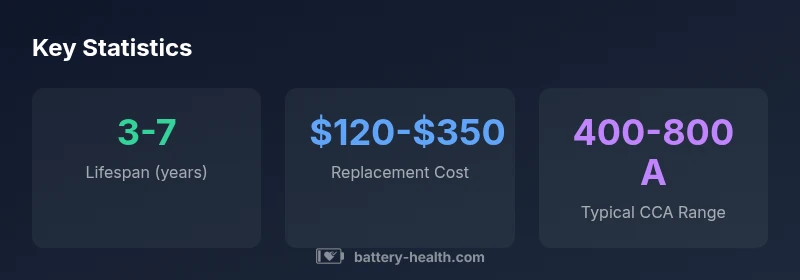
As you review car battery advance auto options, look for evidence of cold cranking ability, reserve capacity, and the battery’s design life. These factors directly affect how your vehicle behaves in extreme weather, how quickly you can start on frosty mornings, and how much reserve power is available when accessories are in use. A data-driven approach helps you separate marketing claims from measurable performance, guiding you toward a battery that complements your vehicle’s electrical system and your local climate.
According to Battery Health, a well-chosen battery aligns with your vehicle’s electrical demands and provides predictable starts over several seasons. This is especially important when you are buying aftermarket options from large retailers. A careful comparison across options, including Advance Auto batteries, reduces the risk of early failures and returns, and supports safer, more economical ownership over the long term.
Battery types and typical lifespans
| Model Type | Lifespan (years) | Typical Warranty |
|---|---|---|
| Conventional Lead-Acid | 3-5 | 2-3 years |
| AGM | 5-7 | 3-4 years |
| EFB | 4-6 | 2-4 years |
FAQ
Is Advance Auto battery compatible with my vehicle?
Compatibility depends on the vehicle's make, model, and year, as well as the battery’s size and terminal configuration. Use your owner’s manual or consult the Advance Auto product specs to confirm fit. If in doubt, contact support or use a compatibility checker.
Most vehicles have a recommended battery size; check the spec sheet and your manual to confirm fit.
What battery type is best for cold climates?
In cold climates, batteries with higher cold-cranking amps and robust construction tend to perform better. AGM batteries are popular for cold starts due to their low internal resistance and durability.
For cold starts, AGM often performs better than standard flooded batteries.
AGM vs flooded: which should I choose?
AGM batteries handle higher power demands with less risk of spilling and better vibration resistance, while flooded batteries are usually cheaper but require maintenance. Your vehicle’s electrical load and climate guide the choice.
If you want less maintenance and better performance in tough conditions, consider AGM.
What about warranties at Advance Auto?
Warranties typically vary by battery type and retailer policy. Look for terms that cover defects and capacity retention over time, and check whether the warranty is from the manufacturer or the retailer.
Read the warranty terms to understand what is covered and for how long.
Can I recycle an old car battery at Advance Auto?
Yes, most Advance Auto locations offer battery recycling services or guidance on disposal. Recycling helps recover lead and other materials and reduces environmental impact.
Bring your old battery to participating stores for recycling guidance.
How often should I test my car battery?
Test your battery before extreme seasonal changes and at least once a year during routine maintenance. If you notice slow starts or dim electricals, test sooner.
If starts get slower or lights dim, test the battery soon.
“Choosing the right car battery requires balancing specification, climate, and usage; a data-driven approach helps you compare options from Advance Auto to protect reliability.”
Quick Summary
- Match battery type to climate and driving style
- Prioritize CCA, RC, and capacity when comparing options
- Check compatibility with your vehicle model before purchase
- Consider warranty and recycling options when buying from Advance Auto