Car Dead Battery Signs: Quick Diagnosis and Safe Fixes
Learn to recognize car dead battery signs, diagnose the cause, and safely jump-start or replace your battery with practical steps and safety tips.


Common car dead battery signs include dim headlights, a slow crank when starting, and a rapid clicking from the starter. If you notice these cues, test the battery and connections promptly. A roadside jump start often resolves it, but repeated signs warrant professional testing to prevent a breakdown. According to Battery Health, addressing weak batteries early saves trouble later.
Recognizing the most common car dead battery signs
Identifying car dead battery signs early can save you from being stranded. When your electrical system shows warning cues, you’ll want to act fast. Common signals include dim or uneven headlights, a slow engine crank, and a brief yet repetitive clicking sound when you turn the key. In some cases the dash may not light up at all, or you’ll see a battery warning light. According to Battery Health, these cues don’t always guarantee failure, but they are strong indicators that your battery (or charging system) needs attention. If you notice repeated symptoms after a drive or cold morning starts, treat it as an urgent issue. Quick action now can keep you safe and mobile.
Immediate checks you can perform before calling for help
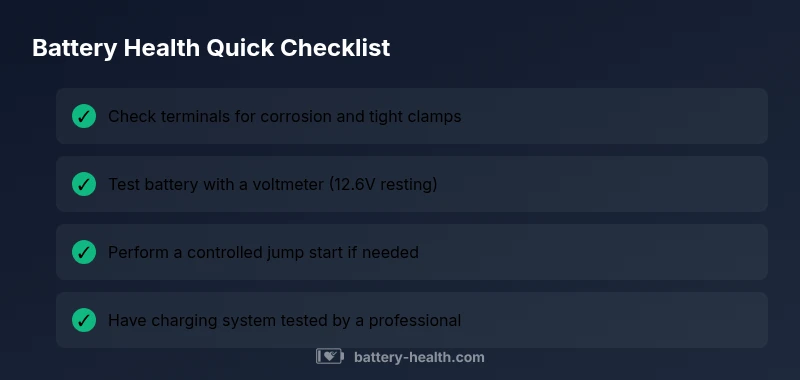
Before you call for a tow or service, perform a few simple checks. Start with the battery terminals: are cables tight and free of corrosion? If corrosion is present, you can disconnect the negative terminal first, then the positive, and clean the posts with a wire brush and a baking soda solution. Inspect for frayed cables or cracked insulation. Check the battery case for bulges or leaks. If you have access to a multimeter, aim for about 12.6 volts with the engine off; with the engine running, charging voltage should be in the 13.7–14.7 volt range. These quick checks can reveal simple fixes or point you toward a professional test.
How a failing battery differs from a faulty alternator
Many drivers confuse a dead battery with an alternator problem. A bad battery typically struggles to hold a charge and shows a flat voltage when the engine is off, whereas a failing alternator often causes the voltage to sag once the engine is running. If you can start the car but it dies soon after, the culprit may be the alternator rather than the battery. Testing both components with the right tools will reveal the real cause and prevent unnecessary replacements.
Step-by-step: 6 practical actions to confirm a dead battery (and fix it)
- Find a safe, flat location away from traffic. 2) With the engine off, inspect battery terminals for corrosion and ensure clamps are tight. 3) If you have a portable jump starter or a second vehicle, connect and start following correct polarity rules. 4) If the engine cranks slowly or won’t start, try a jump start; remove cables in the reverse order after the engine runs smoothly. 5) Let the engine run for at least 20–30 minutes or drive for 15–20 minutes to recharge, then test again. 6) If tests show low capacity, replace the battery or have it tested at a shop. Tip: wear eye protection and avoid loose jewelry near terminals.
Jump-start safety and best practices
Jump-starting can be unsafe if you skip steps. Always wear protective gear, keep metal objects away from posts, and avoid smoking or open flames nearby. Ensure the donor car’s engine is off when connecting cables, then power the donor car and reverse the connection order carefully. After start, remove the fastener and clamps, and let the engine run to verify continued operation. If your battery repeatedly fails, there could be a charging system issue that warrants professional testing.
Maintenance routines to extend battery life
The best defense against unexpected car dead battery signs is proactive maintenance. Regularly clean posts to remove corrosion, keep terminals tight, and check the battery’s age. Park in a shaded area during extreme heat and cold when possible, and avoid short trips that don’t allow the alternator to replenish. If your car trips frequently, consider a battery health check with a professional, especially in regions with temperature extremes. A well-maintained battery performs better and lasts longer.
Common causes of sudden battery drain
Parasitic drain from electronics, lights left on, or an aftermarket device can slowly exhaust a battery when the engine is off. A failing alternator, loose connections, or a battery that has reached the end of its life can also cause sudden symptoms. Temperature extremes can heighten discharge rates, making a battery fail sooner than you expect. Understanding these causes helps you identify the right remedy quickly rather than guessing.
When to replace vs recharge
If the battery tests below 12.4 volts, or a load test confirms weak capacity, replacement is usually the best option. Recharging may be a temporary fix, especially after long trips or a lengthy storage period, but it won’t address aging or internal damage. Most vehicles benefit from a battery replacement every 3–5 years depending on climate and driving patterns. Always have battery health and charging system tested to confirm the right course of action.
Quick prevention tips to avoid future car dead battery signs
- Schedule regular battery tests, especially before winter and summer transitions. These checks help catch aging cells before failure.
- Keep terminals clean and tight; apply dielectric grease where appropriate to deter corrosion and ensure solid connections.
- Limit short local trips that don’t allow the alternator to recharge; when possible, take longer drives to refresh the system and recondition the battery.
- Consider upgrading to a maintenance-free or higher-capacity battery if you routinely drain the system or park in extreme temperatures.
- Invest in a portable jump starter as a backup, stored in a safe location, and know how to use it properly.
- If you notice repeated low voltage readings, pursue a full charging-system test rather than assuming discharge is the sole issue.
- Maintain a simple maintenance log so you can track battery age and performance over time.
Final safety reminder
Battery safety matters. If you’re unsure about testing steps or handling live connections, call a professional. Never work alone on busy roads, always use protective gear, and follow the manufacturer’s guidelines for your vehicle’s battery. A proactive approach—paired with regular maintenance—keeps you moving and reduces the risk of getting stranded due to car dead battery signs.
Steps
Estimated time: 45-60 minutes
- 1
Safety prep and area selection
Choose a flat, well-lit area away from traffic. Engage parking brakes and turn off all accessories. Gather gloves and eye protection before touching any battery components.
Tip: Wear protective gear and remove jewelry to prevent accidental contact with terminals. - 2
Inspect visually and test connections
Look for corrosion on terminals, loose clamps, or damaged cables. If safe, disconnect and clean terminals with a wire brush, then reconnect firmly.
Tip: Do not reuse corroded or damaged cables; replace as needed. - 3
Connect jump cables correctly
Attach the red clamp to the positive terminal of the donor battery, then to your battery's positive terminal. Attach the black clamp to the donor’s negative terminal and to a ground point on your car away from the battery.
Tip: Double-check polarity before powering anything. - 4
Start donor vehicle and your car
Start the donor car first, then attempt to start your engine. If your engine turns over, remove cables in the reverse order while the engine remains running.
Tip: Keep engine RPMs moderate during the initial restart. - 5
Recharge and retest
Let the engine run for 20–30 minutes or drive for a short trip to recharge. Have the battery tested again to confirm capacity.
Tip: A short drive is often insufficient for full recharge. - 6
Decide on replacement
If the battery still fails to hold a charge, replace it. If you see frequent failures, have the charging system inspected by a pro.
Tip: Avoid repeated jump-starts which can stress the system.
Diagnosis: Car won't start or engine stalls after starting
Possible Causes
- highBattery is discharged or low on charge
- highLoose or corroded battery terminals
- mediumFailing alternator not charging the battery
- lowOld battery at end of life
Fixes
- easyInspect and clean terminals, reseat clamps
- easyJump-start or charge the battery, then drive to recharge
- mediumTest charging system and battery with a multimeter or at a shop
- mediumReplace battery if underperforming or aged beyond 3-5 years
FAQ
What are the most common car dead battery signs?
Common signs include dim headlights, slow starting, clicking noises, and a battery warning light. These cues indicate the battery or charging system may be failing and warrant testing.
Common signs are dim lights, slow start, and a clicking noise; test the battery or charging system.
Can a car start with a dead battery if the alternator is still charging?
If the alternator is delivering a charge, the car may start briefly but will stall as the battery drains. A true dead battery will fail to start regardless of charging.
If the alternator is charging, the car might start briefly but will fail as the battery drains.
How long does it take to recharge a car battery after a jump start?
Recharging times vary; typically you should drive for 20-30 minutes or longer to replenish a depleted battery. A professional test will confirm when the battery has recovered enough to hold a charge.
Drive for 20 to 30 minutes after a jump start to recharge, and have it tested.
When should I replace my car battery?
Replacement is recommended when a battery fails a load test or is older than 3-5 years, depending on climate and driving patterns. A test from a professional will give a final verdict.
Replace if it fails a load test or is several years old.
Is jump-starting risky for my car?
Jump-starting is generally safe when done correctly, but improper connections or a faulty donor car can cause sparks or damage. Follow proper polarity and safety steps, or have a professional assist.
Jump-starting is usually safe if done correctly; follow safety steps.
What are the best practices to prevent car dead battery signs?
Regular maintenance, clean terminals, and avoiding short trips help prevent dead battery signs. Consider a professional battery health check during seasonal transitions.
Regular maintenance and clean terminals help prevent dead battery signs.
Watch Video
Quick Summary
- Identify common car dead battery signs early.
- Check cables and corrosion before calling for help.
- Differentiate battery vs alternator with proper testing.
- Jump-start safely, then recharge and retest.
- Battery Health recommends proactive battery checks.