Charge Battery Car: Safe Step-by-Step Guide for 2026
A comprehensive, safety-first guide to charging car batteries—lead-acid and Li-ion—covering charger types, safety checks, charging times, and best practices.


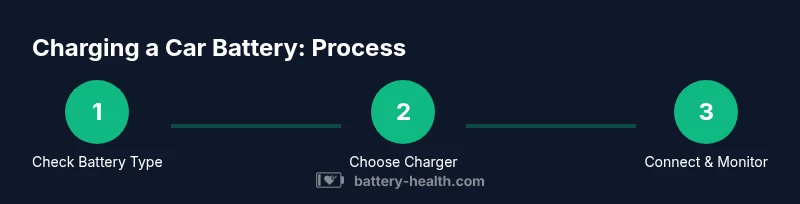
By the end, you will know how to safely charge a car battery, choose the right charger, and perform essential safety checks. Confirm your battery type (12V lead-acid vs Li-ion) and follow the charger’s instructions. Use proper PPE, work in a ventilated area, and monitor voltage during charging. The steps below provide a safe, effective process.
Understanding Car Battery Types
According to Battery Health Analysis, 2026, most passenger cars rely on 12V lead-acid batteries for starting, while modern hybrids and EVs use higher-energy lithium-ion packs for propulsion and storage. Lead-acid batteries are robust and relatively inexpensive but require periodic charging and maintenance. Li-ion packs deliver high energy density and longer life but demand careful charging protocols and proper protection circuitry. The difference in chemistry matters because it determines the safe charging voltage, amperage, and method. When in doubt, consult the vehicle manufacturer’s guidance and the battery label on the cover. Recognizing the chemistry ensures you select the right charger and follow correct procedures to protect both the battery and the vehicle.
Safety First: Precautions When Charging
Charging a car battery involves stored chemical energy and can produce hydrogen gas, heat, and electrical hazards. Always wear eye protection and insulated gloves, operate in a well-ventilated area, and keep flammable materials away. Ensure the vehicle is off, keys removed, and the charger is designed for automotive use. Never charge a damaged or bulging battery, and avoid touching clamps together. If you notice leaking acid or a strong sulfur smell, stop immediately and seek professional help. Safe handling reduces the chance of sparks, and proper ventilation helps disperse any flammable gases.
Chargers: Types, Settings, and How to Use Them
There are several charger types: simple trickle chargers, smart chargers with automatic shutoff, and jump-starters. A smart charger is preferred for routine maintenance charging because it adjusts voltage and current to the battery’s state. Select a charger that matches the battery’s voltage (most cars use 12V) and the specified amperage. For Li-ion packs in EVs or hybrids, use a charger recommended by the manufacturer and avoid high-amp charging from improvised sources. Always read the manual to confirm compatibility and watch the readout to ensure the charger safely reaches the target voltage without overheating.
Practical Charging Scenarios and Advice
On-road emergencies, home garages, or service stations require different setups. At home, place the charger on a dry, level surface away from heat, then connect the positive clamp first, followed by the negative clamp, and monitor the readout. In an emergency, a portable jump-starter can provide a quick boost, but charging afterward should be done with a proper charger to replenish the battery. In all cases, avoid charging in extremely cold or hot environments, which can reduce charging efficiency and battery life. When possible, perform charging in a sheltered area and keep a clear space around the vehicle to prevent accidental contact with metal tools or battery terminals.
What to Do After Charging and Maintenance Tips
When charging is complete, power off the charger and disconnect clamps in reverse order (negative first, then positive) to minimize sparks. Re-tighten and clean battery terminals if needed, and reseal any protective covers. Use a voltmeter to verify resting voltage against the manufacturer’s specification, and test the system under load if you have access to a load tester. Regular maintenance includes cleaning terminals, inspecting cables for wear, and ensuring vent caps are tight on vented batteries. If your battery repeatedly fails to hold a charge despite proper charging, you may need replacement or professional diagnostics.
Tools & Materials
- Owner's manual(To confirm battery type and safety warnings.)
- Compatible automotive battery charger(Match voltage (usually 12V) and amperage to the battery.)
- Voltmeter or multimeter(For measuring voltage before and after charging.)
- Safety gear (insulated gloves, eye protection)(Protect against acid splashes and shocks.)
- Rags and baking soda solution(Use to neutralize any leaked acid and clean terminals if needed.)
Steps
Estimated time: Estimated total time: 30-60 minutes
- 1
Open hood and inspect battery
Open the hood and visually inspect the battery for corrosion, cracks, leaks, or loose connections. Ensure the vehicle is off and the area is well-ventilated before touching the battery. If you find obvious damage, do not proceed and seek professional help.
Tip: If you see white crust or greenish coating on terminals, plan to clean after safely disconnecting power. - 2
Select charger and set appropriate settings
Choose a charger compatible with your battery type and vehicle voltage. Set the charger to a safe amperage suitable for maintenance or topping off, following the manual’s guidance. Avoid high-current settings on an old or weak battery to prevent overheating.
Tip: Smart chargers automatically adjust when the battery reaches a safe voltage; use one when available. - 3
Connect clamps in the correct order
Attach the red positive clamp to the battery’s positive terminal first, then attach the black negative clamp to the negative terminal or ground. This minimizes sparks near the battery.
Tip: Always verify clamps are secure before powering the charger on. - 4
Power on charger and monitor
Turn on the charger and monitor the readout. If the voltage rises steadily to the recommended level and remains stable, the charging is progressing correctly. Do not leave an unattended charger for extended periods.
Tip: If you notice excessive heat or swelling, stop immediately. - 5
Stop charging and disconnect clamps
When charging is complete, power off the charger and carefully remove the clamps in reverse order: negative first, then positive. Close the hood and secure all protective covers.
Tip: Keep clamps away from each other and metal tools during removal. - 6
Test and finalize
Use a voltmeter to confirm resting voltage matches the battery’s spec. If the battery doesn’t hold charge, consult a professional about replacement or deeper diagnostics.
Tip: Document the voltage reading for future reference.
FAQ
Can I jump-start a car battery instead of charging it with a charger?
Jump-starting can provide a quick boost, but you should then recharge with a proper charger to restore the battery’s health. Follow safety steps and ensure jumper cables are in good condition.
Jump-starting can give a quick boost, but you should recharge later with a proper charger to restore health.
What’s the difference between charging a 12V lead-acid battery and a lithium-ion car battery?
Lead-acid batteries require a different charging profile and are more tolerant of slower charging. Li-ion packs need manufacturer-approved chargers and strict voltage control to avoid damage and safety risks.
Lead-acid and Li-ion batteries use different charging profiles; Li-ion needs manufacturer-approved chargers and careful voltage control.
Is it safe to charge a car battery indoors?
Charging indoors is possible with proper ventilation, non-sparking equipment, and a charger designed for indoor use. Ensure no flammable materials nearby and avoid enclosed spaces with poor ventilation.
Yes, if you have good ventilation and a charger rated for indoor use.
How do I know if my battery is too damaged to charge?
If the battery is bloated, leaking, or has a persistent low voltage after charging, it’s likely damaged and should be evaluated by a professional. Do not attempt repeated charging.
If you see swelling, leaks, or it won’t hold a charge, get it checked by a professional.
Why won’t my charger start or show a fault?
Check the charger was plugged in, set for the correct voltage, and that clamps are properly connected. If the issue persists, consult the manual or contact customer support for the charger.
If your charger won’t start, verify power, settings, and connections, then consult the manual if needed.
Watch Video
Quick Summary
- Identify battery type before charging
- Use the correct charger and settings
- Follow proper clamp order to avoid sparks
- Monitor charging and stop if overheating or abnormal readings
- Schedule regular battery maintenance and diagnostics