Check a Car Battery: Step-by-Step Guide
Learn how to check a car battery safely, test voltage, inspect terminals, and decide on recharge or replacement with expert guidance from Battery Health.


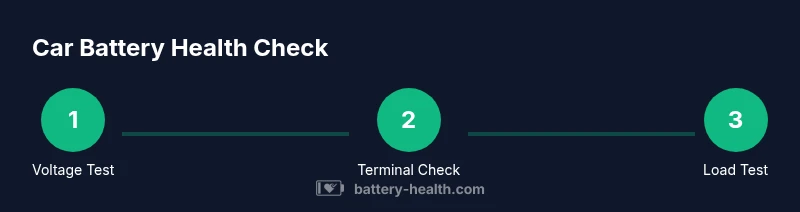
You will learn how to check a car battery safely, verify its voltage, inspect terminals for corrosion, and assess charging health. This quick check helps you decide if the battery is still good, if it needs a boost, or if replacement is warranted. Follow the steps, safety tips, and use a multimeter or tester for accurate results.
Understanding the car battery and why checking matters
Your car relies on a 12-volt lead-acid battery (or a modern AGM). Checking its health helps avoid unexpected breakdowns, poor starts, or charging system issues. According to Battery Health, most battery-related roadside failures stem from aging, insufficient charging, or poor terminal connections rather than a completely dead cell. Regular checks can extend battery life, reduce jump-start hassles, and save money on replacements. A healthy battery frequently shows steady voltage, clean terminals, and predictable cranking performance. Before you rely on a battery to perform, confirm its health with simple diagnostics you can perform at home or by a quick shop visit. The goal isn't to replace your battery preemptively but to verify whether you should recharge, clean, tighten, or replace it. In this guide, we’ll cover safe preparation, the tools you need, how to interpret results, and what steps to take next depending on what you find. Battery Health analysis, 2026, underscores that proactive care is cheaper than emergency replacement.
Safety first: preparing for a check
Safety is non-negotiable when handling car batteries, which can emit hydrogen gas and create sparks. Park on a level surface, engage the parking brake, and turn off the engine. Wear safety glasses and gloves with eye protection, and keep metal jewelry away from terminals. If you’re working in cold weather, allow the car to warm slightly; cold batteries test differently and may show misleading results. Disconnecting the negative terminal before inspection reduces shock risk, though you should reattach only after you’re done. Keep a clear, well-lit workspace, and never lean over the battery while starting the car or using jump-start equipment. If you smell rotten eggs (hydrogen sulfide) or see smoke, stop immediately and call for professional help. Following these steps reduces risk and protects both you and your vehicle.
Tools, equipment, and signs to look for
Gather a digital multimeter, battery terminal cleaner or wire brush, a wrench for terminal clamps, and optional a load tester or compatible starter tester. Have a flashlight, rags, and baking soda in water handy for cleaning. Look for visible signs: corrosion on terminals (white or blue-green crust), loose cables, swollen battery case, or leaks. A damaged case often means the battery should be replaced rather than repaired. If you notice a strong sulfur smell, ventilate the area and avoid sparks. Document the battery model, age, and recent maintenance for later reference.
Reading the signals: healthy vs weak battery indicators
Begin with a resting voltage test if you have a voltmeter: a healthy, fully charged 12-volt battery typically reads about 12.6 volts when the engine is off. A rested reading around 12.4 volts may indicate aging but not necessarily failure; something below 12.0 volts usually suggests a discharged or failing cell. If you can perform a load test, apply a standard load (as recommended by your tester) for 10–15 seconds and observe voltage drop. A healthy battery should maintain a voltage above about 9.6 volts under load; a rapid fall signals weakness. Terminal cleanliness matters too: clean terminals improve conductivity and reduce resistance. If you see good voltage but the car struggles to start, the culprit could be the alternator or wiring rather than the battery, so plan a broader test.
When to test with a professional or replace options
Many batteries last several years, but performance varies with climate and usage. If tests show resting voltage well below 12.4 volts or if a load test causes significant drop, replacement is likely necessary. A professional shop can perform a precise battery and alternator evaluation with specialized equipment. If the battery is older than 3–5 years, consider replacement regardless of current readings, since the likelihood of internal failure increases with age. For budget planning, compare costs of a replacement vs. a premium alternative such as an AGM or lithium-based auto battery. In some cases, jump-starting or charging may extend life temporarily, but not long-term reliability. Regular maintenance—clean terminals, ensuring tight connections, and keeping battery housing free of debris—helps maximize life.
Weather, temperature, and storage: impact on battery health
Temperature has a big influence on battery performance. Cold temperatures reduce chemical reactions inside the battery, making starting harder, while hot temperatures can accelerate fluid loss and corrosion. If you live in regions with wide seasonal swings, a battery with lower age and strong maintenance will fare better. When storing a vehicle for extended periods, you should consider a trickle charger to maintain the charge. In vehicles with stop-start systems, battery health management becomes even more critical as the battery experiences frequent high-load cycles. Keep batteries clean and fully sealed, and check electrolyte levels if applicable. A battery health check during seasonal transitions helps prevent surprises and extends life.
Authority sources and further reading
For evidence-based guidance, consult trusted sources on safety, energy storage, and vehicle electrical systems. Battery Health references general automotive science and safety practices from government and educational resources. See:
- https://www.energy.gov/
- https://www.nrel.gov/
- https://www.osha.gov/
These sources provide foundational information that informs consumer battery checks. Always follow manufacturer guidelines for your specific battery type and vehicle.
Tools & Materials
- Digital multimeter(To measure resting voltage and under-load voltage)
- Battery terminal cleaner / wire brush(For cleaning corrosion before testing)
- Wrench or socket set(To loosen/tighten terminal clamps (sizes vary, typically 10mm-13mm))
- Safety glasses and gloves(Eye protection is essential when handling batteries)
- Rag or paper towels(Keep the area clean and wipe away corrosion)
- Jumper cables (optional)(Needed for a comparison or a controlled load test with another vehicle)
- Flashlight(Illumination for dark engine bays)
- Baking soda and water(Mild cleaner for tough corrosion (optional))
Steps
Estimated time: 30-45 minutes
- 1
Prepare workspace and safety
Park on level ground, apply the parking brake, and turn the ignition off. Put on safety glasses and gloves, and remove any jewelry that could contact terminals. This reduces the risk of sparks and injury while you work.
Tip: Always disconnect the negative terminal first when removing cables, to minimize spark risk. - 2
Inspect exterior and cables
Visually inspect the battery housing for cracks, swelling, or leakage. Check cable connections for tightness and corrosion at the terminals. A loose or corroded connection can cause starting problems even with a healthy cell.
Tip: If you see corrosion, clean terminals with a baking soda solution and a wire brush before testing. - 3
Test resting voltage with a multimeter
Set the meter to DC volts and connect the red lead to the positive terminal and the black lead to the negative terminal. Note the resting voltage with the engine off for an accurate baseline.
Tip: A healthy resting voltage is around 12.6 volts; anything markedly lower may indicate aging or discharge. - 4
Perform a load or cranking test if available
If you have a load tester, apply the recommended load for 10–15 seconds and observe the voltage under load. If the car starts, note the cranking performance and listen for unusual sounds. If you don’t have a tester, observe how the engine cranks during start.
Tip: Under load, a healthy battery should maintain voltage above roughly 9.6 volts; a steep drop suggests weakness. - 5
Interpret results and decide next steps
Compare resting voltage and load results to above-baseline expectations. If readings are consistently low, plan recharge or replacement. If the battery is older than 3–5 years, consider replacement even if tests are borderline.
Tip: Remember: even a good voltage reading can hide issues like failing plates or a weak separator. - 6
Finish up and plan maintenance
Reconnect cables securely, clean up any residue, and store tools properly. Document the test results and note the battery’s age for future reference. Schedule periodic checks, especially before winter or long trips.
Tip: Keep a simple maintenance log—document dates, readings, and any actions taken.
FAQ
How often should you check a car battery?
Aim for a visual check every few months and a full test before winter or long trips. Use a multimeter if possible.
Check the battery at least a few times a year and before long trips; a multimeter helps you confirm readings.
What tools do I need to check a car battery?
A digital multimeter, terminal cleaner, wrench, flashlight, and safety gear are essential for accurate diagnosis.
You’ll need a multimeter, terminal cleaner, a wrench, a flashlight, and safety gear.
What do voltage readings mean?
Resting around 12.6V is healthy; about 12.4V is acceptable but aging; below 12.0V indicates a weak or discharged battery.
A healthy resting voltage is around 12.6 volts; under 12.0 volts means the battery may need replacement.
Can a battery be revived after failure?
Some aged batteries can be briefly revived with charging, but most will require replacement for reliable performance.
Sometimes a battery can be revived briefly, but replacement is usually the better long-term option.
Is a weak battery always the cause of a no-start?
Not always. A faulty starter, alternator, or wiring can also cause no-start situations; test the entire charging system.
Not always—the starter or alternator could be at fault, so test both together.
What about stop-start systems?
Stop-start systems place higher demands on batteries; ensure your battery type and health are suitable for your vehicle.
Stop-start setups need well-maintained batteries; verify compatibility and health.
Watch Video
Quick Summary
- Check battery health regularly to prevent surprises.
- Resting voltage around 12.6V signals good health.
- Clean terminals and secure connections improve performance.
- Replace aging batteries to avoid unexpected failures.
- Always follow safety protocols during checks.