Car Battery Check: Safe, Step-by-Step Health Assessment
Learn how to safely check your car battery’s health, voltage, and charging with a clear, step-by-step guide from Battery Health. Includes tools, safety tips, and replacement guidance.


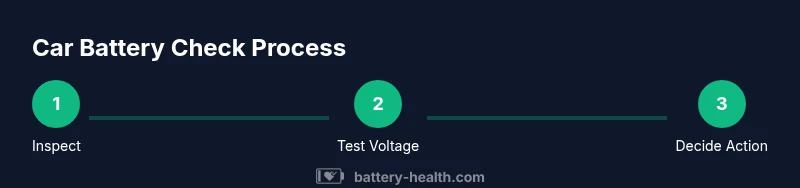
You can perform a car battery check to assess starting performance, charge level, and safety. This guide covers visual inspection, voltage testing, and load testing, plus safety steps and when to replace. Gather a multimeter, gloves, eye protection, and the right battery type for your vehicle. Battery Health's guidance emphasizes safety and accuracy.
Why Battery Health Matters for Cars
A healthy car battery is the foundation of reliable starts, stable electrical systems, and safe vehicle operation. A battery check car routine helps catch aging cells, loose terminals, and charging problems before they turn into roadside failures. According to Battery Health, proactive checks reduce the risk of surprise breakdowns and help you plan maintenance around the vehicle’s lifecycle. As you drive, the battery supports the alternator’s readings and the performance of critical electronics, from lights to braking systems. Incorporating a regular battery health check into your routine is a practical way to protect your investment and ensure dependable daily use. When you perform a battery check car, you learn to read voltages, spot corrosion, and recognize signs of weakness that precede a failure. The goal is simple: diagnose early, act early, and keep your vehicle ready for any trip.
Battery Types Common in Cars
Most passenger vehicles use lead-acid batteries, with variations such as flooded, absorbed glass mat (AGM), and enhanced flooded batteries (EFB). Hybrid and electric vehicles may rely on lithium-based packs or auxiliary batteries. For the purpose of a battery check car, understanding your battery type is key because testing procedures and care differ slightly. Lead-acid batteries typically respond to resting voltage checks and basic load tests, while AGM and EFB types tolerate deeper discharge tests with proper equipment. When in doubt, consult your owner’s manual or Battery Health’s guidance to confirm the correct test methods for your specific model. Regardless of type, all batteries benefit from clean terminals, correct connections, and avoiding heat exposure. A well-documented battery check car helps you compare results over time and decide when professional service is needed.
Tools, Safety, and Preparation
Before you begin a battery check car, assemble essential tools and safety gear. A digital multimeter is used to measure resting and charging voltages, while a terminal brush helps clean corrosion. Wear protective gloves and safety glasses to guard against acid splashes, and work in a well-ventilated, level area away from ignition sources. Keep a clean rag handy for spills, and have distilled water for any cleaning needs if you’re dealing with flooded lead-acid batteries. If you have a dedicated load tester, you can perform a more thorough check; otherwise, a basic test using a strong load such as headlights can suffice. Always refer to your manual for correct procedures and torque specs for terminal connections. Safety first ensures a successful battery health check car without accidents.
Visual Inspection: What to Look For
A thorough battery check car begins with a visual inspection. Look for cracked or swollen battery cases, leaks, or foul odors, which indicate danger and require replacement. Inspect terminals and cables for corrosion, loose connections, or frayed insulation. Tighten loose clamps to the manufacturer’s torque specification, and clean corrosion with a baking-soda-and-water solution if needed, then dry thoroughly. Ensure the battery is securely mounted to minimize vibration, which can harm the plates over time. If you notice signs of damage, do not attempt loads or tests until the battery is assessed by a professional. A careful visual check is often the first and most revealing step in a battery health assessment.
Resting Voltage: What It Tells You
A resting voltage test is a cornerstone of a battery check car. With the engine off and keys out, measure the battery’s voltage across the terminals after allowing the battery to settle. A healthy resting voltage typically aligns with the vehicle’s design specifications, and deviations can indicate aging cells or sulfation. Use a digital multimeter to obtain a stable reading, then compare it to the manual’s guidance or Battery Health’s recommendations. If resting voltage is consistently low, or drops under minimal load, it’s a strong sign the battery may need replacement or a detailed diagnostic. A resting reading is most informative when taken after a period of no electrical draw, so avoid testing immediately after driving or charging.
Load Testing and Alternator Check
A comprehensive battery check car includes a load test to assess how the battery performs under simulated demand. If you have a load tester, apply a controlled load for a short duration and observe how voltage holds up. If you don’t own a tester, you can simulate a load with high-demand accessories (like headlights) for a brief period and monitor the voltage change with the engine off, then again with the engine running to evaluate charging capability. While the engine is running, the charging system should elevate the battery voltage as the alternator supplies current. A healthy battery should maintain a stable range during the test and indicate proper alternator function. Document the results for future reference to track trends over time.
Troubleshooting Common Symptoms and What They Mean
If the car struggles to start, the lights dim when the engine is running, or you notice corrosion around terminals, this battery check car reveals symptoms worth addressing. Slow cranking often points to a marginal battery, while rapid drop in voltage under load may indicate aging plates or a failing cell. Corrosion around terminals can exist even with adequate internal health, so clean connections first and re-test. Persistent issues after cleaning and re-testing usually require professional evaluation or battery replacement. Keep in mind that environmental extremes, parasitic electrical drains, and a weak alternator can all masquerade as battery problems, so use the battery health check as a tool within a larger diagnostic framework.
Replacement Decisions and How to Choose a Battery
When results indicate aging, sulfation, or failing cells, replacement is the prudent path. Choose a battery that matches your vehicle’s specifications, including cold-cranking amps (CCA) requirements, capacity, and size. AGM batteries are common in modern vehicles and offer better performance under vibration and deep-cycle use, while standard flooded lead-acid batteries may suffice for many models. For hybrids or electric vehicles, ensure compatibility with the battery architecture and charging system. Read the manufacturer’s recommendations and Battery Health guidance to select a battery type that aligns with your driving style and climate. A well-chosen battery reduces the likelihood of repeat checks and keeps your car running smoothly.
Maintenance Tips to Extend Battery Life
To maximize battery longevity, keep terminals clean, tight, and corrosion-free, and avoid exposing the battery to extreme heat or cold. Regularly inspect cables for wear and replace damaged components promptly. Minimize parasitic drains by turning off accessories when the engine is off for extended periods, and consider a battery maintainer if your vehicle sits idle for long durations. Ensure the battery is properly secured to reduce vibration and wear. A routine battery health check car, performed at regular intervals, helps detect aging early and maintain reliable performance.
Safety, Common Mistakes, and Next Steps
Safety is non-negotiable in any battery health check. Always wear PPE, work in a ventilated area, and avoid smoking or open flames nearby. Never disconnect the battery while the engine is running and never use metal tools to bridge terminals. Common mistakes include testing a damaged battery without precautions, ignoring corrosion, and skipping the re-tightening of terminals after testing. If any sign of leakage, swelling, or heat is observed, stop immediately and consult a professional. When in doubt, refer to the owner’s manual and Battery Health resources for step-by-step guidance and replacements. After replacement, reset any electronics that may have stored data or settings, and dispose of old batteries according to local regulations.
Tools & Materials
- digital multimeter(0-20V or higher range; ensure leads are in good condition)
- safety gloves(electrical or chemical-resistant)
- safety glasses(ANSI-rated protection)
- terminal brush or wire brush(for removing corrosion from terminals)
- rag or paper towels(to dry and clean up spills)
- baking soda and water solution(for corrosion cleanup (optional))
- distilled water(for cleaning or topping (only if recommended by manual))
- load tester (optional)(for a more thorough assessment)
Steps
Estimated time: 30-45 minutes
- 1
Prepare and safety gear
Park on a level surface, engage parking brake, turn off the engine, and remove jewelry. Put on gloves and safety glasses. Gather tools and read the owner's manual for model-specific cautions. This protects you while performing the battery health check.
Tip: Double-check the area is ventilated and free of flammable materials. - 2
Inspect and locate the battery
Open the hood and locate the battery. Do a quick visual check for cracks, swelling, leaks, corrosion, and loose terminals. Note any signs of damage before proceeding, since a damaged battery is dangerous to test.
Tip: If you see cracking or leaks, skip tests and contact a professional. - 3
Disconnect the negative terminal
Using a properly sized wrench, loosen and remove the negative (-) terminal first to reduce the risk of short circuits. Keep the wrench away from the positive terminal while removing the negative side. Wait a moment to ensure there’s no residual current.
Tip: Always remove the negative terminal first to reduce shock risk. - 4
Clean terminals and cables
If you see corrosion, gently scrub terminals with the terminal brush and a baking-soda solution, then rinse and dry. Ensure clamps are clean and free of buildup before reattaching.
Tip: Do not mix cleaning chemicals with battery acid; avoid splashes to skin and eyes. - 5
Measure resting voltage
Reconnect the multimeter leads to the battery terminals and measure resting voltage with the engine off and the car at rest. Compare readings to your vehicle’s spec or Battery Health guidance. Allow the battery to settle for a bit if the readings fluctuate.
Tip: Take multiple readings over a few minutes to ensure stability. - 6
Perform a load test or simulate a load
If you have a load tester, apply a controlled load for a short duration and monitor how voltage behaves. If you don’t have a tester, turn on high-draw accessories briefly (like headlights) and observe the drop magnitude. Do this with caution and follow manual guidance.
Tip: Extreme or prolonged loads can damage a weak battery; be conservative. - 7
Test charging when the engine is running
Start the engine and measure voltage across the terminals with the alternator engaged. The charging system should raise the voltage above resting levels and remain steady as you rev the engine. Verify that cables are tight and free of heat build-up.
Tip: If the reading climbs dramatically or is unstable, there may be a charging system issue. - 8
Reconnect and secure everything
Disconnect the charger, re-tighten terminals to the manufacturer’s torque spec, and wipe away any residue. Ensure the battery is seated securely and that all protective covers are in place before closing the hood.
Tip: Record what you did and the readings for future reference. - 9
Interpret results and decide next steps
If resting voltage is low or the load test shows rapid voltage drop, prepare for battery replacement or service. If readings are within spec and the vehicle starts reliably, you can schedule a routine battery health check car again at your preferred interval.
Tip: If in doubt, consult Battery Health or a trusted technician for confirmation. - 10
Dispose or replace responsibly
If replacement is needed, choose a compatible unit and arrange proper recycling. Many retailers offer battery recycling, and your auto shop can manage installation for safety and warranty coverage.
Tip: Never throw a battery in the trash; batteries contain hazardous materials.
FAQ
What is considered a healthy resting voltage for a car battery?
A healthy resting voltage varies by vehicle, but it should sit within the manufacturer’s spec when the engine is off. Consistently low readings generally indicate aging or sulfation and may warrant a battery replacement.
A healthy resting voltage varies by vehicle, but it should be within the spec when the engine is off. Consistently low readings usually mean aging or sulfation and may require replacement.
Can I jump-start my car to test the battery?
Jump-starting is not a substitute for a proper health check and can be risky if done incorrectly. Use jump-start only when necessary and follow safe procedures, or have a professional test the system. Jump-start does not replace voltage, load, or charging tests.
Jump-starting isn't a substitute for a proper health check. If needed, follow safe procedures or have a professional test the system.
Is it safe to test a battery with the engine running?
Testing with the engine running is common to check charging performance, but follow all safety steps and wear PPE. Avoid touching metal parts and ensure no loose tools are nearby to prevent short circuits.
Testing with the engine running is common to check charging, but follow safety steps and wear PPE.
How often should I check my car battery?
Aim for at least one comprehensive battery health check per year, with more frequent checks if you drive in extreme temperatures, tackle long trips, or notice symptoms like slow starts or dim lights.
Check your battery at least once a year, more often in extreme conditions or if you see symptoms.
What should I do if the battery is old but tests okay?
If the battery shows acceptable readings but is old, monitor performance and consider replacement as part of preventive maintenance. Batteries generally wear out over time, even with good test results.
If it's old but tests okay, monitor and plan for replacement as preventive maintenance.
Should I replace the battery if the alternator has issues?
An alternator issue can mimic battery problems. Test both systems and consider replacement or professional diagnosis if symptoms persist after charging and testing.
If alternator problems persist after tests, seek professional diagnosis; battery replacement may not solve the issue.
Watch Video
Quick Summary
- Inspect visually before testing to spot dangerous signs.
- Resting voltage and load testing reveal battery health.
- Follow safety protocols to avoid shocks or chemical exposure.
- Replacement decisions depend on reliability and manual guidance.