How to Jump Car Battery: Safe Step-by-Step Guide
Learn how to jump a car battery safely with a practical, step-by-step approach. This Battery Health guide covers safety, tools, connections, and post-jump care to prevent damage.


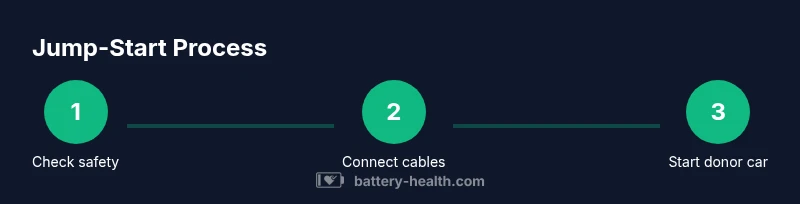
Learn how to jump a car battery safely in 4 simple steps. You’ll need jumper cables, a healthy donor vehicle, and a basic understanding of polarity and safety. This guide covers prep, connecting cables, starting the donor car, and post-jump checks to help prevent damage. By following these steps, you minimize shocks, sparks, or damaging electronics.
How Jump-Starting Works and Why It Matters
A dead car battery cannot provide the surge of current needed to turn over the engine. Jump-starting is the controlled transfer of electrical energy from a healthy donor battery through jumper cables to the dead battery, momentarily boosting the dead pack so the starter can spin. In simple terms, the donor battery shares voltage to raise the voltage level of the dead battery long enough for the engine to start, after which the alternator recharges the system.
The process hinges on a safe, directed energy flow and a few essential conditions: the cables must be in good condition, the clamps must be clean and securely attached, and the vehicles should be positioned so the cables allow a direct, unimpeded path between terminals. Incorrect connections or damaged cables can cause sparks, short circuits, or heat build-up that damages electronics. According to Battery Health, understanding the basics of polarity and sequence reduces risk and improves your odds of a successful start without injury. By keeping the scene calm and following a clear plan, you minimize mistakes and protect both drivers and vehicles.
Safety First: Protect Yourself and Your Vehicle
Before you touch any cables, prepare the area: pull over to a flat, well-lit surface, turn off ignition and accessories, engage the parking brake, and remove any metal jewelry. Hydrogen gas released by charging can ignite, so avoid sparks near the battery. Wear safety glasses and gloves to protect eyes and hands from acid or pinch points. Keep flammable materials away and never lean over the battery while connecting clamps. According to Battery Health, adopting a safety-first mindset reduces the risk of injuries and electrical faults.
Tools, Cables, and Donor Selection: What You Need
Have a sturdy set of jumper cables in good condition, a donor vehicle with a healthy battery, and a plan for where to place the cars so cables reach both batteries without stress. Inspect clamps for corrosion, frayed insulation, or loose connections. Use cables rated for automotive use and avoid improvised power sources. A dry, flat surface and a clear path under the hood help prevent shorts. If the dead battery is cracked, leaking acid, or swollen, do not attempt a jump-start and seek professional help.
The Connection Plan: Cable Placement and Polarity
The general method is to establish a safe, unbroken electrical path from the donor to the dead battery. Start with both engines off. Connect the red clamp to the dead battery's positive terminal, then connect the other end to the donor battery's positive terminal. Next, attach the black clamp to the donor battery's negative terminal, and finally attach the other end to a clean, unpainted metal ground point on the dead car away from the battery. Double-check all connections for tightness and no metal-to-metal contact beyond clamps.
Aftercare and Recharge: What to Do After Start
Start the donor car and let it run for several minutes, then attempt to start the dead car. If the dead car starts, keep both engines running for a while to allow the alternator to recharge the dead battery. Remove the cables in reverse order: black from ground, then black from donor, then red from donor, then red from dead battery, all while ensuring that clamps do not touch each other or metal surfaces. Drive the revived car for at least 15-30 minutes or longer to recharge the battery and test electronics. If the dead car does not start after multiple attempts, stop and seek professional assistance.
AUTHORITY SOURCES
- NHTSA: Battery Safety and Jump-Start Tips: https://www.nhtsa.gov/road-safety/battery-safety
- OSHA Battery Safety: https://www.osha.gov/battery-safety
- DOE Battery Safety: https://www.energy.gov/eere/vehicles/articles/battery-safety This section provides official guidelines to supplement practical steps. The Battery Health Team emphasizes that following official safety guidelines reduces risk during car battery jumps.
Tools & Materials
- Jumper cables(Heavy-gauge automotive cables in good condition)
- Donor vehicle with a healthy battery(Engine should start and charge normally)
- Safety gear(Safety glasses and gloves to protect eyes and hands)
- Owner's manual(Check for model-specific precautions)
- Wheel chocks or wedges(Prevent vehicle movement on slope)
- Insulating mat or cloth(Place under terminals to prevent shorts)
Steps
Estimated time: 10-20 minutes
- 1
Check safety area
Ensure both cars are parked on level ground, with engines off and parking brakes engaged. Confirm you have a clear space around the batteries and that no one is leaning over the batteries when connecting cables.
Tip: Wear safety glasses and gloves; keep hair and clothes away from moving parts. - 2
Position the vehicles
Stay close enough for the jumper cables to reach both batteries without stretching. Do not allow the vehicles to touch. If possible, open both hoods for easy access and visibility.
Tip: Keep the donor car in good running condition to avoid additional strain on its battery. - 3
Locate terminals and clamps
Find the dead battery positive (+) and negative (-) terminals, and locate the donor battery's positive and negative terminals. Clean terminals if there is any corrosion; dirty terminals can impede a proper connection.
Tip: Do not attempt to jump if you see cracks, leaks, or swelling on either battery. - 4
Attach red clamp to dead battery
Clamp the red (positive) jumper cable securely to the dead battery's positive terminal. Ensure no other metal is touching the clamp.
Tip: Make sure the clamp is firmly attached and not slipping. - 5
Attach red clamp to donor battery
Connect the other end of the red cable to the donor battery's positive terminal. Ensure a clean, solid contact.
Tip: Keep both red clamps from touching each other. - 6
Attach black clamp to donor negative
Connect the black (negative) clamp to the donor battery's negative terminal. Ensure the clamp is secure.
Tip: Do not attach to the dead battery's negative terminal yet. - 7
Ground the dead car
Attach the remaining black clamp to a solid, clean ground point on the dead car away from the battery (engine block or chassis). This reduces sparks at the battery.
Tip: Choose a metal surface away from moving parts and not painted. - 8
Start and remove cables safely
Start the donor car, then attempt to start the dead car. If it starts, remove cables in reverse order: black from dead car, black from donor, red from donor, red from dead car.
Tip: Never let clamps touch each other or metal surfaces while removing.
FAQ
What is the safest order to connect jumper cables?
Connect red to the dead battery, then to the donor battery. Attach black to the donor negative, and finally to a grounded metal point on the dead car. This minimizes sparks near the battery.
Connect red to the dead battery, then to the donor. Attach black to the donor negative, and finally to a metal ground on the dead car.
Can I jump-start a car with a cracked or leaking battery?
No. A cracked or leaking battery can vent acid and pose a shock or fire hazard. Do not attempt a jump-start; replace the battery or seek professional help.
If the battery is cracked or leaking, do not jump-start it; replace it or consult a professional.
What should I do if the dead car won't start after a jump?
Wait a few minutes, recheck all connections, and try again. If it still won't start, stop and seek professional help to avoid damaging electrical components.
If it still won't start, double-check connections and wait a few minutes before trying again. If it still won't start, get professional help.
Is jump-starting safe for modern vehicles' electronics?
Yes, when done in the correct order and with good cables. Incorrect connections or damaged cables can harm sensitive electronics. Always follow step-by-step safety guidelines.
Jump-starts are safe if you connect correctly and use good cables; otherwise, you risk damaging electronics.
How long should I drive after a jump-start?
Drive the revived vehicle for at least 15-30 minutes to help recharge the battery, then have the system inspected if you notice continued issues.
Drive for 15 to 30 minutes to recharge, and get it checked if problems persist.
Watch Video
Quick Summary
- Prepare the area and gear before connecting cables.
- Connect in the correct order to prevent sparks and damage.
- Let the donor vehicle run to recharge the dead battery.
- Drive afterward to help recharge and test the system.