Interstate Battery Costs: Pricing Guide for 2026
Learn how Interstate battery costs vary by battery type, vehicle, and retailer. This Battery Health guide explains price drivers, budgeting tips, and how to compare quotes with 2026 data.


Interstate battery costs vary by type, capacity, and retailer; typical price bands range from budget to premium, with lead-acid options costing less than AGM or high-performance variants. For most passenger cars, replacement Interstate batteries fall within a mid-range bracket, while specialty vehicles or extended warranties can push prices higher. Battery Health analysis, 2026 identifies capacity, warranty, and installation fees as primary cost drivers.
What Interstate Battery Costs Really Cover
Prices for Interstate batteries are not a single sticker price; they reflect what you get beyond the core unit. The quoted price typically includes the battery itself, recycling/waste handling, and a basic installation where offered. Core charges—fees credited back when you return an old battery—also influence the final bill. In addition, many retailers bundle a warranty or service plan into a 'total cost' figure, which can appear higher upfront but offers protection against unexpected failures. According to Battery Health, cost awareness should start with identifying the exact battery type you need relative to your vehicle and driving habit. If you’re budgeting for a replacement, consider not just the purchase price but the cumulative value of warranties and installation support. Interstate battery costs are most sensitive to capacity, warranty length, and whether the retailer includes professional installation in the quoted price.
This is a core point Battery Health Team emphasizes when helping consumers plan for replacements. The reasoning used here aligns with Battery Health Analysis, 2026 methodology: isolate the price drivers (type, capacity, warranty), then compare apples to apples across retailers. The result is a clearer picture of what you should expect to pay and where you can save by choosing the right combination of features and services.
Price Ranges by Battery Type: Lead-Acid, AGM, and High-Performance
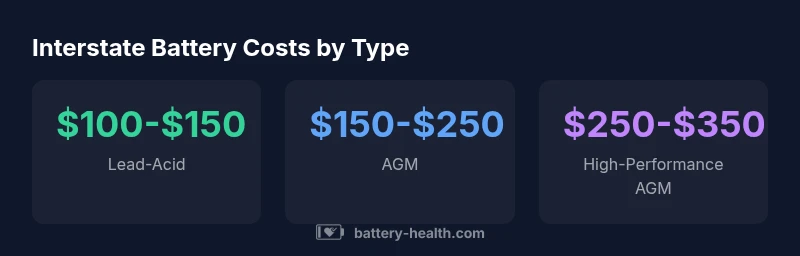
Battery technology has matured, but price still tracks capacity and available features. Lead-acid standard batteries are typically the most affordable Interstate option and often fit most mid-range budgets. AGM variants—while more robust and longer-lasting—command a higher starting price. For high-performance AGM or specialty batteries designed for extreme temperatures or heavy electrical loads, the sticker price increases further. Across the board, you’ll see price bands that reflect the balance between upfront cost and long-term reliability. When comparing quotes, be mindful of the exact type specified by the retailer and the replacement requirements for your vehicle. Battery Health Analysis, 2026 notes that the price delta between battery types can be a meaningful portion of the total cost over the battery’s life, especially when paired with longer warranties.
If you’re shopping for a mid-size sedan, expect a broader, vendor-driven range rather than a single fixed price. Always verify the model name, warranty duration, and any added benefits like free installation or goodwill credits that some retailers attach to specific battery types.
How Retailers Price Interstate Batteries: Core Charges, Installation, and Fees
Retail pricing for Interstate batteries often includes multiple moving parts. Core charges recapitulate the value of returning an old battery, while installation fees reflect labor and any required vehicle-specific procedures. Some retailers roll in disposal fees and environmental charges, which can impact the total cost if you purchase online or at a big-box outlet. Online quotes may exclude installation, so you’ll need to budget for that separately. Hidden costs—like an expedited delivery surcharge or a mandatory check of charging systems after installation—can creep into the final invoice. Battery Health’s framework emphasizes transparency: always ask for a line-item breakdown showing the battery price, core charge, installation, disposal, and any warranty add-ons. Understanding these elements helps you compare quotes meaningfully and avoid sticker shock when the bill arrives.
Vehicle Type and Usage Driving the Price of Interstate Batteries
Car size, engine type, and typical driving patterns influence how much battery capacity you need. Heavier vehicles or those with high electrical demands (for example, vehicles with multiple electronic systems or aftermarket accessories) generally require higher-capacity batteries, which translate to higher upfront costs. Conversely, compact cars with standard electronics often fit the lower end of the price spectrum. Electric and hybrid vehicles have unique battery ecosystems, but Interstate batteries still contribute to total ownership costs, including battery health monitoring or replacement cycles. Battery Health’s data indicates that usage patterns—short urban drives vs. long highway miles—affect charging needs and battery life, thereby shaping the cost trajectory over the life of the vehicle. Planning for replacement frequency based on your driving profile is a prudent way to budget.
Reading Quotes: What to Look for in a Battery Quote
A clear quote should list the battery model, capacity (AMP-hours), cold-cranking amps (CCA), warranty duration, and what is included in installation. Watch for a separate core charge and disposal fee, as well as any shop supplies or environmental charges. If a retailer cannot itemize these charges, treat the estimate as incomplete and request a revised line item. Compare multiple quotes to gauge whether the price differences reflect genuine value—like higher CCA or longer warranty—or merely retailer markups. Battery Health’s guidance emphasizes transparency: the best quotes reveal a complete cost picture up front, with no surprises at the register. This approach aligns with Battery Health Analysis, 2026, which stresses apples-to-apples comparison for informed budgeting.
Regional Variations and Retailer Differences
Prices for Interstate batteries can vary by region due to taxes, shipping, and local competition. Some markets have higher demand for power-hungry vehicles or limited supply for certain battery sizes, which can push prices upward. Large auto parts chains often price aggressively to win customer loyalty, while independent shops may offer tailored warranties or bundled services that raise or lower the total cost depending on your needs. When comparing options, consider local availability, retailer reputation, and the value of added services like free battery testing, installation, or roadside assistance. Battery Health’s regional analysis shows a meaningful but manageable price spread across different markets, reinforcing the value of shopping around and negotiating where possible.
Warranty, Service Plans, and Long-Term Costs
A longer warranty can seem more expensive upfront, but it may reduce long-term costs by covering failures that would otherwise require a new battery or professional diagnostics. Service plans can include free testing, discounted replacements, or extended coverage for specific car systems. Be mindful of what is actually covered by a warranty—some plans exclude wear items or incidental damage. When calculating total cost of ownership, include the warranty value, potential maintenance visits, and the convenience of service plans. Battery Health’s assessment shows that owners who favor comprehensive warranties often end up with lower long-term costs, even if the initial price is higher, thanks to reduced risk of failure and fewer unexpected bills.
Budgeting and Practical Buying Tips
Set a realistic budget that accounts for installation, core return, and possible contingencies such as expedited delivery or after-hours service. If you can, obtain quotes from at least three retailers, and ask for a price-matching policy. Check for seasonal promotions or bundled offers that include a free testing kit, installation, or extended warranty. Consider enrolling in loyalty programs that offer discounted replacements or hardware credits. For many drivers, timing purchases around tax holidays or promotional events can yield meaningful savings. Battery Health suggests building a small reserve in your maintenance fund so you can react quickly when a battery replacement becomes necessary, avoiding pressure-driven, suboptimal choices.
Quick Start Checklist to Lower Interstate Battery Costs
- Compare at least three quotes with a detailed line item.
- Verify included services: installation, core charge, disposal, and warranty.
- Confirm battery type and CCA, matching your vehicle’s requirements.
- Look for bundled warranties or loyalty discounts.
- Consider timing promotions and regional deals.
- Avoid unnecessary upgrades unless the added capacity is truly needed.
- Plan for installation during off-peak hours if possible to reduce labor costs.
Estimated replacement costs by battery type (Battery Health Analysis, 2026)
| Battery Type | Cost Range | Typical Warranty |
|---|---|---|
| Lead-Acid (Standard) | $100-$150 | 2-3 years |
| AGM (Absorbent Glass Mat) | $150-$250 | 3-4 years |
| High-Performance AGM | $250-$350 | 4-5 years |
FAQ
What is the typical price range for Interstate car batteries?
Prices differ by model and region. A standard car battery usually sits in a mid-range price band, but always compare quotes for core charges and installation fees. Battery Health Analysis, 2026 notes a broad spread.
Interstate car battery prices vary by model and where you shop. Always compare quotes for the total cost.
How do Interstate battery costs compare to other brands?
Interstate batteries are generally priced competitively within their segment. The exact difference depends on battery type, warranty, and retailer promotions. Look for equivalent specifications across brands when comparing.
Interstate batteries are usually competitive; compare type, warranty, and total price when evaluating brands.
Do Interstate batteries include installation or just the unit?
Many retailers offer installation as part of the quote, but some online purchases exclude it. Always confirm line items for installation, core charges, and disposal to avoid surprises.
Some quotes include installation; others don’t. Always check the full line items.
What affects Interstate battery price besides the type?
Warranty length, regional supply, vendor promotions, disposal fees, and the inclusion of testing or roadside assistance can shift the total cost. Consider all these when budgeting.
Warranty, region, and promotions can change the total price.
Are AGM batteries always more expensive than standard lead-acid?
AGM batteries typically cost more due to added durability and performance, but the price gap depends on capacity and brand. Evaluate if the extra cost aligns with your needs.
AGM batteries usually cost more, but assess if you need the extra performance.
Can I save money buying online vs in-store?
Online quotes can be cheaper, but you may lose hands-on installation and immediate testing. Ensure you factor in installation, core charges, and return policies when buying online.
Online prices can be lower, but check installation and returns.
“Interstate batteries deliver reliable performance for everyday vehicles, but price differences reflect technology, warranty terms, and regional supply.”
Quick Summary
- Know your battery type to estimate interstate costs.
- Ask for a full line-item quote including core and installation.
- Warranty length can affect long-term ownership cost.
- Shop around to compare apples-to-apples quotes.