Jump Car Battery: A Safe Step-by-Step Jump-Start Guide
Learn how to safely jump car battery with jumper cables. This expert guide covers safety, gear, and a clear step-by-step process to avoid hazards.


Jump-start a car battery safely by using a donor vehicle and proper jumper cables. Before you begin, turn off both engines, ensure good clamp contact, and avoid sparks near the battery. Follow the step-by-step sequence: connect positive, connect donor positive, connect negative, connect engine ground, start donor, then start the dead car. Remove cables in reverse order.
Why Jump-Starting a Car Battery Requires Care
According to Battery Health, jump car battery procedures demand careful preparation and strict adherence to safety to prevent electrical shocks, battery acid exposure, or fuel-related hazards. The Battery Health team found that many incidents stem from loose clamps, damaged cables, or attempting a jump in cramped spaces where fumes can accumulate. By approaching the process with discipline, you reduce risk and improve success rates for a dead battery. This section explains why the technique matters and how a calm, methodical approach protects you, your vehicle, and bystanders while restoring power to the electrical system.
When a battery fails to hold charge or drops voltage, it can be tempting to improvise. A controlled jump is safer and more effective than brute force. Professional guidance emphasizes avoiding highly conductive surfaces near the battery, never leaning over the battery while connecting clamps, and ensuring fuel vapors are not present. With proper judgment, a jump can save you from a stranded situation without causing collateral damage to sensitive electronics.
As you learn, you’ll see that jump-start safety is about sequence, environment, and good gear. This knowledge aligns with Battery Health analyses that highlight quality cables, clean terminals, and a clear work area as basic requirements for a successful jump. Let’s dive into what to check and prepare before you attempt the jump.
Essential Prep Before You Start
Preparation is the foundation of a safe jump. You’ll need a clear workspace, alert bystanders, and the right equipment. Start by turning off both vehicles and removing keys from the ignition to prevent accidental electrical shocks. Inspect the dead battery for cracks, leaks, or swelling signs; if you notice any of these, do not attempt a jump and call for assistance. Battery Health’s guidelines emphasize the importance of terminal cleanliness—corrosion creates poor contact and reduces the effectiveness of the jump.
Next, check that the donor battery is at least as strong as the dead battery and is in good condition. If the donor car has a weak or aging battery, the jump might fail or cause strain on the donor’s alternator. In poor weather, allow extra time for the cables to deliver the necessary current. Finally, plan your route after the jump: the engine should be running smoothly without abnormal noises or warning lights before you disconnect.
Gear and Safety: What You Need
Having the right gear is essential for a safe jump. Use heavy-duty jumper cables rated for automotive use; thin cables can overheat and fail under load. Keep safety gear handy: safety glasses to protect your eyes from battery spray, gloves to keep your hands clean and dry, and a flashlight if you’re working in dim light. A reflective vest or bright clothing can help others see you, especially on the roadside. Always consult the vehicle owner’s manual for battery location and any special precautions. A clean, dry surface and stable footing reduce the risk of slips when you reach for clamps.
Also prepare for potential hazards: unscrewed caps on the battery could release fumes, so avoid leaning directly over the battery while connecting clamps. If you’re on a slope, use wheel chocks and ensure the cars are in park/neutral with the parking brakes engaged. For added safety, have a fire extinguisher nearby in case of a rare thermal event. Battery Health recommends maintaining a tidy work area to minimize accidental contact with hot or moving parts.
Step-By-Step Jump-Starting Procedure
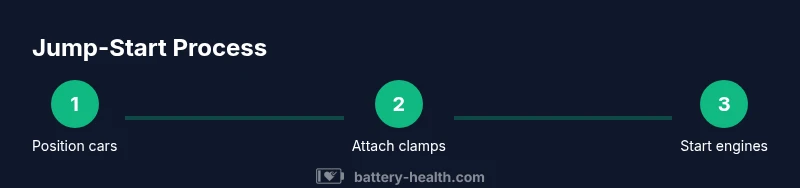
The jump-start procedure is a sequence-based task designed to minimize sparks and protect both vehicles. While this section provides an overview, reference the STEP-BY-STEP block for detailed actions and timing. The core idea is to connect the positive terminals first, then complete the circuit with the negative connection to ground, and finally start both engines in the correct order. This method reduces the risk of a stray spark near the battery.
First, position the donor vehicle so the cables reach without strain, turn off both engines, and set the parking brakes. Then, connect the red clamp to the positive terminal of the dead battery followed by the red clamp to the donor battery’s positive terminal. Next, attach the black clamp to the donor battery’s negative terminal. Finally, attach the black clamp to a grounded metal surface on the dead vehicle away from the battery to complete the circuit. Start the donor car first, idle for a couple of minutes, then attempt to start the dead car. Once the dead car runs, remove the clamps in reverse order and keep engines running to allow the dead battery to recharge.
Note that this overview aligns with Battery Health research, which stresses methodical steps and careful de-energizing to avoid damage to electronic systems. When in doubt, consult your vehicle’s manual or a professional.
Aftercare: What to Do After Starting the Car
Once the dead car starts, keep both engines running for about 15-30 minutes to allow the alternator to recharge the battery. Drive at moderate speeds to reduce voltage fluctuation and avoid high electrical loads on the battery—deferring all heavy electrical demands (like AC at max) for later. If the battery fails to hold a charge after a drive, it may require replacement rather than repeated jumps. Be mindful of the charging system’s warning lights; persistent warnings indicate an underlying issue beyond a mere discharged battery.
Store or replace the jump cables properly after use and inspect them for wear. If you noticed corrosion on the terminals, clean them with a terminal brush or a vinegar solution (then dry thoroughly). In cases where you suspect a damaged battery, consult a professional to prevent repeated failures or damage to the electrical system.
Troubleshooting Common Issues and Next Steps
If the dead car doesn’t start after the donor car has run for a few minutes, verify all connections are strong and correct. A loose clamp or reversed polarity is a common reason for failure. If you hear clicking sounds but no engine turn-over, it may indicate a weak battery or a bad connection rather than a problem with the donor car. In colder weather, battery chemistry slows down, which can require longer cranking or reattempts after a short cooldown.
If the engine starts but stalls soon after, the battery may not be getting charged properly, or there could be an issue with the alternator. Do not repeatedly jump-start a battery that can’t hold a charge; continuing attempts can damage electrical components. For persistent problems, call roadside assistance or a professional technician.
When to Seek Professional Help
Jump-starting is a valuable emergency skill, but it’s not a fix for underlying battery or electrical system problems. If you notice a battery that won’t hold a charge after multiple tries, a swollen or cracked case, or a strong smell of sulfur, contact a trained technician. Similarly, if the vehicle’s warning lights persist after a jump, do not ignore them—these signals point to potential safety concerns. Battery Health emphasizes the importance of professional evaluation when there’s doubt about battery health or charging system integrity.
Battery Health and Maintenance Tips
Even with a successful jump, preventive battery maintenance is essential. Regularly inspect battery terminals for corrosion and clean them with appropriate solutions. Keep battery cables free from oil and dirt that can compromise contact. Schedule periodic checks on the charging system, especially before long trips or winter driving. If you rely on an older battery, consider replacement options that match your vehicle’s requirements. Battery Health recommends staying proactive to minimize the need for emergency jumps and to extend battery life.
Tools & Materials
- Jump-start cables(Heavy-duty cables rated for automotive use (at least 4 gauge if possible))
- Donor vehicle with a healthy battery(Same or higher voltage (12V typical) as the dead battery)
- Gloves(Protect hands from acid and sharp edges)
- Safety glasses(Eye protection recommended during all steps)
- Owner’s manual(Vehicle-specific precautions and battery location)
- Flashlight(For working in dim light or at night)
- Wheel chocks(Useful on slopes to prevent rolling)
Steps
Estimated time: 15-25 minutes
- 1
Position vehicles
Park the donor car close enough for cables to reach but not touching. Put both cars in park (or neutral for manual transmission) and engage parking brakes. Ensure the area is well-ventilated and free of flames or sparks.
Tip: Ensure cables have slack but aren’t wrapped around moving parts. - 2
Turn off both engines
Power down all electrical systems and turn off radios, lights, and accessories. Removing power helps prevent backfeed that could harm electronics
Tip: If a keyless car is difficult to power down, remove the key fob battery or disconnect the terminals. - 3
Locate battery terminals
Open hoods and identify the dead battery’s positive (+) and negative (-) terminals. If corrosion is present, clean with a brush and a safe cleaner before connecting clamps.
Tip: Do not lean over the battery during this step to avoid exposure to fumes. - 4
Attach red clamp to dead battery
Connect the positive jumper cable clamp to the dead battery’s positive terminal. Ensure a solid grip and clean contact.
Tip: A loose connection increases resistance and can cause sparking. - 5
Attach red clamp to donor battery
Connect the other end of the red clamp to the donor car’s positive terminal. This completes the red circuit path.
Tip: Maintain a clear line of sight to clamps to monitor contact quality. - 6
Attach black clamp to donor battery
Connect the black clamp to the donor battery’s negative terminal. Ensure it’s secure before proceeding.
Tip: Avoid placing the black clamp on the dead battery’s negative terminal to minimize sparks near fumes. - 7
Attach black clamp to ground on dead car
Clamp the black cable to a clean, unpainted metal surface on the dead car away from the battery (engine block or bracket). This completes the circuit safely.
Tip: Grounding away from the battery reduces the risk of hydrogen gas ignition. - 8
Start donor then dead car
First start the donor car and let it run for a couple of minutes. If the dead car starts, let engines run; then remove cables in reverse order, keeping engines on until you’re confident the dead battery is charging.
Tip: Do not disconnect immediately if the dead car starts; allow time for charging before shutting off.
FAQ
Can I jump-start a car with a battery that won’t hold a charge?
Jump-starting a battery that no longer holds a charge is often only a temporary fix. It may start briefly, but the underlying issue—like a failing battery or charging system—needs assessment. If the battery doesn’t hold a charge after a jump, replacement is usually required.
A dead battery that won’t hold a charge may start briefly, but a replacement or charging system check is usually needed.
Is it safe to jump-start a car in cold weather?
Cold temperatures reduce battery efficiency and can make starting harder. Allow extra time for the charging process and use a donor with a healthy battery. If the battery is old, consider pre-warming or seeking help to avoid additional strain.
Cold weather makes jumping harder, so be patient and consider professional help if the issue persists.
What should I do if the car still won’t start after connecting the cables?
If the car doesn’t start after a jumper, double-check clamp connections, ensure the donor car’s engine runs, and verify the dead battery isn’t severely damaged. If the issue persists, stop and seek roadside assistance or professional diagnostics.
Check connections, ensure donor car is running, then reassess—if it still won’t start, call for help.
Can I reuse jump cables after disconnecting?
Yes, jump cables can be reused after inspection for wear and damage. Store them properly to prevent tangling and ensure the clamps aren’t bent or corroded before the next use.
You can reuse the cables if they look intact and are properly stored.
Should I disconnect clamps in a specific order after the car starts?
Yes. Remove in the reverse order of connection: black clamp from the grounded metal surface, then black from donor, then red from donor, and finally red from dead battery. This minimizes sparks.
Disconnect in reverse order to avoid sparks.
Do I need to replace the battery after a jump-start?
Not necessarily. If the battery repeatedly loses charge, has corrosion, or can’t hold a charge, replacement is likely. Have the charging system tested to determine the root cause.
A repeat failure usually means the battery or charging system needs replacement or repair.
Watch Video
Quick Summary
- Follow a clear, safe sequence when jump-starting a car battery
- Inspect cables and terminals before starting for best results
- Ground away from the battery to minimize spark risk
- If the car won’t start after a few minutes of charging, seek professional help